
Federal Funds Rate: Understanding Interest Rates & Its Impact
In the United States, the federal funds rate refers to the interest rate that depository institutions (such as banks and credit unionsCredit UnionA credit union is a type of financial organization that is owned and governed by its members. Credit unions provide members with a variety of financial services, including checking and savings accounts and loans. They are non-profit organizations that aim to provide high-quality financial services) charge other depository institutions for overnight lending of capital from their reserve balances on an uncollateralized basis.
Types of Rates
There are two types of federal funds rates: the federal funds effective rate and the federal funds target rate.
The effective rate is calculated as a weighted average of all rates charged by the banks for lending to other banks across the country. Conversely, the target rate is specified by the members of the Federal Open Market Committee (FOMC).
Generally, the federal funds target rate is determined eight times a year, but it may be adjusted more often. The effective and target rates do not always coincide. The Federal Reserve may engage in open market operations (buying or selling the US Treasury securities) to eliminate the discrepancy between the two rates.
Reserve Requirements
The rate is closely related to the concept of reserve requirements. Almost every central bank in the world requires commercial banks in their respective jurisdictions to keep a minimum reserve amount.
Generally, the reserve requirement is a specified percentage of the bank’s total deposit liabilities. The reserve requirement primarily consists of cash physically held by a bank (also known as vault cash) and the bank’s balance held in its account with the central bank.
The purpose of reserve requirements is to cover the possible withdrawals of depositors or any other obligations. If a bank does not currently possess the required amount of money, it can borrow the insufficient amount from another bank or from the Federal Reserve, the central bank.
Alternatively, if a bank holds excess money, it can lend an excessive portion to another bank. The participating banks generally discuss the interest rates that will be charged. Although the banks can charge any interest rate, the rate is typically aligned with the target rate.
The federal funds rate (in this case, the federal funds target rate) is determined by the Federal Open Market Committee, a part of the Federal Reserve System that oversees the US open market operations.
Interest Rates
The importance of the federal funds rate cannot be underestimated because the interest rate is a key tool in the monetary policy implemented by the US Federal Reserve System. Since the federal rate regulates the interest amount that banks can charge each other to maintain their reserve balances, it exerts an indirect influence on the interest rates that the banks charge their customers as well.
For example, if the federal funds rate increases, the banks will also charge their clients higher interest rates as well to offset the increased lending costs. By manipulating the target rate, the Federal Reserve can implement either an expansionary or contractionary monetary policyContractionary Monetary PolicyA contractionary monetary policy is a type of monetary policy that is intended to reduce the rate of monetary expansion to fight inflation. A.
Related Readings
To keep learning and advancing your career, the following CFI resources will be helpful:
- Basis Point (Beep)Basis Point (Beep)A Basis Point, often referred to as a Beep (using the notation bp), is a measurement of one-hundredth of a percent or one ten-thousandth and is a term commonly used in finance. Basis points are commonly used in situations where differences of less than 1% are noteworthy.
- Floating Rate NoteFloating Rate NoteA floating rate note (FRN) is a debt instrument whose coupon rate is tied to a benchmark rate such as LIBOR or the US Treasury Bill rate. Thus, the coupon rate on a floating rate note is variable. It is typically composed of a variable benchmark rate + a fixed spread.
- LIBORLIBORLIBOR, which is an acronym of London Interbank Offer Rate, refers to the interest rate that UK banks charge other financial institutions for
- Prime RatePrime RateThe term “prime rate” (also known as the prime lending rate or prime interest rate) refers to the interest rate that large commercial banks charge on loans and products held by their customers with the highest credit rating.
-
Benefit-Cost Ratio (BCR): Understanding & Calculation
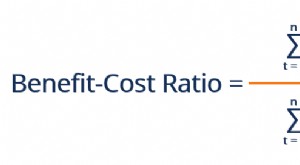
The benefit-cost ratio (BCR) is a profitability indicator used in cost-benefit analysis to determine the viability of cash flows generated from an asset or project. The BCR compares the present value
-
Binomial Interest Rate Tree: Definition, Uses & Applications
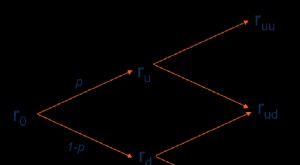
The binomial interest rate tree is a graphical representation of possible interest rate values at different periods of time, under the assumption that at each time period, the interest rate may either
finance
- Applicable Federal Rate (AFR): Definition & How It Works
- Compound Growth Rate: Definition & Calculation | [Your Brand]
- Understanding Coupon Rate: A Key Bond Investment Metric
- Federal Discount Rate: Definition & Importance
- Understanding Forward Rates: A Comprehensive Guide
- Understanding the Overnight Interest Rate: A Comprehensive Guide
- Prime Rate Explained: Understanding Interest Rates for Businesses & Consumers
- Understanding Implied Rates: A Comprehensive Guide
- Prime Rate Explained: Understanding Interest Rates & Its Impact
-
 Understanding Federal Tax Rates on Retirement Pensions
The federal tax rate on pensions is your ordinary income tax rate; however, you'll only be taxed to the extent that you did not contribute any post-tax dollars to the pension fund. The same is tru...
-
 Understanding AER: Annual Equivalent Rate Explained
The Annual Equivalent Rate (AER) is the rate of interest after taking into account the effects of compounding to normalize the interest rateInterest RateAn interest rate refers to the amount charged b...