
Financial Inclusion: Definition, Benefits & Impact
Financial inclusion refers to the provision of equally available and affordable access to financial services for everyone, regardless of their level of income. It applies to providing services to both individuals and businesses.

Summary
- Financial inclusion refers to providing greater access to financial services for poor and low-income individuals, as well as businesses with limited resources.
- Financial inclusion initiatives help boost the economy of poorer regions and countries.
- The rise of fintech is considered a major contributor to increased financial inclusion.
Understanding Financial Inclusion
Financial inclusion is not only important for people in undeveloped countries. It’s estimated that as many as one-fourth of people in the United Kingdom are low-income individuals with limited access to financial services.
A policy of financial inclusion is a focus of the World Bank, as demonstrated by its Universal Financial Access 2020 initiative. The initiative aims to provide at least one billion people worldwide with at least basic access to financial services, such as maintaining a bank account or other financial account from which they can send and receive payments and store their money.
By the World Bank’s estimate, about 1.7 billion adults – roughly one-third of the world’s adult population as of 2020 – are unbanked or underbanked.
The United Nations Development Programme (UNDP) is another initiative that lists increased financial inclusion as one of its goals. The UN’s financial inclusion projects also include a particular focus on aiding unbanked or underbanked women.
The private sector also strives for greater financial inclusion, which has been shown to provide an economic boost to countries. Of course, greater financial inclusion also means greater potential profits for banks and other financial institutions.
Barriers to Financial Inclusion
There are many barriers to financial inclusion, the first of which is extreme poverty. People with little to no money have little to no need for financial services.
In addition to widespread extreme poverty, which still exists in many areas of the world, other significant barriers often make it difficult for poor and low-income people to access basic financial services.
Financial institutions, such as brokerage firmsBrokerageA brokerage provides intermediary services in various areas, e.g., investing, obtaining a loan, or purchasing real estate. A broker is an intermediary who and banks, often impose strict and detailed documentation requirements for opening an account or making money transfers. People who lack the required documentation are then effectively shut out from accessing financial services.
Also, the lack of nearby financial institution offices and high minimum balance or opening account balance requirements provide further barriers to financial inclusion.
Finally, many poor and low-income individuals lack the knowledge of how to avail themselves of, or use, financial services.
Why Financial Inclusion is Important
Lack of access to basic financial services can create crippling financial problems for people. They may have no way to receive certain payments, have to pay higher amounts for basic services such as electricity, and are prevented from making purchases due to having no easy means of submitting payments.
For example, consider how much of modern commerce is conducted online – then think about how an individual with no bank account or credit card could go about ordering something online – like at Amazon.com.
Having access to financial services is important to both individuals and companies, as it provides a means of storing money, managing payments and cash flows, accumulating savings, accessing credit, and making investments. Such access is also key to acquiring assets and building financial security.
Providing greater financial inclusion to small businesses is important because it can help to create more jobs and improve the standard of livingStandard of LivingThe standard of living is a term used to describe the level of income, necessities, luxury, and other goods and services that are generally in a community.
The Rise of Fintech
The rise and growth of financial technology – commonly referred to as fintech – has been an important factor in increasing financial inclusion. It has not only greatly broadened access to financial services, but also significantly reduced the cost of many financial services.
- Online peer-to-peer lendingPeer-to-Peer LendingPeer-to-peer lending is a form of direct lending of money to individuals or businesses without an official financial institution participating as an intermediary in the deal. P2P lending is generally done through online platforms that match lenders with the potential borrowers., companies such as LendingClub and Upstart, have increased access to loans and credit for people with less than impressive credit ratings.
- Automatic savings and investment apps such as Acorn and SoFi have made it easier for people to access savings and investments.
- Robo-advisors, which charge fees well below those charged by personal financial advisors, now provide many more individuals with professional investment guidance at a low, more affordable cost.
More Resources
CFI is the official provider of the global Commercial Banking & Credit Analyst (CBCA)™ Program Page - CBCAGet CFI's CBCA™ certification and become a Commercial Banking & Credit Analyst. Enroll and advance your career with our certification programs and courses.certification program, designed to help anyone become a world-class financial analyst. To keep advancing your career, the additional CFI resources below will be useful:
- Fintech (Financial Technology)Fintech (Financial Technology)The term fintech refers to the synergy between finance and technology, which is used to enhance business operations and the delivery of financial services.
- Personal Financial StatementPersonal Financial StatementA personal financial statement is a document or set of documents that outline an individual’s financial position at a given point in time.
- Banking FundamentalsBanking FundamentalsBanking fundamentals refer to the concepts and principles relating to the practice of banking. Banking is an industry that deals with credit
- Robo-AdvisorsRobo-AdvisorsRobo-advisors are online investment management services that employ mathematical algorithms to provide financial advice with minimal human intervention.
-

Understanding Financial Hardship: Causes, Impacts & Relief
Different programs make hardship decisions based on different criteria. Financial hardship usually refers to a situation in which a person cannot keep up with debt payments and bills. This pa
-

Understanding Financial Exposure: Investment Risk & Potential Losses
Financial exposure is a term used to describe investment risk. It is a calculation of the amount of money that an investor might potentially lose from an investment. An investor’s financial expo
finance
- Understanding Auditors: Roles, Responsibilities & Audit Processes
- EBITDARM Explained: A Comprehensive Guide to Financial Analysis
- Eurocurrency Explained: What It Is & How It Works
- Factset: Financial Data & Analytics Solutions for Investment Professionals
- Understanding Finance: A Comprehensive Overview of Key Concepts
- Understanding Financial Crises: Causes, Impacts, and Examples
- Financial Engineering: Principles, Applications & Career Paths
- Understanding Your Financial Health: A Comprehensive Guide
- Financial Literacy: Understanding Key Concepts & Skills
-
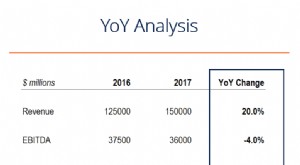 YoY Analysis: Understanding Year-over-Year Growth & Financial Insights
YoY stands for Year over Year and is a type of financial analysisAnalysis of Financial StatementsHow to perform Analysis of Financial Statements. This guide will teach you to perform financial stateme...
-
 Defining Financial Success: Goals & Strategies for a Secure Future
Monetary success is difficult to define in concrete terms. Even though everyone has their own definitions, there is plenty of advice on how to plan for a better financial futu...