
Financial Literacy: Understanding Key Concepts & Skills
Financial literacy is the cognitive understanding of financial components and skills such as budgeting, investing, borrowing, taxation, and personal financial management. The absence of such skills is referred to as being financially illiterate.

According to the Financial Industry Regulatory Authority (FINRA)Financial Industry Regulatory Authority (FINRA)The Financial Industry Regulatory Authority (FINRA) acts as a self-regulatory organization for securities firms operating in the United States., about 66% of the American population is considered financially illiterate.
Being financially literate allows an individual to be better prepared for specific financial roadblocks, which, in turn, decreases the chances of personal economic distress.
Achieving financial literacy is crucial in today’s society due to everyday facets of life, such as student loans, mortgages, credit cards, investments, and health insurance.
Fundamental Components of Financial Literacy
Financial literacy consists of several financial components and skills that allow an individual to gain knowledge regarding the effective management of money and debt.
Below are the fundamental components of financial literacy that should be learned.
1. Budgeting
In budgetingBudgetingBudgeting is the tactical implementation of a business plan. To achieve the goals in a business’s strategic plan, we need some type of budget that finances the business plan and sets measures and indicators of performance., there are four main uses for money that determine a budget: spending, investing, saving, and giving away.
Creating the right balance throughout the primary uses of money allows individuals to better allocate their income, resulting in financial security and prosperity.
In general, a budget should be composed in a way that pays off all existing debt while leaving money aside for saving and making beneficial investments.
2. Investing
To become financially literate, an individual must learn about key components in regards to investing. Some of the components that should be learned to ensure favorable investments are interest rates, price levels, diversification, risk mitigation, and indexes.
Learning about crucial investment components allows individuals to make smarter financial decisions that may result in an increased inflow of income.
3. Borrowing
In most cases, almost every individual is required to borrow money at one point in their life. To ensure borrowing is done effectively, an understanding of interest rates, compound interest, time value of moneyTime Value of MoneyThe time value of money is a basic financial concept that holds that money in the present is worth more than the same sum of money to be received in the future. This is true because money that you have right now can be invested and earn a return, thus creating a larger amount of money in the future. (Also, with future, payment periods, and loan structure is crucial.
If the criteria above are understood sufficiently, an individual’s financial literacy will increase, which will provide practical borrowing guidelines and reduce long-term financial stress.
4. Taxation
Gaining knowledge about the different forms of taxation and how they impact an individual’s net income is crucial for obtaining financial literacy. Whether it be employment, investment, rental, inheritance, or unexpected, each source of income is taxed differently.
Awareness of the different income tax rates permits economic stability and increases financial performance through income management.
5. Personal Financial Management
The most important criteria, personal financial management, includes an entire mix of all of the components listed above.
Financial security is ensured by balancing the mix of financial components above to solidify and increase investments and savings while reducing borrowing and debt.
Achieving an in-depth knowledge of the financial components discussed above guarantees an increase in an individual’s financial literacy.

Importance of Financial Literacy
Obtaining financial literacy is one of the most important things an individual can do to ensure prolonged financial stability.
Listed below are some real-world facts that should emphasize the overall importance of attaining financial literacy.
- It is estimated that about 78% of Americans live paycheck to paycheck.
- More than 189 million of the American population own credit cards.
- On average, credit card owners own about four cards each.
- Student loan debt is about $1.5 trillion for more than 44 million borrowers.
- Credit card debt levels are at a record high of $1.04 trillion.
- Overall, Americans are approximately $12.58 trillion in debt.
The statistics depicted above should illuminate why financial literacy is paramount in today’s financial climate.
Benefits of Financial Literacy
Being financially literate is a skill that brings forth an assortment of benefits that can improve the standard of livingStandard of LivingThe standard of living is a term used to describe the level of income, necessities, luxury, and other goods and services that are generally for individuals through an increase in financial stability.
Listed below are the assortment of benefits of being financially literate:
- Ability to make better financial decisions
- Effective management of money and debt
- Greater equipped to reach financial goals
- Reduction of expenses through better regulation
- Less financial stress and anxiety
- Increase in ethical decision-making when selecting insurance, loans, investments, and using a credit card
- Effective creation of a structured budget
Making steps to becoming financially literate is an important component of life that can ensure financial solidity, reduce anxiety, and stimulate the achievement of financial goals.
Where to Gain Financial Literacy
Beyond gaining knowledge through word-of-mouth, there is an assortment of tools and online modules that can increase an individual’s financial literacy.
Listed below are some tools an individual can use to increase financial literacy:
- EconEdLink: Online financial lessons for K-12 students
- Money Smart: Free financial tools such as podcasts, lesson plans, and games to increase financial literacy
- MoneyWi$e: In a partnership between Capital One and Consumer Action, MoneyWi$e provides free multilingual financial education
- InCharge: Dedicated to empowering consumers through personal financial management, InCharge provides online eBooks for educational purposes
Any of the options listed above provides beneficial financial knowledge that should be pursued if an individual wishes to grow their financial literacy.
Related Readings
CFI is the official provider of the global Commercial Banking & Credit Analyst (CBCA)™Program Page - CBCAGet CFI's CBCA™ certification and become a Commercial Banking & Credit Analyst. Enroll and advance your career with our certification programs and courses. certification program, designed to help anyone become a world-class financial analyst. To keep advancing your career, the additional resources below will be useful:
- Education LoanEducation LoanAn education loan refers to a type of loan that is borrowed by students to finance their expenses related to post-secondary or higher
- HMO vs. PPOHMO vs PPO: Which is Better?Getting the best healthcare often requires choosing between an HMO vs PPO. You need to be able to make an informed decision on which plan will work best.
- Home MortgageHome MortgageA home mortgage is a loan provided by a lender – usually a bank, mortgage company, or other financial institution – to purchase a residence.
- Personal FinancePersonal FinancePersonal finance is the process of planning and managing personal financial activities such as income generation, spending, saving, investing, and protection. The process of managing one’s personal finances can be summarized in a budget or financial plan.
-

Understanding Financial Hardship: Causes, Impacts & Relief
Different programs make hardship decisions based on different criteria. Financial hardship usually refers to a situation in which a person cannot keep up with debt payments and bills. This pa
-

Defining Financial Success: Goals & Strategies for a Secure Future
Monetary success is difficult to define in concrete terms. Even though everyone has their own definitions, there is plenty of advice on how to plan for a better financial futu
finance
- Understanding Auditors: Roles, Responsibilities & Audit Processes
- EBITDARM Explained: A Comprehensive Guide to Financial Analysis
- Eurocurrency Explained: What It Is & How It Works
- Factset: Financial Data & Analytics Solutions for Investment Professionals
- Understanding Finance: A Comprehensive Overview of Key Concepts
- Understanding Financial Crises: Causes, Impacts, and Examples
- Financial Engineering: Principles, Applications & Career Paths
- Understanding Your Financial Health: A Comprehensive Guide
- Financial Inclusion: Definition, Benefits & Impact
-
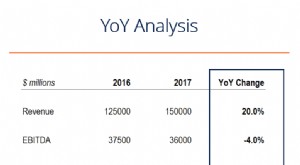 YoY Analysis: Understanding Year-over-Year Growth & Financial Insights
YoY stands for Year over Year and is a type of financial analysisAnalysis of Financial StatementsHow to perform Analysis of Financial Statements. This guide will teach you to perform financial stateme...
-
 Financial Literacy: Understand, Improve & Achieve Your Financial Goals
If you’ve spent any time reading personal finance information and news, you’ve come across the term “financial literacy.” People who are financially literate understand basic concepts that help them m...