
Indexed Annuities: A Comprehensive Guide for Retirees
An indexed annuity is a financial product that pays out a return based on the performance of a linked index. The contract is backed by an insurance company and is popular among retirees because it provides a relatively steady stream of income with downside riskDownside RiskDownside risk refers to the probability that an asset or security will fall in price. It is the potential loss that could result from a fall protection. However, it also severely limits the upside potential of the investment, illustrating the tradeoff between risk and return.

Summary
- An indexed annuity is a financial product that pays out an income stream based on the performance of the linked index (i.e., S&P 500).
- Indexed annuities provide downside protection through their minimum guaranteed return. However, they also limit potential upside through the participation rate and rate cap.
- The guarantees of the annuity contract rest on the ability of the insurance company to honor them.
Indexed Annuity Components
1. Participation Rate
The participation rate refers to the percentage of index return that is credited to the annuitant (annuity holder). For example, if the indexed annuity offers a participation rate of 90% and the linked index realizes a return of 10% for the period, the annuitant receives 9% (90% x 10% = 9%). Most indexed annuities offer a participation rate between 80%-90%.
2. Rate Cap
The rate cap also limits the upside of the index by establishing a ceiling on the rate. For example, if the indexed annuity comes with a rate cap of 7%, the annuitant will get a maximum return of 7%, regardless of the amount of the index’s earnings. When the participation rate is used together with the rate cap, the annuity return is the minimum between the two.
3. Spread/Margin/Asset Fee
Depending on the insurance company, a fee may be applied to the return rate. For example, if the fee is 2% and the index return is 7%, the annuitant receives 5% (7% – 2%).
4. Minimum Guaranteed Return
In contrast with the rate cap, the minimum guaranteed return is offered as a floor to limit the downside of the index. For example, the insurance company may guarantee a minimum return of 2%, so the annuitant is promised 2% even if the index performs poorly over the period.
5. Rider
A rider is an optional form of benefit that can be purchased to supplement an indexed annuity. Many different types of riders can be used to accommodate financial needs, such as early fund withdrawal, lifetime income, death benefits to beneficiaries, and many others at the expense of reduced returns.
Indexed Annuity Examples
An annuitant buys an indexed annuity linked to the S&P 500 IndexS&P 500 IndexThe Standard and Poor’s 500 Index, abbreviated as S&P 500 index, is an index comprising the stocks of 500 publicly traded companies in the. The terms of the indexed annuity are 80% participation rate, 7% cap rate, and a minimum guaranteed return of 2%.
If the S&P 500 generates a 15% return:
Participation rate = 15% * 0.8 = 12%
Minimum of participation rate and cap rate = 12% > 7% = 7% return
If the S&P 500 generates a 6% return:
Participation rate = 6% * 0.8 = 4.8%
Minimum of participation rate and cap rate = 4.8% < 7% = 4.8% return
If the S&P 500 generates a -9% return:
Minimum guaranteed return: 2% return
Advantages of Indexed Annuities
- Increase in returns when the underlying index performs well
- Downside risk protection from the minimum guaranteed return – Protects the principal amount
- Deferred taxes – Taxes are realized only when funds are withdrawn, so it can be advantageous for managing tax payments
Disadvantages of Indexed Annuities
- No dividends – Annuitants miss out on dividend payoutsStable Dividend PolicyA business with a stable dividend policy pays out a steady dividend every given period, regardless of the volatility in the market. The exact amount of dividends that are paid out depends on the long-term earnings of the company., which historically returns an average of 1.87% on the S&P 500.
- Limited upside from participation rate and rate cap
- Tax withdrawal penalty – Contrary to the acclaimed advantage that annuitants can’t lose money on the principal because of the downside risk protection, it is actually possible to incur losses if the annuitant withdraws funds early or surrenders the annuity. Also, if the annuitant withdraws funds before age 59½, they face a tax withdrawal penalty.
- Surrender period – Annuities lack liquidity because annuitants cannot touch their money during the surrender period, which is typically 6-8 years. If they surrender the annuity contract during this period, they are charged a high surrender fee.
- Insurance company’s financial health – Annuity payments are tied to the financial health of the insurance company; if the company goes bankrupt, the indexed annuity is worthless.
Learn More
CFI offers the Capital Markets & Securities Analyst (CMSA)®Program Page - CMSAEnroll in CFI's CMSA® program and become a certified Capital Markets &Securities Analyst. Advance your career with our certification programs and courses. certification program for those looking to take their careers to the next level. To keep learning and developing your knowledge base, please explore the additional relevant resources below:
- Fixed AnnuityFixed AnnuityA fixed annuity is an investment product sold by insurance companies, which provides guaranteed periodic (typically monthly) income payments
- Life and Health InsurersLife and Health InsurersLife and health (L&H) insurers are companies that provide coverage on the risk of loss of life and medical expenses incurred from illness or injuries. The customer - the purchaser of the insurance policy - pays an insurance premium for the coverage.
- Rate of ReturnRate of ReturnThe Rate of Return (ROR) is the gain or loss of an investment over a period of time copmared to the initial cost of the investment expressed as a percentage. This guide teaches the most common formulas
- Risk and ReturnRisk and ReturnIn investing, risk and return are highly correlated. Increased potential returns on investment usually go hand-in-hand with increased risk. Different types of risks include project-specific risk, industry-specific risk, competitive risk, international risk, and market risk.
-

Rate of Return vs. Interest Rate: Understanding the Key Differences
The rate of return is an internal measure of the return on money invested in a project. The interest rate is the external rate at which money can be borrowed from lenders. Rate of R
-

Understanding Rate of Return (RoR): Calculation & Investment Performance
You may be happy if your investment statements show steady gains from year to year. But does that mean you’re getting a good rate of return? And for that matter, what is a good rate of return? As it t
finance
- Understanding Alpha: A Guide to Investment Performance
- Internal Rate of Return (IRR): Definition & Calculation
- Money-Weighted Rate of Return (MWRR) Explained: A Comprehensive Guide
- Understanding Rate of Return: A Comprehensive Guide
- Annualized Rate of Return: Definition & Calculation
- Nominal Rate of Return: Definition & Calculation
- Understanding the Required Rate of Return: A Key Finance Concept
- Understanding Rate of Return (ROR): Calculation & Applications
- Annuities Explained: A Simple Guide to Retirement Income
-
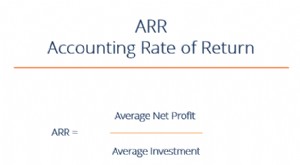 Accounting Rate of Return (ARR): Definition & Capital Budgeting
Accounting Rate of Return (ARR) is the average net incomeNet IncomeNet Income is a key line item, not only in the income statement, but in all three core financial statements. While it is arrived at t...
-
 LIBOR Explained: Understanding the London Interbank Offered Rate
LIBOR is an acronym for London Interbank Offered Rate, and is the most important benchmark for the short-term interest rate that the world’s largest banks charge one another to loan money internationa...