
Understanding Rate of Return: A Comprehensive Guide
A Rate of Return (ROR) is the gain or loss of an investment over a certain period of time. In other words, the rate of return is the gainCapital Gains YieldCapital gains yield (CGY) is the price appreciation on an investment or a security expressed as a percentage. Because the calculation of Capital Gain Yield involves the market price of a security over time, it can be used to analyze the fluctuation in the market price of a security. See calculation and example (or loss) compared to the cost of an initial investment, typically expressed in the form of a percentage. When the ROR is positive, it is considered a gain and when the ROR is negative, it reflects a loss on the investment.
Video Explanation of Rate of Return
Watch this short video to quickly understand the main concepts covered in this guide, including the definition of rate of return, the formula for calculating ROR and annualized ROR, and example calculations.
Formula for Rate of Return
The standard formula for calculating ROR is as follows:

Keep in mind that any gains made during the holding period of the investment should be included in the formula. For example, if a share costs $10 and its current price is $15 with a dividend of $1 paid during the period, the dividend should be included in the ROR formula. It would be calculated as follows:
(($15 + $1 – $10) / $10) x 100 = 60%
Example Rate of Return Calculation
Adam is a retail investor and decides to purchase 10 shares of Company A at a per-unit price of $20. Adam holds onto shares of Company A for two years. In that time frame, Company A paid yearly dividends of $1 per share. After holding them for two years, Adam decides to sell all 10 shares of Company A at an ex-dividend price of $25. Adam would like to determine the rate of return during the two years he owned the shares.
To determine the rate of return, first, calculate the amount of dividends he received over the two-year period:
10 shares x ($1 annual dividend x 2) = $20 in dividends from 10 shares
Next, calculate how much he sold the shares for:
10 shares x $25 = $250 (Gain from selling 10 shares)
Lastly, determine how much it cost Adam to purchase 10 shares of Company A:
10 shares x $20 = $200 (Cost of purchasing 10 shares)
Plug all the numbers into the rate of return formula:
= (($250 + $20 – $200) / $200) x 100 = 35%
Therefore, Adam realized a 35% return on his shares over the two-year period.
Annualized Rate of Return
Note that the regular rate of return describes the gain or loss, expressed in a percentage, of an investment over an arbitrary time period. The annualized ROR, also known as the Compound Annual Growth Rate (CAGR)CAGRCAGR stands for the Compound Annual Growth Rate. It is a measure of an investment’s annual growth rate over time, with compounding taken into account., is the return of an investment over each year.
Formula for Annualized ROR
The formula for annualized ROR is as follows:

Similar to the simple rate of return, any gains made during the holding period of this investment should be included in the formula.
Example of Annualized Rate of Return
Let us revisit the example above and determine the annualized ROR. Recall that Adam purchased 10 shares at a per-unit price of $20, received $1 in dividends per share each year, and sold the shares at a price of $25 after two years. The annualized ROR would be as follows:
(($250 + $20) / $200 )1/2 – 1 = 16.1895%
Therefore, Adam made an annualized return of 16.1895% on his investment.
Alternative Measures of Return
Return can mean different things to different people, and it’s important to know the context of the situation to understand what they mean. In addition to the above methods for measuring returns, there several other types of formulas.
Common alternative measures of returns include:
- Internal Rate of Return (IRR)Internal Rate of Return (IRR)The Internal Rate of Return (IRR) is the discount rate that makes the net present value (NPV) of a project zero. In other words, it is the expected compound annual rate of return that will be earned on a project or investment.
- Return on Equity (ROE)Return on Equity (ROE)Return on Equity (ROE) is a measure of a company’s profitability that takes a company’s annual return (net income) divided by the value of its total shareholders' equity (i.e. 12%). ROE combines the income statement and the balance sheet as the net income or profit is compared to the shareholders’ equity.
- Return on Assets (ROA)Return on Assets & ROA FormulaROA Formula. Return on Assets (ROA) is a type of return on investment (ROI) metric that measures the profitability of a business in relation to its total assets.
- Return on Investment (ROI)Return on Investment (ROI)Return on Investment (ROI) is a performance measure used to evaluate the returns of an investment or compare efficiency of different investments.
- Return on Invested Capital (ROIC)Return on Invested CapitalReturn on Invested Capital - ROIC - is a profitability or performance measure of the return earned by those who provide capital, namely, the firm’s bondholders and stockholders. A company's ROIC is often compared to its WACC to determine whether the company is creating or destroying value.
More Resources
CFI is the official provider of the Financial Modeling & Valuation Analyst (FMVA)Become a Certified Financial Modeling & Valuation Analyst (FMVA)®CFI's Financial Modeling and Valuation Analyst (FMVA)® certification will help you gain the confidence you need in your finance career. Enroll today! certification, designed to teach valuation modeling skills to financial analysts. To continue advancing your career, these additional resources will be useful:
- Investing: A Beginner’s GuideInvesting: A Beginner's GuideCFI's Investing for Beginners guide will teach you the basics of investing and how to get started. Learn about different strategies and techniques for trading
- Unlevered Beta (Asset Beta)Unlevered Beta / Asset BetaUnlevered Beta (Asset Beta) is the volatility of returns for a business, without considering its financial leverage. It only takes into account its assets.
- Basis Points (bps)Basis Points (BPS)Basis Points (BPS) are the commonly used metric to gauge changes in interest rates. A basis point is 1 hundredth of one percent.
- Technical Analysis: A Beginner’s GuideTechnical Analysis - A Beginner's GuideTechnical analysis is a form of investment valuation that analyses past prices to predict future price action. Technical analysts believe that the collective actions of all the participants in the market accurately reflect all relevant information, and therefore, continually assign a fair market value to securities.
-

Understanding NAV Return: A Key Performance Indicator
NAV return, or net asset value return, is a performance measurement for an entity’s assets minus liabilities. NAV return is typically used to measure the performance of mutual funds, open-end fu
-
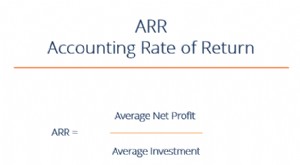
Accounting Rate of Return (ARR): Definition & Capital Budgeting
Accounting Rate of Return (ARR) is the average net incomeNet IncomeNet Income is a key line item, not only in the income statement, but in all three core financial statements. While it is arrived at t
finance
- Understanding Alpha: A Guide to Investment Performance
- Cash-on-Cash Return: Definition, Calculation & Importance
- Hurdle Rate: Definition, Calculation & Importance for Investors
- Indexed Annuities: A Comprehensive Guide for Retirees
- Understanding Interest Rates: A Comprehensive Guide
- Annualized Rate of Return: Definition & Calculation
- Nominal Rate of Return: Definition & Calculation
- Understanding the Required Rate of Return: A Key Finance Concept
- Understanding Rate of Return (ROR): Calculation & Applications
-
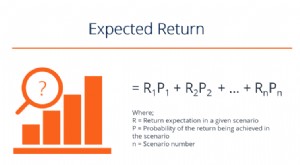 Understanding Expected Return: A Comprehensive Guide
The expected return on an investment is the expected value of the probability distribution of possible returns it can provide to investors. The return on the investment is an unknown variable that has...
-
 Understanding LIBOR: What It Is and How It Works
LIBOR, which is an acronym of London Interbank Offer Rate, refers to the interest rateInterest RateAn interest rate refers to the amount charged by a lender to a borrower for any form of debt given, g...