
Annualized Rate of Return: Definition & Calculation
Annualized rate of return is a way of calculating investment returns on an annual basis. As we invest, we often want to know how much we are earning from our investments. When we calculate our investment earnings over time, it is known as the rate of return.

However, investments come in all shapes and sizes – how do we compare the share price of AmazonFinancial Statements Examples – Amazon Case StudyFinancial statements show the financial performance and strength of a company. The three core financial statements are the income statement, to an investment in Vancouver real estate? The annualized rate of return solves such a problem by calculating the rate of return for all investments on an annual basis. It allows us to compare different types of investments over the same time frame, making it easy to see which investments are most profitable.
Summary
- The annualized rate of return calculates the rate of return on investments by averaging returns on an annual basis.
- For investors with diverse portfolios, the annualized rate of return makes it easy to compare the performance of different investments.
- The annualized rate of return differs from the annual return because it also accounts for the compounding of investment earnings over time.
How does Annualized Rate of Return Work?
The annualized rate of return works by calculating the rate of return on investments for any length of time by averaging the returns into a year-long time frame. The calculation accounts for all the losses and gains over time and provides a measure of performance that equalizes all investments over the same time period.
The annualized rate of return differs from the annual return because the former is an average that also accounts for the compounding of investment earnings over time.
When to Use Annualized Rate of Return
For investors with diverse portfolios, the annualized rate of return makes it easy to compare the performance of different investments. Returns on investments, such as stocks, can change on a moment’s notice, and a 15% gain last year may be followed by a 25% loss in the current year.
For investments with volatile returnsVolatilityVolatility is a measure of the rate of fluctuations in the price of a security over time. It indicates the level of risk associated with the price changes of a security. Investors and traders calculate the volatility of a security to assess past variations in the prices or variable interest rates, it can be difficult to accurately assess how the investments are performing. The annualized rate of return is especially useful for investments where the returns are known in terms of a dollar amount, but the actual percentage rate is unclear.
By calculating a single annualized percentage for all investments, it’s easy to see which investments are underperforming and which provide the best returns over time.
Formula
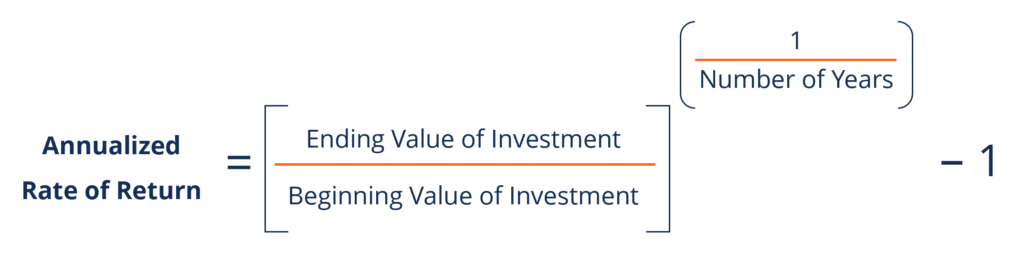
Where:
- Beginning Value of Investment – The amount initially invested
- Ending Value of Investment – The present-day value of your investments
- Number of Years – The length of your investment in years
Multiply the result by 100 to see the rate of return in percentages. If the result is negative, it means your investments suffered a loss over the time period.
Real-World Example
Let’s assume that an individual placed their money into two different investment products:
- A $100,000 investment into a high-interest savings account with a variable interest rateFloating Interest RateA floating interest rate refers to a variable interest rate that changes over the duration of the debt obligation. It is the opposite of a fixed rate.. With no additional contributions, six years later, the account balance amounts to $115,900.
- An investment property in Miami that was bought for $350,000 in 2015. Five years later, the property is now worth $410,000.
With two completely different investments, which one provides the best return? We can use the annualized rate of return formula to calculate the rate of return for both investments on an annual basis.
Using the formula given above, we substitute the figures:
1) ARR = (115,900 / 100,000) (1/6) – 1
ARR = 0.02489 ≈ 2.50%
2) ARR = (410,000 / 350,000) (1/5) – 1
ARR = 0.03215 ≈ 3.21%
By using the annualized rate of return formula, we are now able to compare the returns for both investments over the same time frame. Therefore, we can conclude that the investment property in Miami provides the best return at an annualized rate of 3.21%.
Related Readings
CFI offers the Commercial Banking & Credit Analyst (CBCA)™Program Page - CBCAGet CFI's CBCA™ certification and become a Commercial Banking & Credit Analyst. Enroll and advance your career with our certification programs and courses. certification program for those looking to take their careers to the next level. To keep learning and developing your knowledge base, please explore the additional relevant resources below:
- Absolute ReturnAbsolute ReturnAbsolute return can be defined as the return, i.e., absolute gain or loss, an investment generates over a specific period of time. The gain or loss is
- DiversificationDiversificationDiversification is a technique of allocating portfolio resources or capital to a variety of investments.The goal of diversification is to mitigate losses
- Risk and ReturnRisk and ReturnIn investing, risk and return are highly correlated. Increased potential returns on investment usually go hand-in-hand with increased risk. Different types of risks include project-specific risk, industry-specific risk, competitive risk, international risk, and market risk.
- Investing: A Beginner’s GuideInvesting: A Beginner's GuideCFI's Investing for Beginners guide will teach you the basics of investing and how to get started. Learn about different strategies and techniques for trading
-

Understanding Alpha: A Guide to Investment Performance
Alpha is a measure of the performance of an investment as compared to a suitable benchmark index, such as the S&P 500S&P – Standard and PoorsStandard & Poor’s is an American fi
-

Cash-on-Cash Return: Definition, Calculation & Importance
Cash on cash return is a rate of returnRate of ReturnThe Rate of Return (ROR) is the gain or loss of an investment over a period of time copmared to the initial cost of the investment expressed as a p
invest
- Annualized Total Return (CAGR): Definition & Calculation
- Indexed Annuities: A Comprehensive Guide for Retirees
- Understanding Rate of Return: A Comprehensive Guide
- Annualization Explained: Calculating Annual Rates & Returns
- Understanding Average Return: A Simple Guide
- Nominal Rate of Return: Definition & Calculation
- Understanding the Required Rate of Return: A Key Finance Concept
- Understanding Rate of Return (RoR): Calculation & Investment Performance
- Understanding Rate of Return (ROR): Calculation & Applications
-
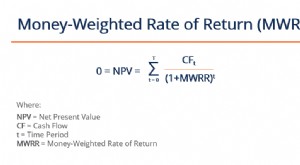 Money-Weighted Rate of Return (MWRR) Explained: A Comprehensive Guide
The money-weighted rate of return (MWRR) refers to the discount rate that equates a project’s present value cash flows to its initial investment. It is used to determine the profitability of a p...
-
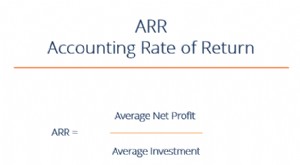 Accounting Rate of Return (ARR): Definition & Capital Budgeting
Accounting Rate of Return (ARR) is the average net incomeNet IncomeNet Income is a key line item, not only in the income statement, but in all three core financial statements. While it is arrived at t...