
Josef Ackermann: Biography & Career Highlights | Deutsche Bank & Beyond
Josef Ackermann (or Josef Meinrad Ackermann) is a Swiss banker who was born on February 7, 1948. Ackermann was the chairman of the Bank of Cyprus and CEO of the Deutsche Bank. Mr. Ackerman obtained a Ph.D. from Saint Gallen University. He officially began his corporate bankingCorporate BankingCorporate banking is a subset of business banking that involves a range of banking services that are offered only to corporates. The services include the career in 1977 with Credit Suisse.
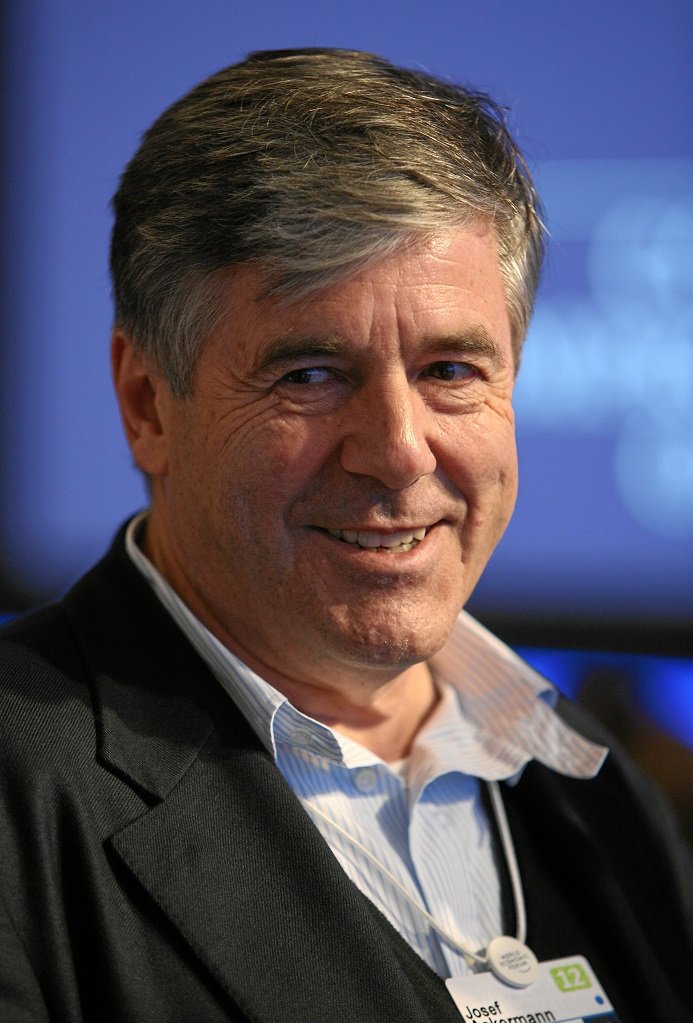
Josef Ackermann worked as a lecturer (visiting) at the Johann Wolfgang Goethe University and the London School of Economics. He sat on the Boards of Royal Dutch Shell, Bayer, Zurich Financial Services, Deutsche Lufthansa, Mannesman, and Linde. He assisted in the international expansion of the Deutsche Bank and introduced new management techniques focusing on shareholders and investment bankingInvestment BankingCFI's Investment Banking Manual. This 400+ page guide is used as a real training tool and bulge bracket global investment banks. Learn everything a new investment banking analyst or associate needs to know to get started on the job. This guide and handbook teaches accounting, Excel, financial modeling, valuation,.
Summary
- Josef Ackermann (or Josef Meinrad Ackermann) is a Swiss Banker who was born on February 7, 1948.
- Ackermann was the chairman of the Bank of Cyprus and CEO of the Deutsche Bank.
- He sat on the Boards of Royal Dutch Shell, Bayer, Zurich Financial Services, Deutsche Lufthansa, Mannesman, and Linde. He also assisted in the international expansion of the Deutsche Bank and introduced new management techniques focusing on shareholders and investment banking.
Ackermann’s Early Career
Josef Ackermann was born in Walenstadt, Switzerland, and grew up in Mels, Switzerland. His father was a local doctor. From a young age, he and two younger brothers were encouraged to participate in sports, arts, and culture (musical instruments) and learn foreign languages abroad.
After excelling in mathematics in high school, Ackermann decided to pursue an education in Economics and Social Sciences at the University of Saint Gallen, focusing on Bank Management. He also served in military reserves, where he became a colonel. He was encouraged to pursue a career in military services, but he chose to pursue a different career path. In 1977, Ackermann completed his studies and graduated with a doctorate in Economics.
Ackermann became an Assistant to the General Board of Directors for Credit Suisse in New York City after graduation. At the age of 33, he was managing 300 subordinates. In 1990, he was promoted to General Director at Credit Suisse, thereby making him a member of the board. In 1993, Ackermann became the president of the Executive Board and facilitated the successful merger between Credit Suisse and Swiss Volksbank. In 1996, he joined Deutsche Bank after leaving Credit Suisse.
After joining the Deutsche Bank in 1996, Ackermann used an integrated and communicative approach to the merger of the U.S.-based Bankers Trust into Deutsche Bank. He took the lead in the merger facilitation in 1998. By 1999, Ackermann’s department was responsible for 60% of Deutsche Bank’s revenues.
Ackermann’s Career at the Deutsche Bank
Shortly after joining the Deutsche Bank, Josef Ackermann decided to sell the retail banking branches in France and prioritized Italy and Spain. He also facilitated the merger of the bank’s separate divisions (i.e., private wealth clients, business, and retail) into one private bankingPrivate BankingPrivate banking involves providing personalized financial and banking services to high net worth individual clients. The bank assigns department. Deutsche Bank cut down its workforce by 19% between 2001 and 2004 and also shut down over 200 retail bank branches in Germany.
Ackermann also made decisions that later led to the purchase of the private banking division of Zurich Financial Services and the hiring of Pierre de Weck (Mr. de Weck was responsible for the private wealth management division of the Deutsche Bank). Deutsche Bank’s pretax earningsPretax IncomePretax income, also known as earnings before tax, is the net income earned by a business before taxes are subtracted/accounted for. from wealth and asset management tripled from 2002 to 2003, generating a net income of 929 million euros by the end of the third quarter of 2003. The bank ranked seventh in terms of revenue.
Ackermann served as the chief executive officer of Deutsche Bank until 2013.
Other Positions Held by Josef Ackermann
Josef Ackermann served on the boards of Siemens AG. Linde, Bayer AG, Mannesman and Deutsche Lufthansa AG, while maintaining his full-time position at Deutsche Bank. His other positions include:
- Visiting Professor, Johann Wolfgang Goethe University and the London School of Economics
- Chairman of the Board of Directors, World Economic Forum
- President of the Board of Trustees, St. Gallen Foundation for International Studies
- Non-Executive Director, Royal Dutch Shell
- Chairman of the Board of Directors, Institute of International Finance
- President of the Board of Patrons, Institute for Corporate Culture Affairs
Related Readings
CFI offers the Commercial Banking & Credit Analyst (CBCA)™Program Page - CBCAGet CFI's CBCA™ certification and become a Commercial Banking & Credit Analyst. Enroll and advance your career with our certification programs and courses. certification program for those looking to take their careers to the next level. To keep learning and developing your knowledge base, please explore the additional relevant resources below:
- Asset ManagementAsset ManagementAsset management refers to the process of developing, operating, maintaining, and selling assets in a cost-effective manner.
- Board of DirectorsBoard of DirectorsA board of directors is a panel of people elected to represent shareholders. Every public company is required to install a board of directors.
- CEO vs. CFOCEO vs. CFOPeople outside the business world often get confused with the roles played by the CEO vs. CFO. The Chief Executive Officer (CEO) and the Chief Financial Officer (CFO) take on different but equally important responsibilities in an organization.
- Merger vs. AcquisitionMerger vs. AcquisitionThere are key differences between a merger vs. acquisition in terms of initiation, procedure, and outcome. A merger occurs when individual
-

Bank Line of Credit (LOC): Definition & How It Works
A “bank line” or a “line of credit” (LOC) is a kind of financing that is extended to an individual, corporationCorporate InformationLegal corporate information about Corporate
-

Understanding Bank Statements: A Comprehensive Guide
A bank statement is a monthly financial document that provides a summary of the account holder’s activity. Bank statements are generally prepared by the bank for the account holder at the end of
finance
- Bank Account Liens: Understanding Creditor Rights & Protection
- Liability for Forged Checks: Who Pays the Price?
- Bank Account Access: Who Can See Your Information?
- Bank Drafts: Definition, How They Work & Usage
- Understanding Bank Ratings: A Guide to Financial Stability
- Understanding Money: Definitions and Types (Narrow vs. Broad)
- Deutsche Bank Restructuring: Understanding the 2019 Job Cuts
- Insights from a Banking Career: Lessons Learned & Career Advice
- Discover Bank Review: Is It the Right Online Bank for You?
-
 Fraudulent Bank Account Withdrawals: Your Rights & Recovery
When someone fraudulently withdraws money from your bank account you are not responsible for the missing money in some cases. There are certain things you will need to do to recover you money. ...
-
 Understanding Bank Overdrafts: Causes, Costs & Solutions
A bank account overdraft happens when an individual’s bank account balance goes down to below zero, resulting in a negative balance. It usually happens when there are no more funds in the accoun...