
Macrofinance Explained: Understanding Economic Policy & Market Trends
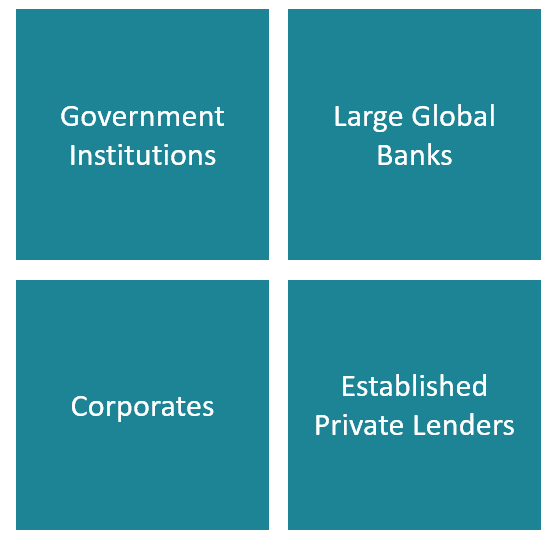
Macrofinance targets widespread benefits to a section of the economyMarket EconomyMarket economy is defined as a system where the production of goods and services are set according to the changing desires and abilities of or the whole economy. It is tailored to fulfill all the financial obligations of the economy and find solutions to meet the obligations. To achieve said obligations, governments must draft policies, develop plans for subsidiesSocial SecuritySocial Security is a US federal government program that provides social insurance and benefits to people with inadequate or no income. The first Social, and engage in multi-year expansion strategies. In doing so, macrofinance policies will give the government an edge in providing avenues for economic growthGross National ProductGross National Product (GNP) is a measure of the value of all goods and services produced by a country’s residents and businesses. It, increased employment, and other expansions of the economy. The image below lists the different macrofinance players in an economy:
Example of Macrofinance
Let’s say state Y wants to promote the production of energy-efficient taxis in the bid to increase employment and encourage tax remittance. So, it decides to offer tax benefits to manufacturer X in the automobile assembly business. In return, the manufacturer agrees to sell its taxis at a subsidized price. Due to the affordability of the taxi, more people will gain access to jobs. The jobs will earn them money to pay their taxes and also allow them to re-invest. The taxes will enable the government to invest in programs that will not only increase the employment rate but also benefit everyone in the economy.
Macrofinance vs. Microfinance
Often, there is considerable confusion between the meaning of macrofinance and microfinance. But what all policymakers agree on is that in the presence of a balance between policies and goals, both macrofinance and microfinance provide a lot of benefits to the general economy.
Microfinance is tailored to meet the needs of individuals, small industries, or any small operating business that faces difficulties in accessing funds, while macrofinance focuses on meeting the needs of a section of the economy or the whole economy itself. Below is a detailed comparison of both macrofinance and microfinance.
- Conceptually, microfinance focuses on individual needs, while macrofinance focuses on the whole nation.
- In microfinance, the common financiers are microfinance Institutions (MFI), self-help groups (SHG), donors, and non-governmental institutions (NGO). In macrofinance, the financiers are major players such as governments, big corporations, established private lenders, and banks, including the central bank.
- Since the mode of operations is small in microfinance, the funding is generally continuous. However, with significant investments in macrofinance, projects only last for a limited tenure depending on the type of project.
- In microfinance, since financing is tailored to benefit an individual, the rate of default is very high. However, in macrofinance, since the benefit is for the whole economy, the primary challenge is in policy implementation rather than failure or discontinuation of the program.
- Microfinance empowers individuals to become self-reliant, while macrofinance aims at profiting the whole economy. For instance, Joe may borrow $15,000 for a new start-up. As a result, he may only employ James and Zowe as his assistants. On the other hand, government Z may want to construct a new public subway. The new line may cost the government $200 million per kilometer. When a contract is issued to company XY, the company on the ground employs a large number of workers to work on the construction site.
Other Terms Similar to Macrofinance
Even though in this context we’ve related the word ‘macro’ to finance, you may find other instances where macro will present with an entirely different meaning. Here are those instances:
Macro in Microsoft Excel
In MS Excel, a macro is a feature triggered by a keyboard or mouse event that automates repetitive and common data formatting tasks.
Macro in Accounting
In accounting, it’s known as macro accounting. It refers to accounting for the aggregate performance of the country. Like macrofinance, macro accounting focuses on the general economy of the nation, rather than a single entity.
Macro in Risks
Macro risks refer to political changes that are either controllable or uncontrollable. Usually, they affect all foreign activities that hamper investment opportunities and hurt the GDP of the involved country. Often, an acute effect may lead to high inflation and a collapse of the currency.
Macro in Economics
Macro in economics focuses on changes in asset prices in a section of the economy or the whole economy, rather than a specific industry.
More Resources
CFI is the official provider of the global Financial Modeling & Valuation Analyst (FMVA)™Become a Certified Financial Modeling & Valuation Analyst (FMVA)®CFI's Financial Modeling and Valuation Analyst (FMVA)® certification will help you gain the confidence you need in your finance career. Enroll today! certification program, designed to help anyone become a world-class financial analyst. To keep advancing your career, the additional CFI resources below will be useful:
- Fiscal PolicyFiscal PolicyFiscal Policy refers to the budgetary policy of the government, which involves the government controlling its level of spending and tax rates
- GDP FormulaGDP FormulaGross Domestic Product (GDP) is the monetary value, in local currency, of all final economic goods and services produced in a country during a
- BureaucracyBureaucracyThe system to maintain uniform authority within and across institutions is known as bureaucracy. Bureaucracy essentially means to rule by the office.
- Normative EconomicsNormative EconomicsNormative economics is a school of thought which believes that economics as a subject should pass value statements, judgments, and opinions on
-
Understanding Account Numbers: Your Key to Financial Records
An account number is a unique code composed of numbers, letters, or other characters, and is assigned to the account owner for ease of reference in a financial institution’s accounting records.&
-

Understanding Account Statements: A Comprehensive Guide
An account statement is a periodic report that is sent to a customer. It contains a summary of account activity within a defined period – usually a month, quarter, year, or other custom periods.
finance
- Economy Ground Shipping: A Comprehensive Guide
- PC Banking: A Comprehensive Guide to Online Banking Security & Features
- Understanding GDP: What It Is and Why It Matters
- Jumbo CDs: Higher Rates & Deposits Explained
- Understanding Cyclical Stocks: Performance & Investment Strategies
- Understanding Car Fuel Economy: MPG & How to Improve It
- Understanding Regulation Z: Your Rights as a Borrower
- Annuities Explained: A Simple Guide to Retirement Income
- Understanding the Overnight Interest Rate: Impact on the Economy
-
 Understanding Account Balances: A Comprehensive Guide
An account balance is the amount of money present in a financial repository during the current accounting period. It is the net difference between the credits and debits posted in any given accounting...
-
 Macrofinance Explained: Understanding Economic Policy & Market Trends
Macrofinance targets widespread benefits to a section of the economyMarket EconomyMarket economy is defined as a system where the production of goods and services are set according to the changing des...