
Understanding the MICR Line on Checks: What You Need to Know
The term Magnetic Ink Character Recognition (MICR) refers to the small digital characters at the bottom of a check or a financial document. The MICR line is a set of digital numbers that represent the bank routing number, account numberAccount NumberAn account number is a unique code composed of numbers, letters, or other characters, and is assigned to the account owner for ease of reference in a, and check number.
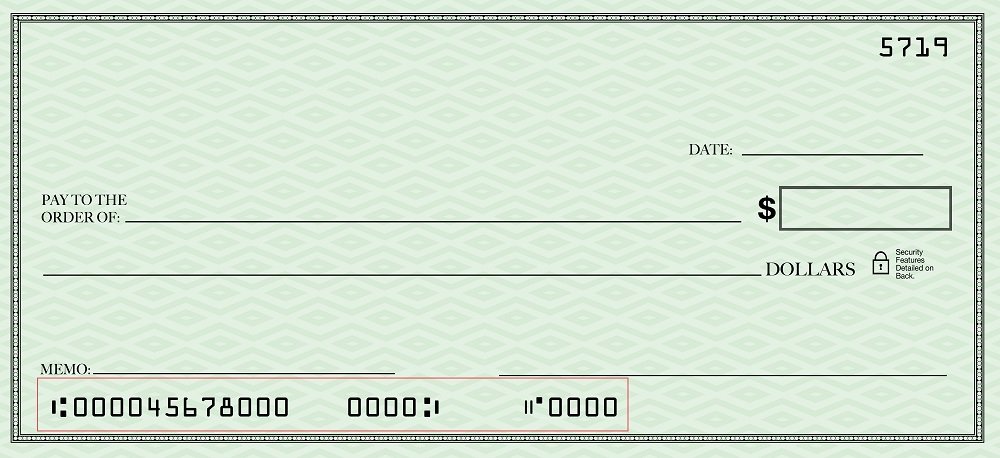
The MICR digital numbers are sensitive to the magnetic field and are printed using technology with a special ink recognition line to allow the readability of characters. The printed information can only be read by specific computers.
Summary
- The Magnetic Ink Character Recognition (MICR) line is a set of digital numbers that represent the bank routing number, account number, and check number.
- Magnetic ink character recognition uses magnetic ink or toner contained in a clear band to draw a set of digital numbers.
- The main advantage of the MICR line is that it facilitates the use of routing numbers, as well as detecting and preventing fraud.
How the Magnetic Ink Character Recognition Line Works
Banks and financial institutions use MICR technology to facilitate the processing of checksHow to Write a CheckEven though digital payments are continually gaining more market share, it’s still important to know how to write a check. This guide shows you step by step. It was established in the late 1950s by the American Bankers Association. The American National Standards Institute later adopted the MICR line as the standard industry tool for proofing.
The MICR number provides the means of converting the image of documents into a digitized format that allows computers to process and store the account number, routing number, check number, and numbers found in other financial documents. The MICR line is grouped in a specific order from right to left into six filed lines that include the amount, transaction code, domestic or account number, bank state branch (BSB) code, auxiliary domestic, and extra auxiliary domestic.
Magnetic ink or toner is used to print the MICR line on a check. The line contains a clear band – usually less than an inch deep and positioned along the bottom of a document. Specific computers can read and internalize the characters with magnetic ink even if they are covered with marks, such as bank stamps, signatures, or cancellation marks.
Banks usually use MICR line numbers to minimize exposure to check fraud by sending them to the central processing system at the close of a business day. The MICR fonts are either CMC-7 or E-13B, which are used globally. The former is commonly used in parts of South America and Europe, while the latter is mostly used in North America, the U.K, and Australia. Both inks can help computers recognize forged and counterfeit checks by failing to respond to the magnetic field.
Special Considerations
The use of magnetic ink character technology has other uses and is not limited to printing information on checks. For example, MICR technology is also used to print numerous financial documents in the U.S. Some of the financial documents that are printed using the MICR line include coupons, credit card invoices, and direct email.
An accreditation system is used to protect the efficiency of the clearing system. It is necessary because of the large volume of MICR printers in the market. If the MICR is not acceptable, the vast number of documents with MICR encoding can lead to serious financial security breakdown. The accreditation criterion focuses on page description language (PDL), magnetic toner, the print engine, the CMC-7 or E-13B fonts, and the operating system.
Advantages of the MICR Line
One of the most notable benefits of the MICR line is its ability to facilitate the use of routing numbers. In the U.S., banks and financial institutions use a specific nine-digit numerical code to process checks and clear funds.
The routing number is indicated on the front side of a check to represent the custodian bank with the account from which funds are to be drawn. Routing numbers are commonly applicable to direct deposits and wire transfersWire TransferWire transfer is the electronic transfer of funds between people or entities. It allows people in distant locations around the globe to safely transfer.
Using the MICR Line to Detect Fraud
The financial services sector is plagued with major cases of fraud. Fraud is internationally recognized as the deception and unlawful acquisition of money through deception or criminal activity.
There are numerous types of financial fraud, including tax fraud, pyramid schemesPyramid SchemeA pyramid scheme is an unsustainable business model in which original investors make money by recruiting others rather than by selling actual products or, tax fraud, counterfeit cards, identity fraud, bankruptcy fraud, and securities fraud. However, the MICR line comprises unique magnetic ink characters designed to detect and curb fraud. For example, the use of unique fonts and special magnetic ink in the MICR line makes it hard to forge checks.
One of the common bank criminal fraud laws is Section 3-407 of the Uniform Commercial Code (UCC). Financial contracts are regulated by the set of business laws provided in the UCC. The statute contains nine articles that tackle each aspect of banking and loans.
Losses caused by different types of fraud can be detected and reduced by using the MICR line. For example, a bank may incur a loss when it fails to verify the legitimacy of a photocopied check encashed by a fraudster.
Related Readings
CFI is the official provider of the Commercial Banking & Credit Analyst (CBCA)™Program Page - CBCAGet CFI's CBCA™ certification and become a Commercial Banking & Credit Analyst. Enroll and advance your career with our certification programs and courses. certification program, designed to transform anyone into a world-class financial analyst.
To keep learning and developing your knowledge of financial analysis, we highly recommend the additional resources below:
- International Bank Account Number (IBAN)International Bank Account Number (IBAN)The International Bank Account Number – typically referred to as IBAN – is a system of identification for bank accounts that is used across national borders. Internationally agreed upon, the IBAN system acts as a facilitator for communicating and processing international transactions
- Available BalanceAvailable BalanceAn account holder’s available balance is the amount of funds in their account that can be accessed immediately.
- Checking Accounts vs Savings AccountsChecking Accounts vs Savings AccountsA bank client can choose to open checking accounts vs savings accounts depending on several factors, such as purpose, ease of access, or other attributes. A checking account is a type of bank account that is used for everyday transactions. It is the most basic account that banks, credit unions, and small lenders offer.
- Online Payment CompaniesOnline Payment CompaniesOnline payment companies are responsible for handling online or internet-based methods of payment. Examples include PayPal, Alipay, and Google Pay.
-

Understanding the Overnight Interest Rate: A Comprehensive Guide
The overnight rate refers to the interest rate that depository institutions (e.g., banks or credit unionsCredit UnionA credit union is a type of financial organization that is owned and governed by it
-
Prime Rate Explained: Understanding Interest Rates for Businesses & Consumers
The term “prime rate” (also known as the prime lending rate or prime interest rate) refers to the interest rate that large commercial banks charge on loans and products held by their custo
finance
- Understanding the MICR Line on Checks: A Comprehensive Guide
- Advance-Decline Line: Understanding Market Momentum
- Advance-Decline Line: Understanding Market Sentiment & Trends
- Kagi Chart Explained: A Clearer View of Price Action
- Understanding the Security Market Line (SML) | Capital Asset Pricing Model
- Value Line Composite Index: Definition, History & Composition
- Understanding Below-the-Line Items in Financial Statements
- Revenue Recognition Principle: Definition & Importance
- Straight-Line Depreciation: Understanding the Basics
-
 Understanding NCREIF: Real Estate Investment Performance Data
NCREIF is an acronym of the National Council of Real Estate Investment Fiduciaries, and it operates as a non-profit entity. The main aim of the NCREIF is to inform concerned parties on the actual perf...
-
 Operating Ratio: Definition, Calculation & Importance
The operating ratio is a measure of efficiency that is used by management to determine day-to-day operational performance. This metric compares operating expenses, also known as OPEX, to net sales. Th...