
Understanding Non-Banking Financial Companies (NBFCs): A Comprehensive Guide
A non-banking financial company, also known as non-banking financial institutions, are companies that offer financial services and products but are not officially recognized as a bank with a full banking license.
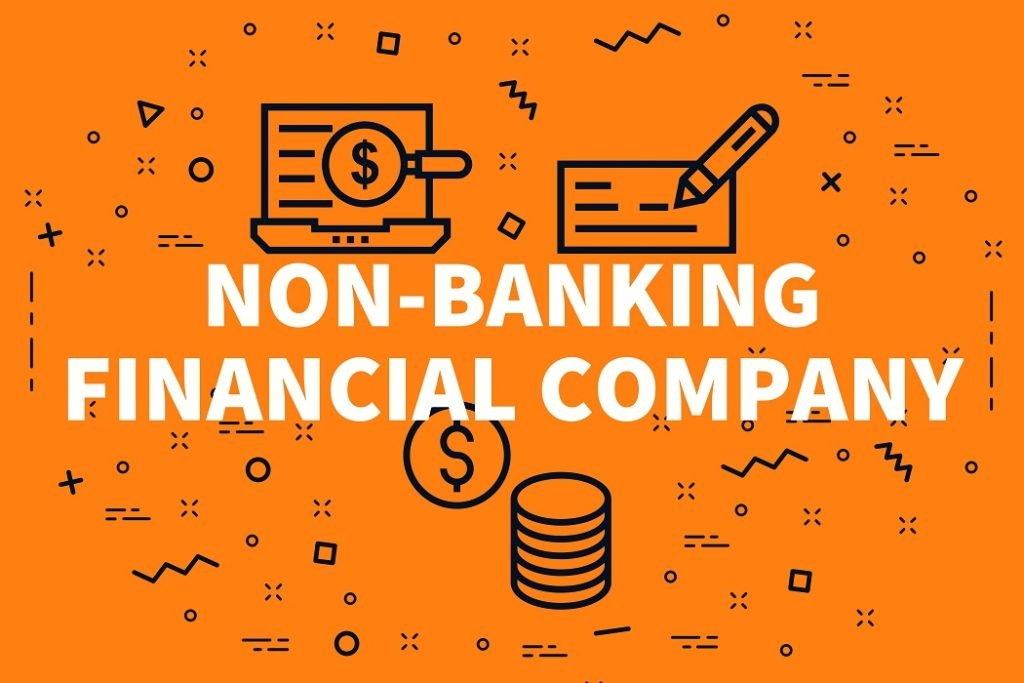
Generally, the distinction between a recognized bank and a non-banking financial company is the fact that non-bank companies cannot accept traditional demand deposits. Demand deposits are funds held in a bank account that can be withdrawn at any time, usually in the form of a checking accountChecking AccountA checking account is a type of deposit account that individuals open at financial institutions for the purpose of withdrawing and depositing money. Also known as a transactional or demand account, a checking account is very liquid. To put it simply, it provides users a quick way of accessing their money..
Non-Banking Financial Company Explained
Non-banking financial companies are not subject to banking regulations or the usual oversight by federal authorities that are usually followed by recognized banks. Types of companies that are considered NBFCs are the following:
- Risk-pooling institutions
- Life and health insurance companiesLife and Health InsurersLife and health (L&H) insurers are companies that provide coverage on the risk of loss of life and medical expenses incurred from illness or injuries. The customer - the purchaser of the insurance policy - pays an insurance premium for the coverage.
- Property and casualty insurance companies
- Reinsurance companiesReinsurance CompaniesReinsurance companies, also known as reinsurers, are companies that provide insurance to insurance companies. In other words, reinsurance companies are companies that receive insurance liabilities from insurance companies.
- Specialty insurance companies
- Savings institutions
- Pension funds
- Mutual funds
- Money-market funds
- Private equity funds
- Hedge fundsHedge FundA hedge fund, an alternative investment vehicle, is a partnership where investors (accredited investors or institutional investors) pool
- Venture capital funds
- Market makers
- Broker-dealer institutions
- Specialized lenders
- Real estate lenders
- Leasing companies
- Payday lenders
- General financial service providers
- Investment banking companies
- Credit rating agencies
- Management consulting companies
- Financial advisors
- Securities traders and brokers
NBFCs in the United States generally fall under the regulations of the Dodd-Frank Wall Street Reform and Consumer Protection ActDodd-Frank ActThe Dodd-Frank Act, or the Wall Street Reform and Consumer Protection Act of 2010, was enacted into law during the Obama administration as a response to the financial crisis of 2008. It sought to introduce significant changes to financial regulation and create new government agencies tasked with implementing the various clauses in the law.. The legislation was passed in 2010 among the broad financial reform within the United States as a response to the 2008 Global Financial Crisis.
The purpose of the Dodd-Frank Act was to reform the specific sectors of the financial system that were at the root of the financial crisis. The companies included banks, mortgage lenders, and credit rating agencies.
Effects of the 2008 Global Financial Crisis
NBFCs before the Dodd-Frank Act were referred to as “shadow banks” to describe them as the fast-expanding plethora of institutions that contributed to the easy-money lending environment. The subprime mortgage meltdown and financial crisis that followed was a direct product of the “shadow banks” becoming too prominent and lacking enough regulation.
Many very large and prominent investment companies and brokerages were involved with the activities that led to the financial crisis. After the financial crisis, traditional banks found themselves under an intense regulatory microscope. It led to a large contraction of lending activities, as regulations for lending and other credit activities tightened. However, the demand for borrowing remained the same, and NBFCs were able to fill the void of funding.
After the 2008 Global Financial Crisis, NBFCs were able to grow very quickly, and in various industries.
Differences Among Countries
The existence of NBFCs is more prominent in some geographical locations than others. For example, in Canada, NBFCs are far less prominent than in the U.S. It is due to different competitive environments between the two countries. Canada’s banking industry is much more concentrated, resembling an oligopolyOligopolyThe term oligopoly refers to an industry where there are only a small number of firms operating. In an oligopoly, no single firm enjoys a.
An oligopoly is an industry that is dominated by a small group of large companies. The companies exercise strong pricing power and more market control than other companies normally would. Canadian banks are fully diversified and provide a full range of financial services, including most functions that a non-banking financial company would normally perform, such as insurance, wealth management, investment banking, and brokerage services.
In contrast, the U.S. banking industry is far more fragmented. A fragmented industry is one where the companies compete heavily, and there is no group of companies that dominate. It means that there is much more competition among smaller companies and more opportunities for NBFCs to flourish.
Controversy with NBFCs
Many would argue that NBFCs are essential services that provide other services that are not met by traditional banks and are able to specialize in the services and perform better. Such institutions help meet the demand for credit required by individuals and businesses that banks are not able to provide.
However, the fact that NBFCs are not regulated as heavily as banks pose an additional risk. Such a risk was highlighted during the 2008 Global Financial Crisis when the lending practices of the companies went unchecked and resulted in a disastrous outcome.
Going forward, it is clear that the companies are necessary to meet the demands of the financial markets. However, more regulatory oversight should be instituted to make sure that poor practices are not being followed as they were in 2008.
More Resources
CFI is the official provider of the Commercial Banking & Credit Analyst (CBCA)™Program Page - CBCAGet CFI's CBCA™ certification and become a Commercial Banking & Credit Analyst. Enroll and advance your career with our certification programs and courses. certification program, designed to transform anyone into a world-class financial analyst.
In order to help you become a world-class financial analyst and advance your career to your fullest potential, these additional resources will be very helpful:
- Pension FundPension FundA pension fund is a fund that accumulates capital to be paid out as a pension for employees when they retire at the end of their careers.
- Pooled FundsPooled FundsPooled funds is a term used to collectively refer to a set of money from individual investors combined, i.e., "pooled" together for investment purposes
- Private Equity FundsPrivate Equity FundsPrivate equity funds are pools of capital to be invested in companies that represent an opportunity for a high rate of return. They come with a fixed
- Property and Casualty InsurersProperty and Casualty InsurersProperty and casualty (P&C) insurers are companies that provide coverage on assets (e.g., house, car, etc.) and also liability insurance for accidents, injuries, and damage to other people or their belongings.
-

Understanding Auditors: Roles, Responsibilities & Audit Processes
An auditor is a person or a firm assigned to perform an audit on an organization. An audit is a structured, methodical process that includes an examination of books, accounts, records, or various docu
-

Understanding Clawbacks: Protecting Stakeholders from Failed Performance
What happens when a person promises to perform and then fails to deliver on their promises? Or what happens when it is found that a performance reportDue Diligence ReportExample due diligence report o
finance
- Amalgamation Explained: Mergers & Corporate Combinations
- Understanding Financial Distress: Causes, Consequences & Bankruptcy
- Financial Guarantee: Definition, Types & How They Work
- Financial Leverage Explained: Using Debt for Growth
- Understanding Financial Statement Normalization: A Comprehensive Guide
- Understanding Private Companies: Ownership, Structure, and Types
- Understanding Public Companies: A Comprehensive Guide
- Understanding the Role of an Accountant: Key Responsibilities & Importance
- Understanding Associate Companies: Definition & Ownership
-
 Understanding Financial Statement Disclosures: A Comprehensive Guide
Financial statement disclosures put the numbers in context. A company's financial statements are supposed to provide a picture of its financial condition. But without context, the stateme...
-
 Acquirer Definition: Understanding Corporate Acquisitions
An acquirer is a registered company that purchases a portion of, or all the rights to, another company. The acquiring company takes over the management of another company by obtaining a majority stake...