
Non-Performing Assets (NPAs): Definition & Implications
A non-performing asset (NPA) is a classification used by financial institutions for loans and advances on which the principal is past due and on which no interest paymentsInterest PayableInterest Payable is a liability account shown on a company’s balance sheet that represents the amount of interest expense that has accrued have been made for a period of time. In general, loans become NPAs when they are outstanding for 90 days or more, though some lenders use a shorter window in considering a loan or advance past due.

A loan is classified as a non-performing asset when it is not being repaid by the borrower. It results in the asset no longer generating income for the lender or bank because the interest is not being paid by the borrower. In such a case, the loan is considered “in arrears.”
Sub-Classifications for Non-Performing Assets (NPAs)
Lenders usually provide a grace period before classifying an asset as non-performing. Afterward, the lender or bank will categorize the NPA into one of the following sub-categories:
1. Standard Assets
They are NPAs that have been past due for anywhere from 90 days to 12 months, with a normal risk level.
2. Sub-Standard Assets
They are NPAs that have been past due for more than 12 months. They have a significantly higher risk level, combined with a borrower that has less than ideal credit. Banks usually assign a haircutHaircutIn finance, haircut refers to the reduction applied to the value of an asset for the purpose of calculating capital requirements, margins, or collateral level. It is the difference between the market value of an asset used as collateral and the amount of loan given against it. (reduction in market value) to such NPAs because they are less certain that the borrower will eventually repay the full amount.
3. Doubtful Debts
Non-performing assets in the doubtful debts category have been past due for at least 18 months. Banks generally have serious doubts that the borrower will ever repay the full loan. This class of NPA seriously affects the bank’s own risk profile.
4. Loss Assets
These are non-performing assets with an extended period of non-payment. With this class, banks are forced to accept that the loan will never be repaid, and must record a loss on their balance sheetBalance SheetThe balance sheet is one of the three fundamental financial statements. The financial statements are key to both financial modeling and accounting.. The entire amount of the loan must be written off completely.
How NPAs Work
Loans, as addressed above, are not switched into the NPA category until a considerable period of non-payment has passed. Lenders consider all of the factors that may make a borrower late on making interest and principal paymentsPrincipal PaymentA principal payment is a payment toward the original amount of a loan that is owed. In other words, a principal payment is a payment made on a loan that reduces the remaining loan amount due, rather than applying to the payment of interest charged on the loan. and extend a grace period.
After a month or so, banks typically consider a loan overdue. It is not until the end of the grace period (typically, 90 days of non-payment) that the loan then becomes a non-performing asset.
Banks may attempt to collect the outstanding debt by foreclosing on whatever property or asset has been used to secure the loan. For example, if an individual takes out a second mortgage and that loan becomes an NPA, the bank will generally send notice of foreclosure on the home because it is being used as collateral for the loan.
Significance of NPAs
It is important for both the borrower and the lender to be aware of performing versus non-performing assets. For the borrower, if the asset is non-performing and interest payments are not made, it can negatively affect their credit and growth possibilities. It will then hamper their ability to obtain future borrowing.
For the bank or lender, interest earned on loans acts as a main source of income. Therefore, non-performing assets will negatively affect their ability to generate adequate income and thus, their overall profitability. It is important for banks to keep track of their non-performing assets because too many NPAs will adversely affect their liquidity and growth abilities.
Non-performing assets can be manageable, but it depends on how many there are and how far they are past due. In the short term, most banks can take on a fair amount of NPAs. However, if the volume of NPAs continues to build over a period of time, it threatens the financial health and future success of the lender.
Related Readings
CFI is the official provider of the Financial Modeling and Valuation Analyst (FMVA)™Become a Certified Financial Modeling & Valuation Analyst (FMVA)®CFI's Financial Modeling and Valuation Analyst (FMVA)® certification will help you gain the confidence you need in your finance career. Enroll today! certification program, designed to transform anyone into a world-class financial analyst.
To keep learning and developing your knowledge of financial analysis, we highly recommend the additional CFI resources below:
- AmortizationAmortizationAmortization refers to the process of paying off a debt through scheduled, pre-determined installments that include principal and interest
- Loan CovenantLoan CovenantA loan covenant is an agreement stipulating the terms and conditions of loan policies between a borrower and a lender. The agreement gives lenders leeway in providing loan repayments while still protecting their lending position. Similarly, due to the transparency of the regulations, borrowers get clear expectations of
- Probability of DefaultProbability of DefaultProbability of Default (PD) is the probability of a borrower defaulting on loan repayments and is used to calculate the expected loss from an investment.
- Uniform Rules for Collections (URC)Uniform Rules for Collections (URC)The Uniform Rules for Collections is a set of rules that help assist in the process of collecting debts or owed money or assets. The URCs were established – or proposed – by the International Chamber of Commerce (ICC), a worldwide organization that serves to promote and facilitate business interests and trade
-

Annuity Loans: Access Retirement Funds Without Cashing Out
An annuity loan is a type of loan an annuity holder borrows money against the cash value of the annuity contract. This type of loan allows individuals to access their retirement funds without go
-
What is a Stock Loan?
A stock loan is a type of transaction that commonly occurs between two different stock brokers. This type of transaction is also known as a securities loan. Here are the basics of a stock loan a
finance
- Collateral Explained: What It Is & How It Works
- FHA Loans: Your Guide to Government-Backed Mortgages
- Understanding Interest: Costs & Rewards of Borrowing and Lending
- Leveraged Loans: Definition, Features & Who Uses Them
- Understanding Loans: Definition, Types & How They Work
- Loan Servicing Explained: What It Is & How It Works
- Non-Performing Loans (NPL): Definition, Causes & Impact
- Asset Conversion Loans: A Quick Guide for Businesses
- Starter Loans: Build Credit with Low or No Credit History
-
 Amortization Explained: Understanding Debt Repayment & Schedules
Amortization refers to the process of paying off a debt through scheduled, pre-determined installments that include principal and interestDebt ScheduleA debt schedule lays out all of the debt a busine...
-
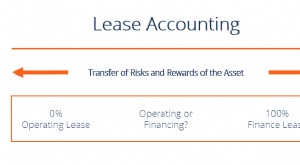 Understanding Leases: Types, Classifications, and Key Concepts
Leases are contracts in which the property/asset owner allows another party to use the property/asset in exchange for something, usually money or other assets. The two most common types of leases...