
Pound Sterling (GBP): History, Value & Key Facts
The Pound Sterling refers to the national currency of the Isle of Man, the United Kingdom, South Sandwich Islands, Gibraltar, South Georgia, and the British Antarctic Territory. It is the oldest currency to be in constant use. It is also known as the sterling or pound and abbreviated as GBP.
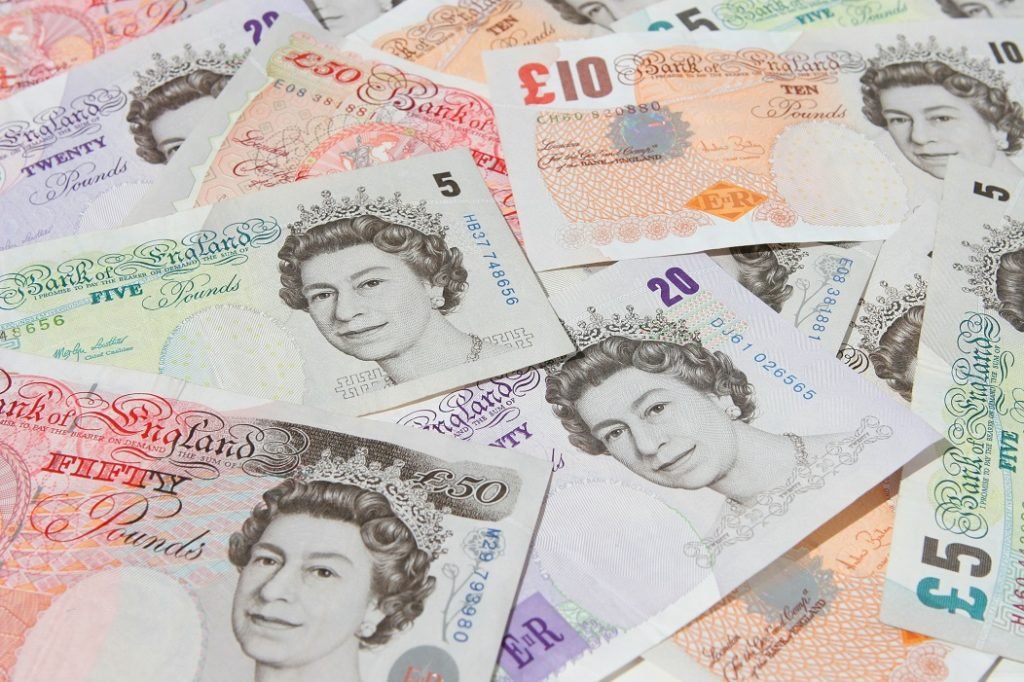
GBP is the fourth most commonly exchanged currency on the forex market. Together with the US dollar, Japanese yen, the euro, and the Chinese yuan, the currencies create a basket that measures the worth of the exclusive drawing rights of the International Monetary Fund (IMF)International Monetary Fund (IMF)The International Monetary Fund (IMF) is an institution of the United Nations that sets standards for the global economy with the aim of.
The Bank of England issues the pound sterling, prints its own banknotes, and controls the issuance of banknotes by private banks in Northern Ireland and Scotland. Sterling notes issued by other jurisdictions are not governed by the Bank of England.
Currently, four denominations of notes are in circulation – 5, 10, 20, and 50 GBP. The polymer printed notes include 5 GBP, 10 GBP, and 20 GBP. Coins come in 1, 2, 5, 10, 20, and 50 pence, 1 GBP and 2 GBP. 100 pence is equivalent to 1 pound.
Summary
- The Pound Sterling refers to the national currency of the Isle of Man, the United Kingdom, South Sandwich Islands, Gibraltar, the British Antarctic Territory, and South Georgia.
- GBP is the fourth most commonly exchanged currency on the forex market, only behind the euro, the US dollar, and the Japanese yen.
- The Bank of England is authorized to set the British pound’s monetary policy by regulating the supply of money.
History of the Pound Sterling
The name of the pound sterling is derived from the Latin word “libra,” which corresponds to balance and weight. The Bank of England first issued the pound banknotes more than 300 years ago, with the notes undergoing several changes over the years. The pound coin first appeared in 1489, during the rule of Henry VII. Pound notes started to circulate in England in 1694, shortly after the establishment of the Bank of EnglandBank of EnglandThe Bank of England (BoE) is the central bank of the United Kingdom and a model on which most central banks around the world are built. Since, and the notes were originally handwritten. The pound worked in its complex scheme of pennies and shillings until 1971, when the decimal system was introduced.
Coin minting was mechanized in 1660, and features such as side lettering were introduced in its design to help eliminate money-clipping. GBP continues to exist independently today, although much of the rest of Europe already uses the euro as a common currency.
The United Kingdom allowed the British pound to float freely in 1971, among other currencies. Such a decision allowed market factors to decide the value of the currency rather than artificial pegs. The U.K. considered attaching the value of the British pound to the deutsche mark in 1990, but soon afterward discarded that notion. In 2002, after the euro became the shared currency of most member states of the European UnionEuropean Union (EU)The European Union (EU) is a unified international organization that governs the economic, political, and social policies of 27 member, the United Kingdom opted not to follow it. Instead, the U.K. retained GBP as its national currency.
Pound Sterling and Monetary Policy
The Bank of England is authorized by the U.K. government to set the British pound’s monetary policy by regulating the supply of money. It exercises control over the issuance of banknotes in Wales and England and controls the flow of banknotes issued by seven approved banks in Northern Ireland and Scotland.
Apart from banknotes minted by separate issuers in Northern Ireland and Scotland, the Royal Mint issues all the U.K. coins and coins of other nations as well. The Royal Mint, an independent organization, is owned by the Treasury.
In the U.K. Crown Dependencies, the Bank of England does not govern the Jersey pound, the Manx pound, and the Guernsey pound and are distributed separately. However, they are held at a set exchange rate by their national governments, and the Bank of England notes remain in use on the islands, creating a kind of one-way legally recognized currency union.
More Resources
CFI offers the Commercial Banking & Credit Analyst (CBCA)™Program Page - CBCAGet CFI's CBCA™ certification and become a Commercial Banking & Credit Analyst. Enroll and advance your career with our certification programs and courses. certification program for those looking to take their careers to the next level. To keep learning and developing your knowledge base, please explore the additional relevant resources below:
- Fixed vs. Pegged Exchange RatesFixed vs. Pegged Exchange RatesForeign currency exchange rates measure one currency's strength relative to another. The strength of a currency depends on a number of factors such as its inflation rate, prevailing interest rates in its home country, or the stability of the government, to name a few.
- United States Dollar (USD)United States Dollar (USD)The United States Dollar refers to the national currency of the U.S and is represented by the ISO code USD and is often abbreviated as US$.
- Sterling Overnight Interbank Average Rate (SONIA)Sterling Overnight Interbank Average Rate (SONIA)Sterling Overnight Interbank Average Rate (SONIA) is an unsecured overnight rate for wholesale funds for all sterling-denominated unsecured
- Swiss Franc (CHF)Swiss Franc (CHF)The Swiss franc refers to Switzerland’s national currency and is represented by ISO code CHF. It was formally recognized as Switzerland's
-
Acid-Test Ratio: Understanding Your Company's Short-Term Liquidity
The Acid-Test Ratio, also known as the quick ratioQuick RatioThe Quick Ratio, also known as the Acid-test, measures the ability of a business to pay its short-term liabilities with assets readily conv
-

Advertising to Sales Ratio: Measuring Ad Effectiveness & ROI
The advertising to sales ratio, also called the “A to S” for short, measures the effectiveness, or how successful, a company’s advertising strategiesAIDA ModelThe AIDA model, which s
finance
- Current Ratio: Definition, Calculation & Financial Health
- Understanding Forward Rates: A Comprehensive Guide
- Hope Credit: Understanding Your Post-Secondary Education Tax Credit
- Libra Cryptocurrency: A Comprehensive Overview
- Modigliani-Miller Theorem: Understanding Capital Structure & Firm Value
- Understanding NCREIF: Real Estate Investment Performance Data
- Operating Ratio: Definition, Calculation & Importance
- Understanding the Overnight Interest Rate: A Comprehensive Guide
- Prime Rate Explained: Understanding Interest Rates for Businesses & Consumers
-
![Rule of 72: Calculate Investment Doubling Time | [Your Brand Name]](https://www.etffin.com/article/uploadfiles/202110/2021100815281678_S.png) Rule of 72: Calculate Investment Doubling Time | [Your Brand Name]
Rule of 72: Calculate Investment Doubling Time | [Your Brand Name]In finance, the Rule of 72 is a formula that estimates the amount of time it takes for an investment to double in value, earning a fixed annual rate of returnRate of ReturnThe Rate of Return (ROR) is ...
-
 Nifty 50: History, Significance & Key Stocks - A Comprehensive Guide
The Nifty 50 refers to the fifty most popular large-cap stocks that traded at high valuations in the 1960s and 1970s. They included household names such as Xerox (XRX), IBM, Polaroid and Coca-Cola (...