
Rights Issue Explained: A Guide for Shareholders
A rights issue is an offering of rights to the existing shareholders of a company that gives them an opportunity to buy additional sharesStockholders EquityStockholders Equity (also known as Shareholders Equity) is an account on a company's balance sheet that consists of share capital plus directly from the company at a discounted price rather than buying them in the secondary marketSecondary MarketThe secondary market is where investors buy and sell securities from other investors. Examples: New York Stock Exchange (NYSE), London Stock Exchange (LSE).. The number of additional shares that can be bought depends on the existing holdings of the shareowners.
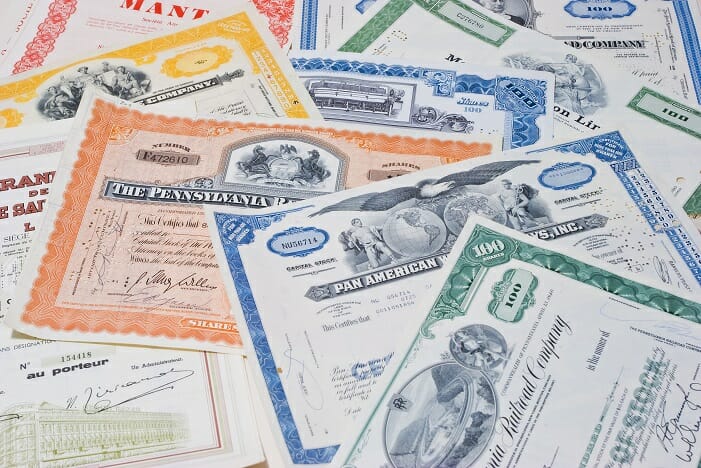
Features of a Rights Issue
- Companies undertake a rights issue when they need cash for various objectives. The process enables the company to raise money without incurring underwritingUnderwritingIn investment banking, underwriting is the process where a bank raises capital for a client (corporation, institution, or government) from investors in the form of equity or debt securities. This article aims to provide readers with a better understanding of the capital raising or underwriting process fees.
- A rights issue gives preferential treatment to existing shareholders, where they are given the right (not obligation) to purchase shares at a lower price on or before a specified date.
- Existing shareholders also enjoy the right to trade with other interested market participants until the date at which the new shares can be purchased. The rights are traded in a similar way as normal equity shares.
- The number of additional shares that can be purchased by the shareholders is usually in proportion to their existing shareholding.
- Existing shareholders can also choose to ignore the rights; however, if they do not purchase additional shares, then their existing shareholding will be diluted post issue of additional shares.
Reasons for a Rights Issue
- When a company is planning an expansion of its operations, it may require a huge amount of capital. Instead of opting for debtSenior and Subordinated DebtIn order to understand senior and subordinated debt, we must first review the capital stack. Capital stack ranks the priority of different sources of financing. Senior and subordinated debt refer to their rank in a company's capital stack. In the event of a liquidation, senior debt is paid out first, they may like to go for equity to avoid fixed payments of interest. To raise equity capital, a rights issue may be a faster way to achieve the objective.
- A project where debt/loan funding may not be available/suitable or expensive usually makes a company raise capital through a rights issue.
- Companies looking to improve their debt-to-equity ratio or looking to buy a new company may opt for funding via the same route.
- Sometimes troubled companies may issue shares to pay off debt in order to improve their financial health.
Example of a Rights Issue
Let’s say an investor owns 100 shares of Arcelor Mittal and the shares are trading at $10 each. The company announces a rights issue in the ratio of 2 for 5, i.e., each investor holding 5 shares will be eligible to buy 2 new shares. The company announces a discounted price of, for example, $6 per share. It means that for every 5 shares (at $10 each) held by an existing shareholder, the company will offer 2 shares at a discounted price of $6.
- Investor’s Portfolio Value (before rights issue) = 100 shares x $10 = $ 1,000
- Number of right shares to be received = (100 x 2/5) = 40
- Price paid to buy rights shares = 40 shares x $6 = $ 240
- Total number of shares after exercising rights issue = 100 + 40 = 140
- Revised Value of the portfolio after exercising rights issue = $ 1,000 + $240 = $1,240
- Should be price per share post-rights issue = $1,240 / 140 = $8.86
According to theory, the price of the share after the rights issue should be $8.86, but that is not how the markets behave. An uptrend in the share price will benefit the investor, while if the price falls below $8.86, the investor will lose money. The decline in share price can be attributed to several factors. Here are some of them:
- It gives a signal to the market that the company may be struggling, which can be the reason the company issued shares at a discount.
- By issuing more shares, there is dilution in the value of available shares.
Conclusion
- Share capital increases depending on the rights issue ratio.
- The company gets positive cash flow (from financing), which can be used to improve its operations.
- Effective EPSEarnings Per Share (EPS)Earnings per share (EPS) is a key metric used to determine the common shareholder's portion of the company’s profit. EPS measures each common share's profit, book value, and other per-share metrics decline because of the higher number of shares (see diluted EPSValuationFree valuation guides to learn the most important concepts at your own pace. These articles will teach you business valuation best practices and how to value a company using comparable company analysis, discounted cash flow (DCF) modeling, and precedent transactions, as used in investment banking, equity research,).
- Market price gets adjusted (after book close) after the issuance of rights shares.
Additional Resources
Increase your knowledge with the following CFI resources:
- Capital Raising ProcessCapital Raising ProcessThis article is intended to provide readers with a deeper understanding of how the capital raising process works and happens in the industry today. For more information on capital raising and different types of commitments made by the underwriter, please see our underwriting overview.
- Offering MemorandumOffering MemorandumAn Offering Memorandum is also known as a private placement memorandum. It is used as a tool to attract external investors.
- Initial Public OfferingInitial Public Offering (IPO)An Initial Public Offering (IPO) is the first sale of stocks issued by a company to the public. Prior to an IPO, a company is considered a private company, usually with a small number of investors (founders, friends, family, and business investors such as venture capitalists or angel investors). Learn what an IPO is
- Original Issue DiscountOriginal Issue Discount (OID)An original issue discount (OID) is a type of debt instrument. Often a bond, OID's are sold at a lower value than face value when issued
-

Understanding Forfeited Shares: Causes, Consequences, and Rights
Forfeited shares often result from when investors in equity shares fail to comply with pre-specified purchase agreements or restrictions. The end result of share forfeiture is that the shareholder no
-

Understanding Voting Shares: Your Right to Participate in Company Decisions
Voting shares are shares of a company that entitle the shareholder to vote on key issues of the company. It is generally one vote per share. The shares represent an ownership interest in a corporation
finance
- Rights Offerings: Understanding Shareholder Rights and Stock Purchases
- Authorized Stock: Understanding Share Issuance Limits
- CCPPO Shares Explained: Understanding Cumulative, Convertible, & Participating Preferred Stock
- Understanding Junior Equity: Risks and Returns
- Outstanding Shares: Definition & Importance for Investors
- Preferred Shares: A Comprehensive Guide for Investors
- Understanding Registration Rights: Investor Protection & SEC Compliance
- Non-Renounceable Rights: Understanding Shareholder Options
- L&T Finance Rights Issue: Dates, Details & Shareholding Ratio
-
 Common vs. Preferred Stock: Understanding the Differences
Potential investors who are looking to acquire a stake or ownership in a company can choose to purchase between common vs preferred shares. Companies typically issue and sell shares to raise funds for...
-
 Dutch Auction Explained: How It Works & When to Use It
A Dutch auction is a price discovery process in which the auctioneer starts with the highest asking price and lowers it until it reaches a price level where the bids received will cover the entir...