
Preferred Shares: A Comprehensive Guide for Investors
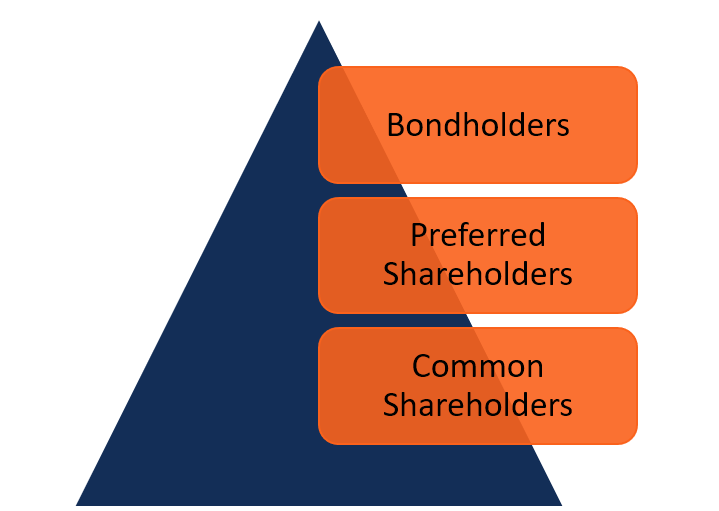
Preferred shares (also known as preferred stock or preference shares) are securities that represent ownership in a corporationCorporationA corporation is a legal entity created by individuals, stockholders, or shareholders, with the purpose of operating for profit. Corporations are allowed to enter into contracts, sue and be sued, own assets, remit federal and state taxes, and borrow money from financial institutions., and that have a priority claim over common shares on the company’s assets and earnings. The shares are more senior than common stock but are more junior relative to bondsBondsBonds are fixed-income securities that are issued by corporations and governments to raise capital. The bond issuer borrows capital from the bondholder and makes fixed payments to them at a fixed (or variable) interest rate for a specified period. in terms of claim on assets. Holders of preferred stock are also prioritized over holders of common stockCommon StockCommon stock is a type of security that represents ownership of equity in a company. There are other terms – such as common share, ordinary share, or voting share – that are equivalent to common stock. in dividend payments.
Features of Preferred Shares
Preferred shares have a special combination of features that differentiate them from debt or common equity. Although the terms may vary, the following features are common:
- Preference in assets upon liquidation: The shares provide their holders with priority over common stock holders to claim the company’s assets upon liquidation.
- Dividend payments: The shares provide dividend payments to shareholders. The payments can be fixed or floating, based on an interest rate benchmark such as LIBORLIBORLIBOR, which is an acronym of London Interbank Offer Rate, refers to the interest rate that UK banks charge other financial institutions for.
- Preference in dividends: Preferred shareholders have a priority in dividend payments over the holders of the common stock.
- Non-voting: Generally, the shares do not assign voting rights to their holders. However, some preferred shares allow its holders to vote on extraordinary events.
- Convertibility to common stock: Preferred shares may be converted to a predetermined number of common shares. Some preferred shares specify the date at which the shares can be converted, while others require approval from the board of directorsBoard of DirectorsA board of directors is a panel of people elected to represent shareholders. Every public company is required to install a board of directors. for the conversion.
- Callability: The shares can be repurchased by the issuer at specified dates.
Types of Preferred Stock
Preferred stock is a very flexible type of security. They can be:
- Convertible preferred stock: The shares can be converted to a predetermined number of common shares.
- Cumulative preferred stock: If an issuer of shares misses a dividend payment, the payment will be added to the next dividend payment.
- Exchangeable preferred stock: The shares can be exchanged for some other type of security.
- Perpetual preferred stock: There is no fixed date on which the shareholders will receive back the invested capital.
Advantages of Preferred Shares
Preferred shares offer advantages to both issuers and holders of the securities. The issuers may benefit in the following way:
- No dilution of control: This type of financing allows issuers to avoid or defer the dilution of control, as the shares do not provide voting rights or limit these rights.
- No obligation for dividends: The shares do not force issuers to pay dividends to shareholders. For example, if the company does not have enough funds to pay dividends, it may just defer the payment.
- Flexibility of terms: The company’s management enjoys the flexibility to set up almost any terms for the shares.
Preferred shares can also be an attractive alternative for investors. The investors may benefit in the following way:
- Secured position in case of the company’s liquidation: Investors with preferred stock are in a more secure position relative to common shareholders in the event of liquidation, because they have a priority in claiming the company’s assets.
- Fixed income: These shares provide their shareholders with a fixed income in the form of dividend payments.
Related Readings
CFI is the official provider of the global Financial Modeling & Valuation Analyst (FMVA)™Become a Certified Financial Modeling & Valuation Analyst (FMVA)®CFI's Financial Modeling and Valuation Analyst (FMVA)® certification will help you gain the confidence you need in your finance career. Enroll today! certification program, designed to transform anyone into a world-class financial analyst. To help you advance your career, check out the additional CFI resources below:
- Senior and Subordinated DebtSenior and Subordinated DebtIn order to understand senior and subordinated debt, we must first review the capital stack. Capital stack ranks the priority of different sources of financing. Senior and subordinated debt refer to their rank in a company's capital stack. In the event of a liquidation, senior debt is paid out first
- Retained EarningsRetained EarningsThe Retained Earnings formula represents all accumulated net income netted by all dividends paid to shareholders. Retained Earnings are part
- Stakeholder vs. ShareholderStakeholder vs. ShareholderThe terms “stakeholder” and “shareholder” are often used interchangeably in the business environment. Looking closely at the meanings of stakeholder vs shareholder, there are key differences in usage. Generally, a shareholder is a stakeholder of the company while a stakeholder is not necessarily a shareholder.
- Stockholders EquityStockholders EquityStockholders Equity (also known as Shareholders Equity) is an account on a company's balance sheet that consists of share capital plus
-

Corporate Bonds: A Comprehensive Guide to Investing
Corporate bonds are issued by corporationsCorporationA corporation is a legal entity created by individuals, stockholders, or shareholders, with the purpose of operating for profit. Corporations are a
-

Understanding Cumulative Dividends: A Guide for Investors
A cumulative dividend is a required fixed distribution of earnings made to shareholders. Preferred sharesPreferred SharesPreferred shares (preferred stock, preference shares) are the class of stock ow
finance
- Redeemable Preference Shares: A Comprehensive Guide
- A-Shares Explained: Understanding Preferred Stock & Share Classes
- Authorized Shares: Understanding a Company's Issuance Limit
- CCPPO Shares Explained: Understanding Cumulative, Convertible, & Participating Preferred Stock
- Common vs. Preferred Stock: Understanding the Differences
- Understanding Forfeited Shares: Causes, Consequences, and Rights
- Outstanding Shares: Definition & Importance for Investors
- Understanding Voting Shares: Your Right to Participate in Company Decisions
- Understanding Anti-Dilution Provisions: Protecting Investor Equity
-
 Authorized Stock: Understanding Share Issuance Limits
Authorized stock or authorized shares refer to the maximum number of shares a corporation is legally permitted to issue according to its corporate bylawsCompany BylawsCompany bylaws are the rules that...
-
 Understanding Company Bylaws: A Comprehensive Guide
Company bylaws are the rules that govern how a company is run and one of the first items to be established by the board of directorsBoard of DirectorsA board of directors is a panel of people elected ...