
Understanding Financial Risk: A Comprehensive Guide
In finance, risk is the probability that actual results will differ from expected results. In the Capital Asset Pricing Model (CAPM)Capital Asset Pricing Model (CAPM)The Capital Asset Pricing Model (CAPM) is a model that describes the relationship between expected return and risk of a security. CAPM formula shows the return of a security is equal to the risk-free return plus a risk premium, based on the beta of that security, risk is defined as the volatility of returns. The concept of “risk and return” is that riskier assets should have higher expected returns to compensate investors for the higher volatility and increased risk.

Types of Risk
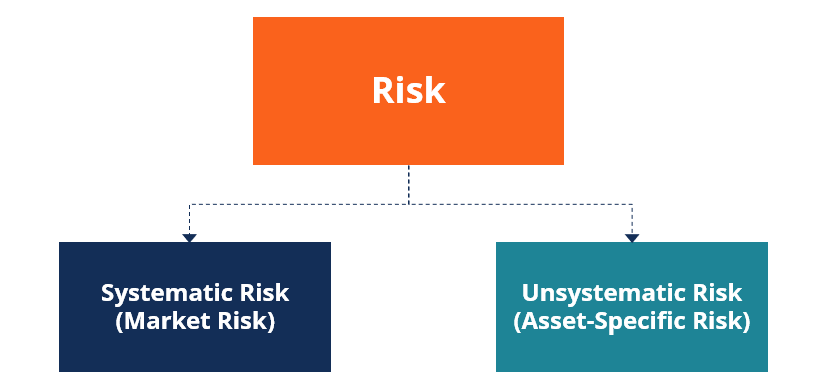
Broadly speaking, there are two main categories of risk: systematic and unsystematic. Systematic risk is the market uncertainty of an investment, meaning that it represents external factors that impact all (or many) companies in an industry or group. Unsystematic risk represents the asset-specific uncertainties that can affect the performance of an investment.
Below is a list of the most important types of risk for a financial analyst to consider when evaluating investment opportunities:
- Systematic Risk – The overall impact of the market
- Unsystematic Risk – Asset-specific or company-specific uncertainty
- Political/Regulatory Risk – The impact of political decisions and changes in regulation
- Financial Risk – The capital structure of a company (degree of financial leverage or debt burden)
- Interest Rate Risk – The impact of changing interest rates
- Country Risk – Uncertainties that are specific to a country
- Social Risk – The impact of changes in social norms, movements, and unrest
- Environmental Risk – Uncertainty about environmental liabilities or the impact of changes in the environment
- Operational Risk – Uncertainty about a company’s operations, including its supply chain and the delivery of its products or services
- Management Risk – The impact that the decisions of a management team have on a company
- Legal Risk – Uncertainty related to lawsuits or the freedom to operate
- Competition – The degree of competition in an industry and the impact choices of competitors will have on a company
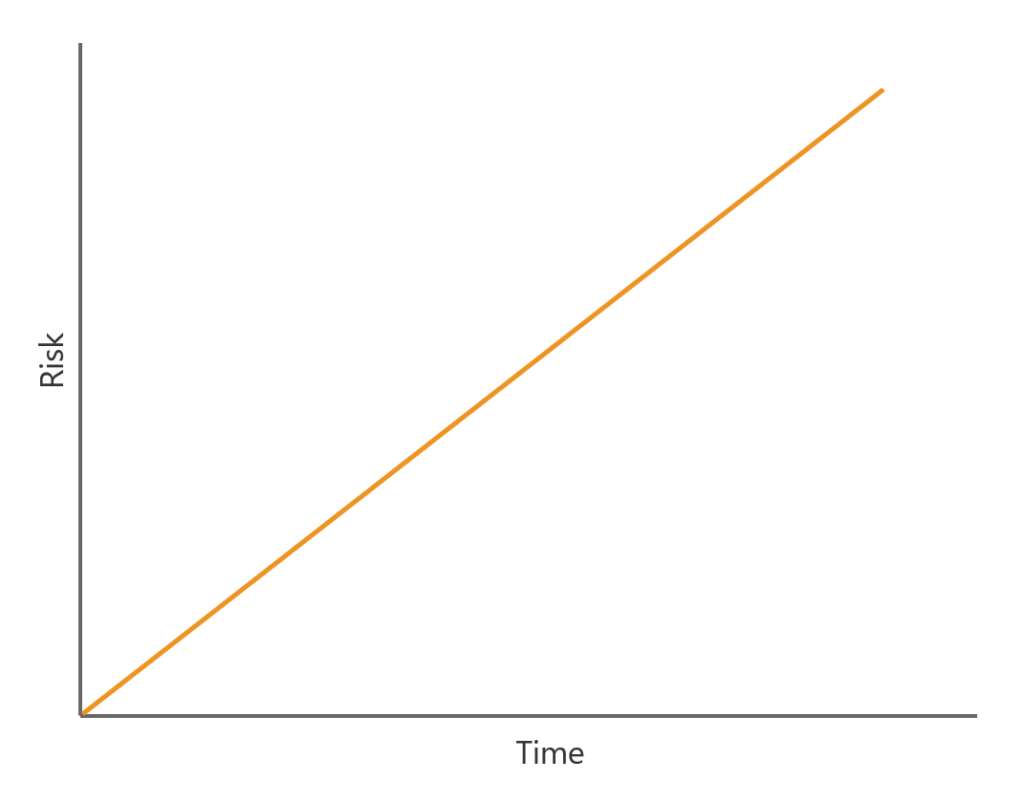
Time vs. Risk
The farther away into the future a cash flow or an expected payoff is, the riskier (or more uncertain) it is. There is a strong positive correlation between time and uncertainty.
Below, we will look at two different methods of adjusting for uncertainty that is both a function of time.
Risk Adjustment
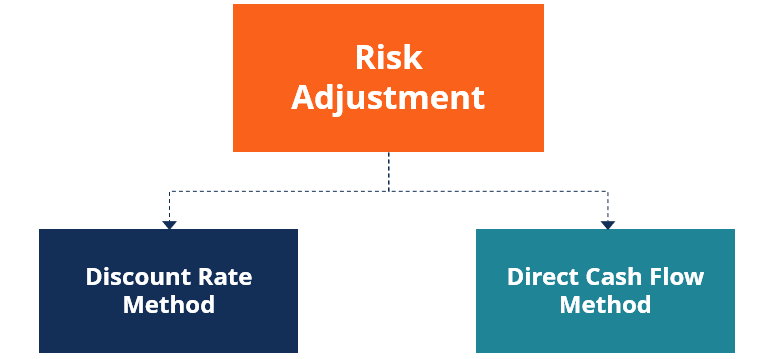
Since different investments have different degrees of uncertainty or volatility, financial analysts will “adjust” for the level of uncertainty involved. Generally speaking, there are two common ways of adjusting: the discount rate method and the direct cash flow method.
#1 Discount Rate Method
The discount rate method of risk-adjusting an investment is the most common approach, as it’s fairly simple to use and is widely accepted by academics. The concept is that the expected future cash flows from an investment will need to be discounted for the time value of money and the additional risk premium of the investment.
To learn more, check out CFI’s guide to Weighted Average Cost of Capital (WACC)WACCWACC is a firm’s Weighted Average Cost of Capital and represents its blended cost of capital including equity and debt. and the DCF modeling guideDCF Model Training Free GuideA DCF model is a specific type of financial model used to value a business. The model is simply a forecast of a company’s unlevered free cash flow.
#2 Direct Cash Flow Method
The direct cash flow method is more challenging to perform but offers a more detailed and more insightful analysis. In this method, an analyst will directly adjust future cash flows by applying a certainty factor to them. The certainty factor is an estimate of how likely it is that the cash flows will actually be received. From there, the analyst simply has to discount the cash flows at the time value of money in order to get the net present value (NPV)Net Present Value (NPV)Net Present Value (NPV) is the value of all future cash flows (positive and negative) over the entire life of an investment discounted to the present. of the investment. Warren Buffett is famous for using this approach to valuing companies.
Risk Management
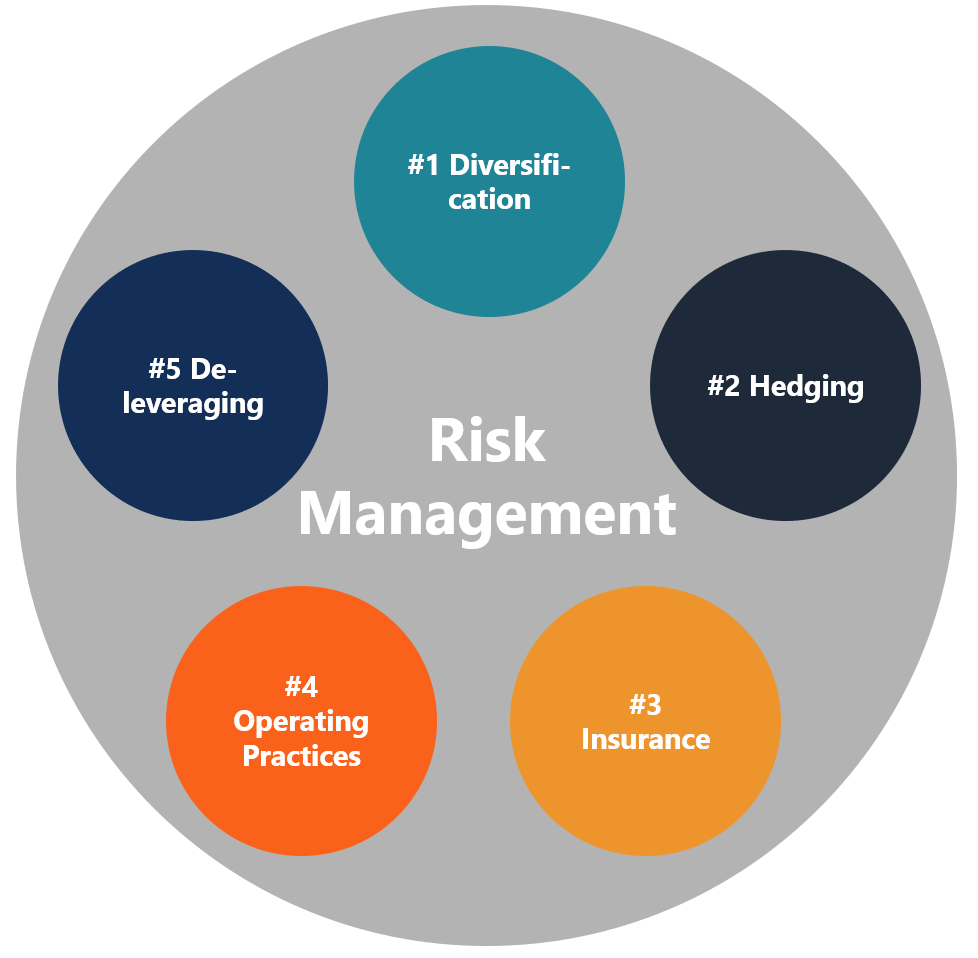
There are several approaches that investors and managers of businesses can use to manage uncertainty. Below is a breakdown of the most common risk management strategies:
#1 Diversification
Diversification is a method of reducing unsystematic (specific) risk by investing in a number of different assets. The concept is that if one investment goes through a specific incident that causes it to underperform, the other investments will balance it out.
#2 Hedging
Hedging is the process of eliminating uncertainty by entering into an agreement with a counterparty. Examples include forwards, options, futures, swaps, and other derivatives that provide a degree of certainty about what an investment can be bought or sold for in the future. Hedging is commonly used by investors to reduce market risk, and by business managers to manage costs or lock-in revenues.
#3 Insurance
There is a wide range of insurance products that can be used to protect investors and operators from catastrophic events. Examples include key person insurance, general liability insurance, property insurance, etc. While there is an ongoing cost to maintaining insurance, it pays off by providing certainty against certain negative outcomes.
#4 Operating Practices
There are countless operating practices that managers can use to reduce the riskiness of their business. Examples include reviewing, analyzing, and improving their safety practices; using outside consultants to audit operational efficiencies; using robust financial planning methods; and diversifying the operations of the business.
#5 Deleveraging
Companies can lower the uncertainty of expected future financial performance by reducing the amount of debt they have. Companies with lower leverage have more flexibility and a lower risk of bankruptcy or ceasing to operate.
It’s important to point out that since risk is two-sided (meaning that unexpected outcome can be both better or worse than expected), the above strategies may result in lower expected returns (i.e., upside becomes limited).
Spreads and Risk-Free Investments
The concept of uncertainty in financial investments is based on the relative risk of an investment compared to a risk-free rate, which is a government-issued bond. Below is an example of how the additional uncertainty or repayment translates into more expense (higher returning) investments.
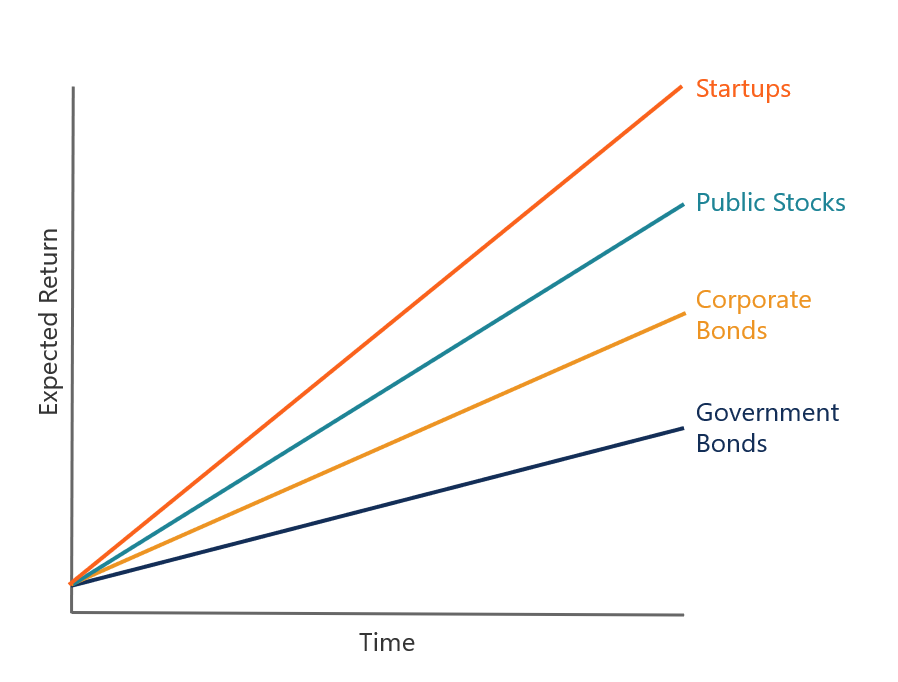
As the chart above illustrates, there are higher expected returns (and greater uncertainty) over time of investments based on their spread to a risk-free rate of return.
Related Readings
CFI offers the Financial Modeling & Valuation Analyst (FMVA)™Become a Certified Financial Modeling & Valuation Analyst (FMVA)®CFI's Financial Modeling and Valuation Analyst (FMVA)® certification will help you gain the confidence you need in your finance career. Enroll today! certification program for those looking to take their careers to the next level. To keep learning and advancing your career, the following CFI resources will be helpful:
- Capital StructureCapital StructureCapital structure refers to the amount of debt and/or equity employed by a firm to fund its operations and finance its assets. A firm's capital structure
- Debt vs. Equity FinancingDebt vs Equity FinancingDebt vs Equity Financing - which is best for your business and why? The simple answer is that it depends. The equity versus debt decision relies on a large number of factors such as the current economic climate, the business' existing capital structure, and the business' life cycle stage, to name a few.
- Investing: A Beginner’s GuideInvesting: A Beginner's GuideCFI's Investing for Beginners guide will teach you the basics of investing and how to get started. Learn about different strategies and techniques for trading
- VolatilityVolatilityVolatility is a measure of the rate of fluctuations in the price of a security over time. It indicates the level of risk associated with the price changes of a security. Investors and traders calculate the volatility of a security to assess past variations in the prices
-

Understanding Interest Rate Risk: Definition & Impact
Interest rate risk is the probability of a decline in the value of an asset resulting from unexpected fluctuations in interest rates. Interest rate risk is mostly associated with fixed-income assets (
-

Liquidity Premium: Definition, Calculation & Investment Implications
A liquidity premium compensates investors for investing in securities with low liquidity. Liquidity refers to how easily an investment can be sold for cash. T-billsTreasury Bills (T-Bills)Treasury Bil
finance
- Understanding Risk Grades: An Investor's Guide
- Understanding Risk Preference: A Comprehensive Guide
- Understanding Operating Risk: A Key Component of Business Risk
- Risk Shifting: Definition, Examples & Implications
- Understanding Currency Risk: A Comprehensive Guide
- Understanding Downside Risk: Protecting Your Investments
- Understanding Market Risk: A Comprehensive Guide
- Understanding Inherent Risk: A Key Concept in Risk Management
- Portfolio Diversification: Reduce Risk & Enhance Returns
-
 Understanding Foreign Exchange Risk: A Comprehensive Guide
Foreign exchange risk, also known as exchange rate risk, is the risk of financial impact due to exchange rate fluctuations. In simpler terms, foreign exchange risk is the risk that a business’ f...
-
 Funding Liquidity Risk: Definition, Causes & Mitigation
Funding liquidity risk refers to the risk that a company will not be able to meet its short-term financial obligations when due. In other words, funding liquidity risk is the risk that a company will ...