
Understanding Unconventional Cash Flow: A Comprehensive Guide
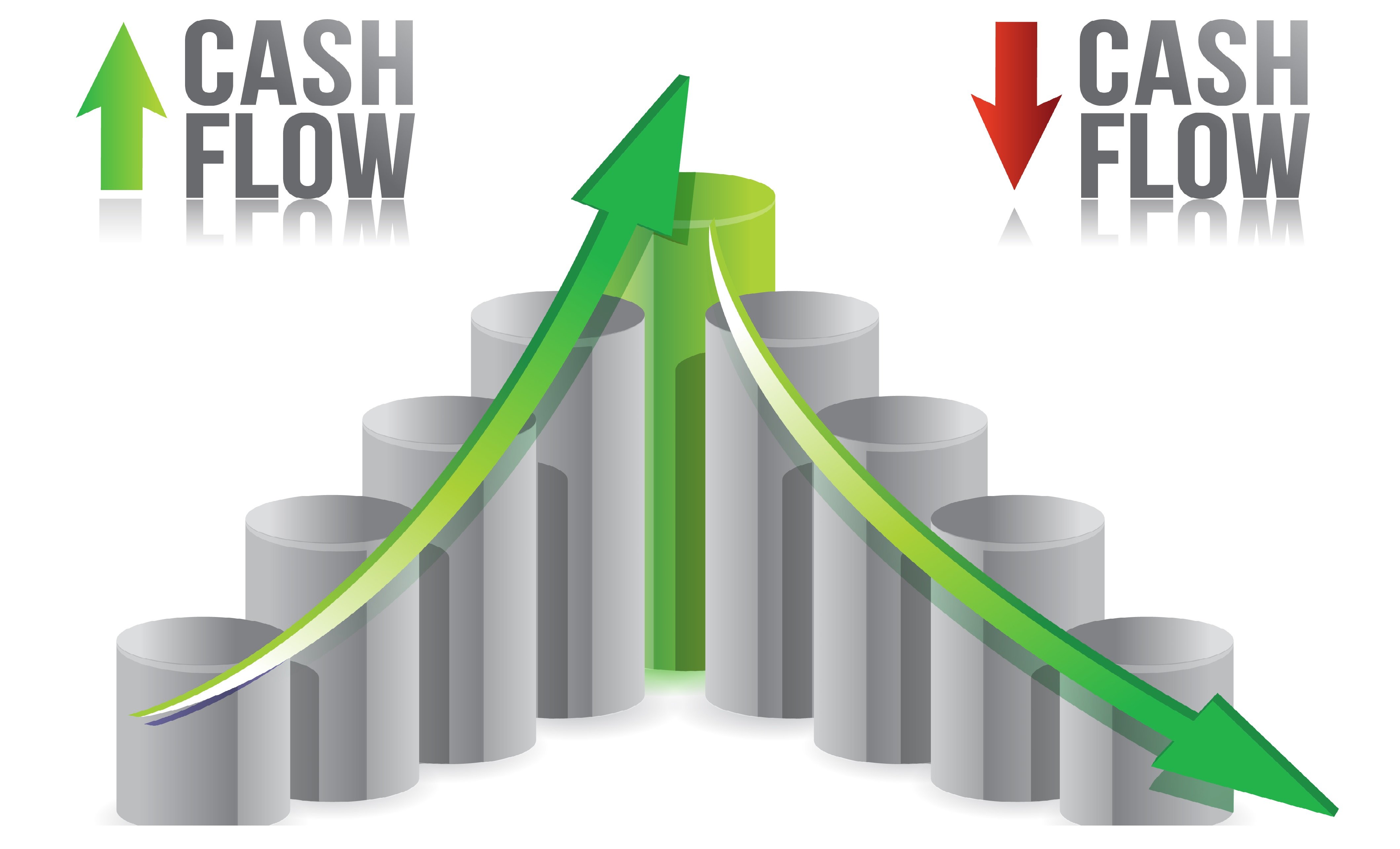
An unconventional cash flow profile is a series of cash flowsCash FlowCash Flow (CF) is the increase or decrease in the amount of money a business, institution, or individual has. In finance, the term is used to describe the amount of cash (currency) that is generated or consumed in a given time period. There are many types of CF that, over time, don’t go in only one direction. It is characterized by not just one, but several changes in the direction of the cash flow. Directional changes are usually represented by the positive (+) and negative (–) signs. The positive sign (+) denotes a cash inflow of cash, while the negative (–) sign denotes an outflow of cash.
Unconventional cash flows may look like the following example:
- 2015: + 1,000,000
- 2016: – 300,000
- 2017: + 500,000
- 2018: – 200,000
The information above shows an unconventional cash flow profile for the company because of the series of cash flow direction changes.
Unconventional cash flows are more difficult to deal with because they include more than one Internal Rate of Return (IRR)Internal Rate of Return (IRR)The Internal Rate of Return (IRR) is the discount rate that makes the net present value (NPV) of a project zero. In other words, it is the expected compound annual rate of return that will be earned on a project or investment..
Unconventional Cash Flow and the Internal Rate of Return (IRR)
The Internal Rate of Return (IRR) is a financial metric used for measuring cash flow. IRR is specifically utilized to evaluate acquisitions and other business investments. The metric can provide a general overview of a company’s financial status and help to predict future cash flows.
A company with a conventional cash flow profile will normally show just a single IRR, but a company with an unconventional cash flow will demonstrate multiple IRRs.
Note: Always be sure to use the more accurate XIRR instead of IRRXIRR vs IRRWhy use XIRR vs IRR. XIRR assigns specific dates to each individual cash flow making it more accurate than IRR when building a financial model in Excel. in Excel.
Conventional cash flow vs. Unconventional cash flow
Here are the differences between conventional cash flow and unconventional cash flow:
Conventional cash flow reflects only one direction in the cash flow of a company or organizationTypes of OrganizationsThis article on the different types of organizations explores the various categories that organizational structures can fall into. Organizational structures. Usually, cash outflows occur only once – at the beginning of a project – after which, all cash flows are inflows. The initial outflow is, of course, the capital required for funding the project. The subsequent cash inflows represent revenue or profits received. There may be an initial cash inflow if the project is funded with capital borrowed from a bankList of Top Investment BanksList of the top 100 investment banks in the world sorted alphabetically. Top investment banks on the list are Goldman Sachs, Morgan Stanley, BAML, JP Morgan, Blackstone, Rothschild, Scotiabank, RBC, UBS, Wells Fargo, Deutsche Bank, Citi, Macquarie, HSBC, ICBC, Credit Suisse, Bank of America Merril Lynch or other financial institution.
For example, assume Company Z wants to open a new branch office in a major city. To pay for the new office, the company borrows a certain amount of money from the bank. The money that the bank puts into the company’s account is a cash inflow.
An outflow of all or part of the funding occurs when Company Z begins work on building the new branch office. Deposits, from revenues, that are made to repay the bank financing are recorded as cash inflow. When financing payments of either principal or interest are made to the back, such payments appear as cash outflows.
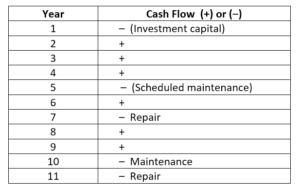
Unconventional cash flow, on the other hand, reflects a series of cash flows in different directions over a period of time. Such cash flow profiles are very common among businesses that require periodic maintenance of equipment.
Say, for example, an investor owns a 20-room hostel. The owner may see an unconventional cash flow because once every five years, a maintenance check and renovation need to be done to ensure the quality of the amenities that the hostel’s guests use.
Examples
Example 1:
Example 2:
Another example can be seen in people’s daily lives, such as the simple process of withdrawing money from an account to pay monthly expenses. A person who keeps a careful list of monthly expenses knows precisely how much he or she needs to withdraw from the bank.
However, someone less careful with their finances may tend to initially withdraw more money than they need, then redeposit some of the withdrawn funds. In any event, they will have more complicated unconventional cash flows from month to month.
Challenges from an Unconventional Cash Flow
Unconventional cash flow, as noted above, is characterized by a series of cash flows in different directions. This creates multiple different IRRs, which makes it more difficult for an analyst to value such a company. Once determined, IRRs are compared to the company’s hurdle rateHurdle Rate DefinitionA hurdle rate, which is also known as minimum acceptable rate of return (MARR), is the minimum required rate of return or target rate that investors are expecting to receive on an investment. The rate is determined by assessing the cost of capital, risks involved, current opportunities in business expansion, rates of return for similar investments, and other factors or to the lowest possible return rate of a project.
More Resources
CFI is the official provider of the Financial Modeling and Valuation Analyst (FMVA)™Become a Certified Financial Modeling & Valuation Analyst (FMVA)®CFI's Financial Modeling and Valuation Analyst (FMVA)® certification will help you gain the confidence you need in your finance career. Enroll today! certification program, designed to transform anyone into a world-class financial analyst.
To keep learning and expanding your knowledge of financial analysis, we highly recommend these additional free CFI resources:
- Analysis of Financial StatementsAnalysis of Financial StatementsHow to perform Analysis of Financial Statements. This guide will teach you to perform financial statement analysis of the income statement,
- Cash Flow from Financing ActivitiesCash Flow from Financing ActivitiesCash Flow from Financing Activities is the net amount of funding a company generates in a given time period. Finance activities include the
- Cost of CapitalCost of CapitalCost of capital is the minimum rate of return that a business must earn before generating value. Before a business can turn a profit, it must at least generate sufficient income to cover the cost of funding its operation.
- Statement of Cash FlowsStatement of Cash FlowsThe Statement of Cash Flows (also referred to as the cash flow statement) is one of the three key financial statements that report the cash
-
Understanding Cash Flow from Operations: A Comprehensive Guide
Cash flow from operations is the section of a company’s cash flow statementCash Flow StatementA cash flow Statement contains information on how much cash a company generated and used duri
-
Understanding the Statement of Cash Flows: A Comprehensive Guide
The Statement of Cash Flows (also referred to as the cash flow statementCash Flow StatementA cash flow Statement contains information on how much cash a company generated and used during a give
finance
- Understanding Cash Flow: A Comprehensive Guide
- Cash Flow to Debt Ratio: Understanding and Calculation
- Understanding Conventional Cash Flow: Definitions and Examples
- Understanding the Operating Cash Flow Ratio: A Key Liquidity Metric
- Price-to-Cash Flow Ratio (P/CF): Definition & Analysis
- Understanding Incremental Cash Flow: A Business Guide
- Understanding Operating Cash Flow (OCF): A Comprehensive Guide
- Understanding Cash Flow Statements: A Comprehensive Guide
- Cash Flow Loans: Fueling Business Growth & Overcoming Short-Term Needs
-
 Profit vs. Cash Flow: Understanding the Key Difference
Understanding the difference between profit vs cash is very important in the finance industry. Profit is defined as revenue less all the expenses of a company in a certain period, while cash flow is c...
-
 Understanding Cash Flow from Investing Activities: A Comprehensive Guide
Cash Flow from Investing Activities is the section of a company’s cash flow statementCash Flow StatementA cash flow Statement contains information on how much cash a company generated and...