
Understanding the Operating Cash Flow Ratio: A Key Liquidity Metric
The Operating Cash Flow Ratio, a liquidity ratio, is a measure of how well a company can pay off its current liabilitiesCurrent LiabilitiesCurrent liabilities are financial obligations of a business entity that are due and payable within a year. A company shows these on the with the cash flowFree Cash Flow (FCF)Free Cash Flow (FCF) measures a company’s ability to produce what investors care most about: cash that's available be distributed in a discretionary way. generated from its core business operations. This financial metric shows how much a company earns from its operating activities, per dollar of current liabilities. Since earningsRetained EarningsThe Retained Earnings formula represents all accumulated net income netted by all dividends paid to shareholders. Retained Earnings are part involve accruals and can be manipulated by management, the operating cash flow ratio is considered a very helpful gauge of a company’s short-term liquidity.
Formula
The formula for calculating the operating cash flow ratio is as follows:

Where:
- Cash flow from operations can be found on a company’s statement of cash flowsCash Flow StatementA cash flow Statement contains information on how much cash a company generated and used during a given period.. Alternatively, the formula for cash flow from operations is equal to net income + non-cash expenses + changes in working capital.
- Current liabilities are obligations due within one year. Examples include short-term debt, accounts payable, and accrued liabilities.
What is Cash Flow From Operations?
It is important to understand cash flow from operations (also called operating cash flow) – the numerator of the operating cash flow ratio.
Operating cash flow (OCF) is one of the most important numbers in a company’s accounts. It reflects the amount of cash that a business produces solely from its core business operations. Operating cash flow is intensely scrutinized by investors, as it provides vital information about the health and value of a company. If a company fails to achieve a positive OCF, the company cannot remain solvent in the long term. A negative OCF indicates that a company is not generating sufficient revenues from its core business operations, and therefore needs to generate additional positive cash flow from either financing or investment activities.
Example of the Operating Cash Flow Ratio
The following information was taken out of Company A’s Q2 financial statements:

To calculate the ratio at the end of the second quarter:

Therefore, the company earns $1.25 from operating activities, per dollar of current liabilities. Alternatively, it can be viewed as, “Company A can cover its current liabilities 1.25x over.”
Download the Free Template
Enter your name and email in the form below and download the free template now!
Interpretation of Operating Cash Flow Ratio
If the ratio is less than 1, the company generated less cash from operations than is needed to pay off its short-term liabilities. This signals short-term problems and a need for more capital. A higher ratio – greater than 1.0 – is preferred by investors, creditors, and analysts, as it means a company can cover its current short-term liabilities and still have earnings left over. Companies with a high or uptrending operating cash flow are generally considered to be in good financial health.
Key Takeaways
- The operating cash flow ratio is a liquidity ratio that measures how well a company can pay off its current liabilitiesCurrent LiabilitiesCurrent liabilities are financial obligations of a business entity that are due and payable within a year. A company shows these on the with cash generated from its core business operations.
- This liquidity ratio is considered an accurate measure of short-term liquidity, as it only uses cash generated from core business operations rather than from all income sources.
- A ratio less than 1 indicates short-term cash flow problems; a ratio greater than 1 indicates good financial health, as it indicates cash flow more than sufficient to meet short-term financial obligations.
Learn More:
We hope you have enjoyed reading CFI’s guide to the operating cash flow ratio. To learn more about cash flow and financial analysis, we suggest the following CFI resources:
- The Ultimate Cash Flow Guide (EBITDA, CF, FCF, FCFF)The Ultimate Cash Flow Guide (EBITDA, CF, FCF, FCFE, FCFF)This is the ultimate Cash Flow Guide to understand the differences between EBITDA, Cash Flow from Operations (CF), Free Cash Flow (FCF), Unlevered Free Cash Flow or Free Cash Flow to Firm (FCFF). Learn the formula to calculate each and derive them from an income statement, balance sheet or statement of cash flows
- Analysis of Financial StatementsAnalysis of Financial StatementsHow to perform Analysis of Financial Statements. This guide will teach you to perform financial statement analysis of the income statement,
- Comparable Company AnalysisComparable Company AnalysisThis guide shows you step-by-step how to build comparable company analysis ("Comps") and includes a free template and many examples.
- Financial Analysis Ratios GlossaryFinancial Analysis Ratios GlossaryGlossary of terms and definitions for common financial analysis ratios terms. It's important to have an understanding of these important terms.
-

Understanding the Retention Ratio: Reinvesting for Growth
The retention ratio (also known as the net income retention ratio) is the ratio of a company’s retained income to its net incomeNet IncomeNet Income is a key line item, not only in the income st
-
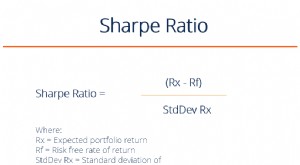
Sharpe Ratio: Calculate & Interpret Investment Performance
Named after American economist, William Sharpe, the Sharpe Ratio (or Sharpe Index or Modified Sharpe Ratio) is commonly used to gauge the performance of an investment by adjusting for its risk.The hig
finance
- Cash Conversion Ratio (CCR): Definition & Importance
- Understanding Cash Flow: A Comprehensive Guide
- Cash Flow to Debt Ratio: Understanding and Calculation
- Operating Cash to Debt Ratio: Understanding Financial Health
- Operating Cash to Total Cash Ratio: Meaning & Significance
- Operating Ratio: Definition, Calculation & Importance
- Price-to-Cash Flow Ratio (P/CF): Definition & Analysis
- Understanding Operating Cash Flow (OCF): A Comprehensive Guide
- Operating Cash Flow Formula: Calculation & Explanation
-
 Quick Ratio: Understanding Your Business's Short-Term Liquidity
The Quick Ratio, also known as the Acid-test or Liquidity ratio, measures the ability of a business to pay its short-term liabilities by having assets that are readily convertible into cashCash Equiva...
-
 Reserve Ratio Explained: Understanding Bank Reserves
The reserve ratio – also known as bank reserve ratio, bank reserve requirement, or cash reserve ratio – is the percentage of deposits a financial institution must hold in reserve as cash. ...