
Venture Capital: Funding Startups & Understanding Equity
Venture capital is a form of financing that provides funds to early-stage, emerging companies with high growth potential, in exchange for equity Stockholders EquityStockholders Equity (also known as Shareholders Equity) is an account on a company's balance sheet that consists of share capital plusor an ownership stake. Venture capitalists take the risk of investing in startupHow VC’s Look at Startups and FoundersA guide to how VC's look at startups and founders. The odds of being funded, the odds of commercial success, traits they look for, good vs bad pitches companies, with the hope that they will earn significant returns when the companies become a success. They are wealthy enough to take losses that may be incurred by investing in unproven, high-risk companies. When choosing companies to invest in, they consider the company’s growth potential, the strength of its management team, and the uniqueness of its products or services.

Venture capital allows entrepreneurs with minimal operating history and inadequate funds to secure capital to launch their business and also get guidance from experienced business executives. Entrepreneurs are often unable to access bank financingBridge LoanA bridge loan is a short-term form of financing that is used to meet current obligations before securing permanent financing. It provides immediate cash flow when funding is needed but is not yet available. A bridge loan comes with relatively high interest rates and must be backed by some form of collateral due to the lack of experience in business and the high-risk nature of startup businesses, and venture capitalists come in as a relief.
Venture capitalists provide funding in exchange for control of decision-making and a portion of the company’s ownership. Some of the successful companies that gained success from venture capital funding include Facebook, Uber, Twitter, Airbnb, Paypal, and Xiaomi.
History of Venture Capital
Venture capital first started in the United States around the time of World War II. Before then, wealthy families such as the Rockefellers, Warburgs, and Vanderbilts were the most popular investors in emerging companies. The first-ever venture capital firm, the American Research and Development Corporation (ARDC), was created in 1946, unique in providing funding from other sources apart from wealthy families.
George Doriot, ARDC’S founder, is regarded as the father of venture capitalism for starting the first-ever publicly-owned venture capital firm. Before setting up ARDC, Doriot moved from France to the United States to get a business degree. He later taught at the Harvard Business School and also worked as an investment banker.
Doriot and some of his former ARDC employees funded some of the United State’s most successful companies, including Morgan, Holland Venture, and Greylock Partners. One of his successful investments is the Digital Equipment Corporation (DEC) that he funded to a tune of $70,000 in 1957. The company’s value increased to over $355 million during its initial public offering in 1968, representing an annual return of 101%.
Venture capitalism started to take shape in 1958 following the enactment of the Small Business Investment Act. The Act gave the Small Business Association the authority to license small business investment companies in the United States. The license granted the investment companies access to low-cost, government-guaranteed funds to help them invest in U.S. emerging companies.
The industry experienced a slowdown in the 1980s, with some firms posting losses for the first time. The slowdown was caused mainly by the oversupply of IPOs, inexperienced fund managers, and increased competition. The United States venture capital firms also faced competition from foreign companies, mainly from Japan and Korea.
Normal operations resumed in the 1990s before taking a hit in the early 2000s during the dot-com bust. Venture capitalists that had invested in tech companies experienced substantial losses. Since then, the industry has experienced upward growth, with over $47 billion in venture capital as of 2014.
Five Stages in Venture Capital Financing
There are five stages in venture capital financing, and they include:
#1 Seed Stage
At the seed stage, the company is only an idea for a product or service, and the entrepreneur must convince the venture capitalist that their idea is a viable investment opportunity. If the business shows potential for growth, the investor will provide funding to finance early product or service development, market research, business plan development, and setting up a management team. Seed-stage venture capitalists participate in other investment rounds alongside other investors.
#2 Startup Stage
The startup stage requires a significant cash infusion to help in advertising and marketing of new products or services to new customers. At this stage, the company has completed market research, has a business plan in place, and has a prototype of its products to show investors. The company brings in other investors at this stage to provide additional financing.
#3 First Stage
The company is now ready to go into actual manufacturing and sales, and this requires a higher amount of capital than the previous stages. Most first-stage businesses are generally young and have a commercially-viable product or service.
#4 Expansion Stage
The business has already started selling its products or services and needs additional capital to support the demand. It requires this funding to support market expansion or start another line of business. The funding may also be used for product improvement and plant expansion.
#5 Bridge Stage
The bridge stage represents the transition to a public company. The business has reached maturity, and it requires financing to support acquisitions, mergers, and IPOs. The venture capitalist can exit the company at this stage, sell off his shares, and earn a huge return on his investments in the company. The exit of the venture capitalist allows other investors to come in, hoping to gain from the IPO.
Structure of a Venture Capital Firm
A venture capital firm is structured in the form of a partnership, where the venture capital firm serves as the general partners and the investors as the limited partners. The limited partners may include insurance companies, wealthy persons, pension funds, university endowment funds, and foundations. All the partners have an ownership stake in the venture firm fund, but the general managers serve as the managers and investment advisors to the companies invested in.
The profits from the investment of the venture capital firm are split between the general partners and limited partners. The general partners, who are also the private equity fund managers, get 20% of the profits as a performance incentive. They also receive an annual management fee of up to 2% of the capital invested. The limited partners who invested in the fund share with the general partners the other 80%.
Related Readings
To learn more about corporate investing and financing, here are some helpful CFI resources:
- Startup Valuation MetricsStartup Valuation Metrics (for internet companies)Startup Valuation Metrics for internet companies. This guide outlines the 17 most important e-commerce valuation metrics for internet starts to be valued
- Corporate VenturingFinanceCFI's Finance Articles are designed as self-study guides to learn important finance concepts online at your own pace. Browse hundreds of articles!
- Mezzanine FundMezzanine FundA mezzanine fund is a pool of capital which invests in mezzanine finance for acquisitions, growth, recapitalization, or management/leveraged buyouts. In the capital structure of a company, mezzanine finance is a hybrid between equity and debt. Mezzanine financing most commonly takes the form of preferred stock or subordinated and unsecured debt.
- Angel InvestorAngel InvestorAn angel investor is a person or company that provides capital for start-up businesses in exchange for ownership equity or convertible debt. They may provide a one-time investment or an ongoing capital injection to help the business move through the difficult early stages.
-
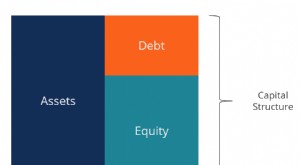
Understanding Capital Structure: Debt vs. Equity
Capital structure refers to the amount of debtMarket Value of DebtThe Market Value of Debt refers to the market price investors would be willing to buy a companys debt at, which differs from the book
-
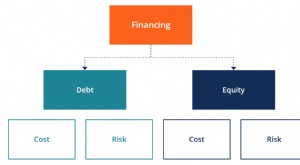
Understanding Business Financing: A Comprehensive Guide
Financing refers to the methods and types of funding a business uses to sustain and grow its operations. It consists of debtSenior and Subordinated DebtIn order to understand senior and subordinated d
finance
- Basel I: Understanding Core Banking Regulations & Capital Requirements
- Understanding Capital: Types, Categories & Value Creation
- Capital Rationing: Definition, Strategy & Impact on Investment Decisions
- Cost of Capital: Definition, Calculation & Importance
- Venture Debt: A Comprehensive Guide for Startups
- Understanding Capital Losses: Definition, Calculation & Examples
- Understanding Mispricing: Market Prices vs. True Value
- Venture Capital Funds: Investing in High-Growth Startups
- Venture Capital Investing: A Comprehensive Guide
-
 Understanding Capital Gains: A Comprehensive Guide
A capital gain is an increase in the value of an asset or investment resulting from the price appreciation of the asset or investment. In other words, the gain occurs when the current or sale price of...
-
 Understanding Capital Gains Tax: A Comprehensive Guide
Capital gains tax is a tax imposed on capital gains or the profits that an individual makes from selling assets. The tax is only imposed once the asset has been converted into cash, and not when it&rs...