
Understanding Business Financing: A Comprehensive Guide
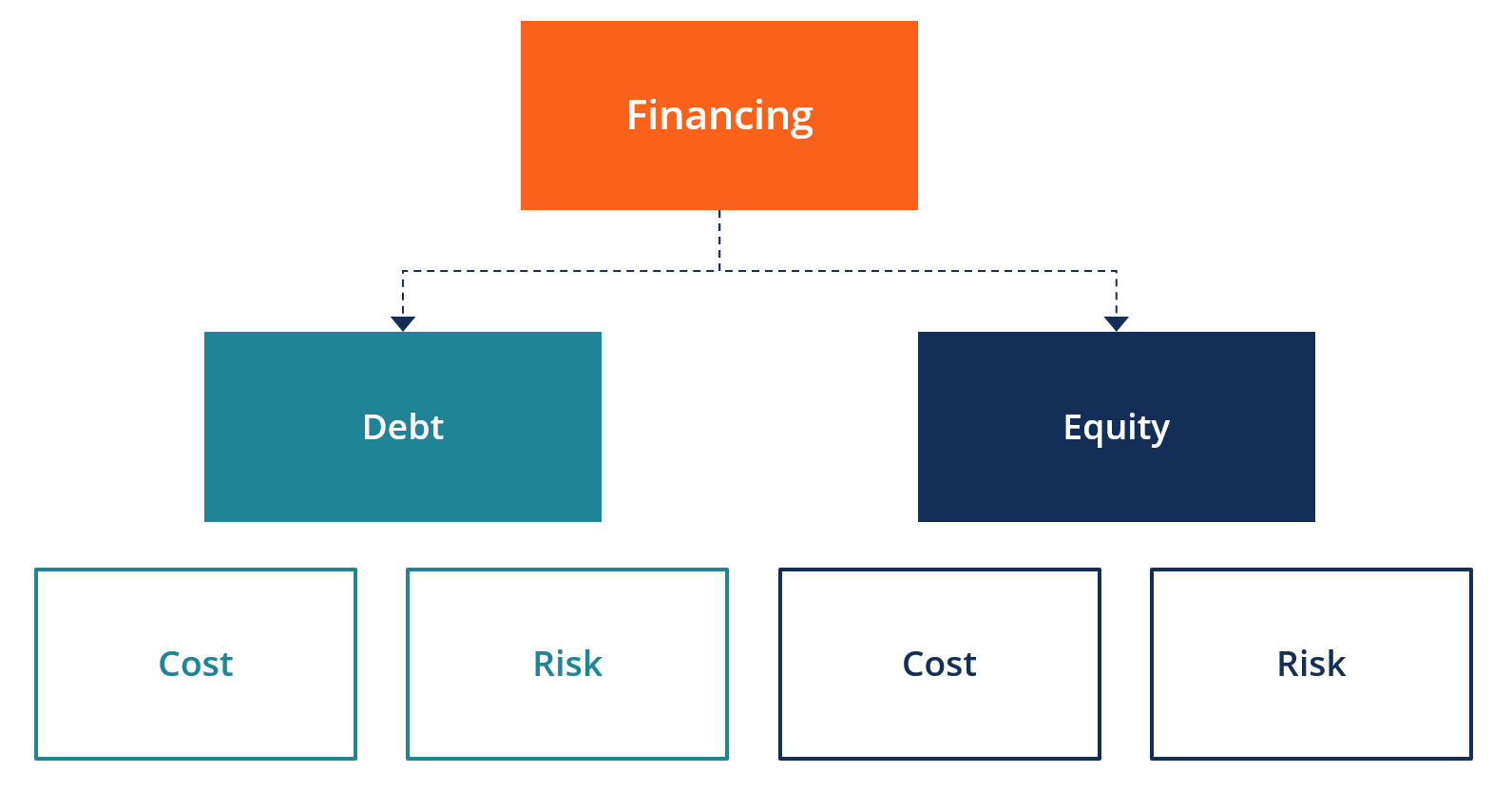
Financing refers to the methods and types of funding a business uses to sustain and grow its operations. It consists of debtSenior and Subordinated DebtIn order to understand senior and subordinated debt, we must first review the capital stack. Capital stack ranks the priority of different sources of financing. Senior and subordinated debt refer to their rank in a company's capital stack. In the event of a liquidation, senior debt is paid out first and equityShare CapitalShare capital (shareholders' capital, equity capital, contributed capital, or paid-in capital) is the amount invested by a company’s capital, which are used to carry out capital investments, make acquisitionsMergers Acquisitions M&A ProcessThis guide takes you through all the steps in the M&A process. Learn how mergers and acquisitions and deals are completed. In this guide, we'll outline the acquisition process from start to finish, the various types of acquirers (strategic vs. financial buys), the importance of synergies, and transaction costs, and generally support the business. This guide will explore how managers and professionals in the industry think about the financing activities of a company.
Financing Activities
On a company’s cash flow statementCash Flow StatementA cash flow Statement contains information on how much cash a company generated and used during a given period., there is a section that’s referred to as cash flow from financing activities, which summarizes how the business was funded over a particular period.
Activities include:
- Issuing debt to raise money
- Repaying debt
- Issuing equity to raise money
- Repurchasing equity
- Paying dividendsDividendA dividend is a share of profits and retained earnings that a company pays out to its shareholders. When a company generates a profit and accumulates retained earnings, those earnings can be either reinvested in the business or paid out to shareholders as a dividend.
Debt vs Equity
Managers of businesses have two choices when it comes to funding activities: debt or equity. There are pros and cons to each, and the optimal choice is often a combination of each.
Characteristics of debt financing:
- A loan that must be repaid
- Bears an interest expense
- Has a maturity date
- Must be repaid before equity in the event of insolvency
- Cheaper than equity capital
- Adds risk to the business
Characteristics of equity financing:
- Direct ownership in the company
- Has no interest payments, but may have a dividend
- Permanent capital, no maturity (except for certain types of preferred shares)
- Last to be repaid
- More expensive than debt
Capital Structure
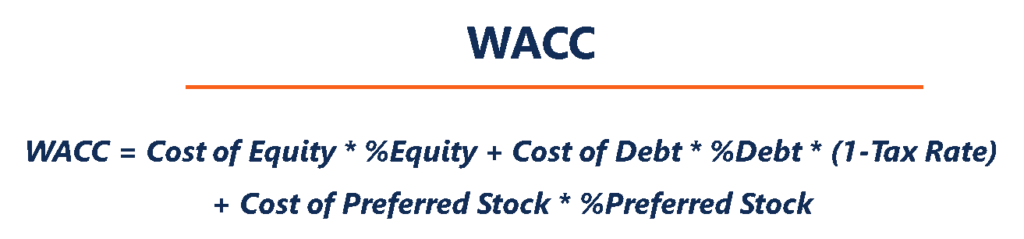
The decision between debt vs equity financing is what ultimately determines a company’s capital structure. The optimal capital structure for a business is typically considered that which results in the lowest weighted average cost of capital (WACC)WACCWACC is a firm’s Weighted Average Cost of Capital and represents its blended cost of capital including equity and debt.. While that’s true in theory, in practice, managers of firms tend to have preferences depending on how risk averse they are.
A firm’s WACC is a function of the cost of debt and the cost of equity, expressed in the following formula:
Considerations
When managers of business think about their financing strategy, there are many factors that need to be taken into account.
These important considerations include:
- Current cash balance
- Upcoming capital expenditures
- Upcoming debt maturities
- Ongoing interest and dividend payments
- Operating cash flow of the business
- Current and expected interest rates
- Risk tolerance
- Capital markets conditions
- Investors’ expectations
Additional Resources
Thank you for reading this CFI guide to financing, what it is, and why it matters. CFI is the official provider of the FMVA certification programBecome a Certified Financial Modeling & Valuation Analyst (FMVA)®CFI's Financial Modeling and Valuation Analyst (FMVA)® certification will help you gain the confidence you need in your finance career. Enroll today!, designed to help anyone become a world-class financial analyst. To learn more and advance your career, these additional CFI resources will be helpful:
- Acquisition FinanceAcquisition FinanceAcquisition finance refers to the different sources of capital that are used to fund a merger or acquisition. This is usually a complex mission requiring thorough planning, since acquisition finance structures often require a lot of variations and combinations. Moreover, acquisition financing is seldom procured from one source.
- Debt vs EquityDebt vs Equity FinancingDebt vs Equity Financing - which is best for your business and why? The simple answer is that it depends. The equity versus debt decision relies on a large number of factors such as the current economic climate, the business' existing capital structure, and the business' life cycle stage, to name a few.
- FCFF vs FCFEFCFF vs FCFEThere are two types of Free Cash Flows: Free Cash Flow to Firm (FCFF), commonly referred to as Unlevered Free Cash Flow; and Free Cash Flow to Equity (FCFE), commonly referred to as Levered Free Cash Flow. It is important to understand the difference between FCFF vs FCFE as the discount rate and numerator of valuation
- M&A Considerations and ImplicationsM&A Considerations and ImplicationsWhen conducting M&A a company must acknowledge & review all factors and complexities that go into mergers and acquisitions. This guide outlines important
-

Venture Capital: Funding Startups & Understanding Equity
Venture capital is a form of financing that provides funds to early-stage, emerging companies with high growth potential, in exchange for equity Stockholders EquityStockholders Equity (also known as S
-
Venture Debt: A Comprehensive Guide for Startups
Venture debt is a type of debt financing obtained by early-stage companies and startupsStartup Valuation Metrics (for internet companies)Startup Valuation Metrics for internet companies. This guide ou
finance
- Basel I: Understanding Core Banking Regulations & Capital Requirements
- Understanding Capital: Types, Categories & Value Creation
- Capital Rationing: Definition, Strategy & Impact on Investment Decisions
- Understanding Capital Structure: Debt vs. Equity
- Cost of Capital: Definition, Calculation & Importance
- Debt Financing: A Comprehensive Guide for Businesses
- Seed Financing: A Comprehensive Guide for Startups
- Series C Financing: A Comprehensive Guide for Startups
- Debt Financing Explained: Types, Benefits & How to Get Approved
-
 Unitranche Debt Explained: Structure, Benefits & Risks
A Unitranche Debt is a hybrid loan structure that combines senior and subordinated debtSenior and Subordinated DebtIn order to understand senior and subordinated debt, we must first review the capital...
-
 Vendor Financing: A Comprehensive Guide for Businesses
Vendor financing refers to the lending of money by a vendor to a customer, who then uses the money to buy the vendor’s inventoryInventoryInventory is a current asset account found on the balance...