
Understanding Capital Gains: A Comprehensive Guide
A capital gain is an increase in the value of an asset or investment resulting from the price appreciation of the asset or investment. In other words, the gain occurs when the current or sale price of an asset or investment exceeds its purchase price. Capital gains are attributable to all types of capital assets, including, but not limited to, stocksStockWhat is a stock? An individual who owns stock in a company is called a shareholder and is eligible to claim part of the company’s residual assets and earnings (should the company ever be dissolved). The terms "stock", "shares", and "equity" are used interchangeably., bonds, goodwillGoodwillIn accounting, goodwill is an intangible asset. The concept of goodwill comes into play when a company looking to acquire another company is, and real estate.

Classifications of Capital Gain
Capital gain can be realized or unrealized. The realized gain is the gain from the final sale of an asset or investment. Conversely, an unrealized gain arises when the current price of an asset or investment exceeds its purchase price, but the asset or investment is still unsold. Note that only realized capital gains are taxed, while unrealized (capital) gains are merely paper gains that are usually subject to accounting reporting but do not trigger a taxable event.
Additionally, realized capital gains are usually classified as short-term gains or long-term gains. Short-term (capital) gains occur if an asset or investment was held for less than a year. Long-term (capital) gains are gains from an asset or investment that was held for more than one year.
Capital Gains and Taxation
Realized capital gains are considered taxable events. Most countries impose special taxes for realized gains, levied on both individuals and corporationsCorporationA corporation is a legal entity created by individuals, stockholders, or shareholders, with the purpose of operating for profit. Corporations are allowed to enter into contracts, sue and be sued, own assets, remit federal and state taxes, and borrow money from financial institutions..
However, for the gains of investment funds such as a mutual fundMutual FundsA mutual fund is a pool of money collected from many investors for the purpose of investing in stocks, bonds, or other securities. Mutual funds are owned by a group of investors and managed by professionals. Learn about the various types of fund, how they work, and benefits and tradeoffs of investing in them, the tax on the gains is imposed upon the fund’s investors.
Generally, the holding time of an asset or investment affects the tax rate applicable to a capital gain. For example, if the gain is short-term (as defined above), it is taxed at the ordinary income tax rate. On the other hand, long-term (capital) gains are usually taxed at a lower tax rate. For example, if the ordinary tax rate is 35%, the capital gain can be taxed at a 20% rate.
Related Readings
CFI offers the Financial Modeling & Valuation Analyst (FMVA)™Become a Certified Financial Modeling & Valuation Analyst (FMVA)®CFI's Financial Modeling and Valuation Analyst (FMVA)® certification will help you gain the confidence you need in your finance career. Enroll today! certification program for those looking to take their careers to the next level. To keep learning and advancing your career, the following CFI resources will be helpful:
- Accounting for Income TaxesAccounting For Income TaxesIncome taxes and their accounting is a key area of corporate finance. There are several objectives in accounting for income taxes and optimizing a company's valuation.
- Capital Gains Yield CalculatorCapital Gains Yield CalculatorThis capital gains yield calculator demonstrates how to calculate the capital gains yield using the purchase price and current price of a stock. Capital gains yield (CGY) is the price appreciation on an investment or a Security expressed as a percentage. The formula for calculating capital gains yield is: CGY = (curren
- Retained Earnings
- Taxable IncomeTaxable IncomeTaxable income refers to any individual's or business’ compensation that is used to determine tax liability. The total income amount or gross income is used as the basis to calculate how much the individual or organization owes the government for the specific tax period.
-

Invested Capital: Definition & How It Fuels Business Growth
Invested capital is the investment made by both shareholdersShareholderA shareholder can be a person, company, or organization that holds stock(s) in a given company. A shareholder must own a minimum
-

Return on Invested Capital (ROIC): Definition & Calculation
Return on Invested CapitalInvested CapitalInvested capital is the investment made by both shareholders and debtholders in a company. When a company needs capital to expand, it can obtain it either by
finance
- Basel I: Understanding Core Banking Regulations & Capital Requirements
- Understanding Capital: Types, Categories & Value Creation
- Understanding Capital Gains: A Comprehensive Guide
- Understanding Capital Gains Tax: A Comprehensive Guide
- Capital Gains Yield (CGY): Definition & Formula | [Your Brand]
- Capital Rationing: Definition, Strategy & Impact on Investment Decisions
- Cost of Capital: Definition, Calculation & Importance
- Venture Capital: Funding Startups & Understanding Equity
- Understanding Long-Term Capital Gains Tax: Rates & Strategies
-
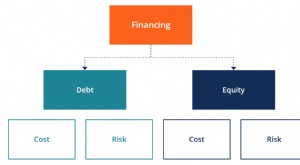 Understanding Business Financing: A Comprehensive Guide
Financing refers to the methods and types of funding a business uses to sustain and grow its operations. It consists of debtSenior and Subordinated DebtIn order to understand senior and subordinated d...
-
 Fixed Capital: Definition, Examples & Importance
Fixed capital, or fixed assets or capital assets, refers to a company’s long-term assets, such as land, buildings, or equipment that is used in producing goods or services. SummaryFix...