
Volcker Rule Explained: Understanding Banking Restrictions
The Volcker Rule refers to Sec 619 of the Dodd-Frank Act,Dodd-Frank ActThe Dodd-Frank Act, or the Wall Street Reform and Consumer Protection Act of 2010, was enacted into law during the Obama administration as a response to the financial crisis of 2008. It sought to introduce significant changes to financial regulation and create new government agencies tasked with implementing the various clauses in the law. which prohibits banks from engaging in proprietary trading,Proprietary TradingProprietary Trading (Prop Trading) occurs when a bank or firm trades stocks, derivatives, bonds, commodities or other financial instruments in its own account, using its own money instead of using its clients’ money. This enables the firm to earn full profits from a trade rather than just the commission it receives or from using their depositors’ funds to invest in risky investment instruments. The rule also prohibits banks from owning or investing in hedge fundsHedge Fund StrategiesA hedge fund is an investment fund created by accredited individuals and institutional investors for the purpose of maximizing returns and or private equity funds. Private Equity FundsPrivate equity funds are pools of capital to be invested in companies that represent an opportunity for a high rate of return. They come with a fixed
Before the 2008 financial crisis, banks engaged in speculative trading using their depositors’ accounts, which led to the collapse of several banks and loss of depositor funds. The rule was preceded by the Glass-Steagall Act of 1933Glass-Steagall ActThe Glass-Steagall Act, also known as the Banking Act of 1933, is a piece of legislation that separated investment and commercial banking. The Act came as an emergency response to the massive bank failures during the Great Depression, as it was thought that speculation by commercial banks had contributed to the crash, which was introduced during the Great Depression.
Background of the Volcker Rule
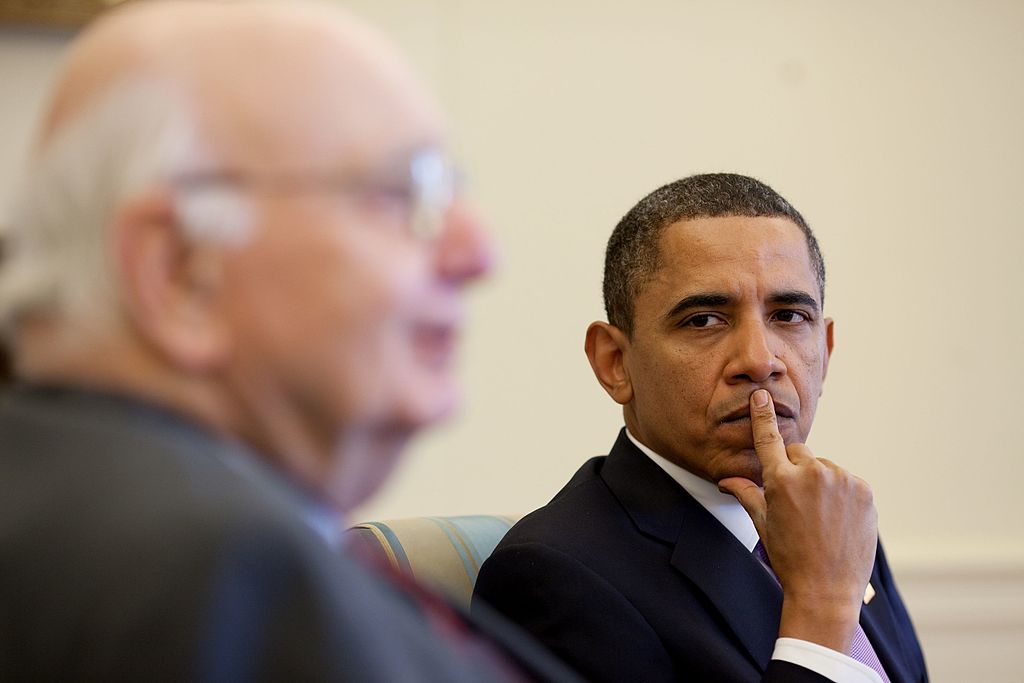
The Volcker Rule is named after former Federal Reserve chairman, Paul Volcker, who proposed the rule as a way to curb the US banks’ speculative trading activities that did not benefit consumers. Volcker headed the Economic Recovery Advisory Body under the Obama administration in 2009.
He argued that the banks’ speculative trading activities contributed to the 2008 financial crisis. Large banks that engaged in proprietary tradingProprietary TradingProprietary Trading (Prop Trading) occurs when a bank or firm trades stocks, derivatives, bonds, commodities or other financial instruments in its own account, using its own money instead of using its clients’ money. This enables the firm to earn full profits from a trade rather than just the commission it receives accumulated huge losses, which forced the government to intervene by bailing them out using taxpayer funds.
The Volcker proposal aimed at separating the commercial banking and investment banking divisions of banks. The divisions were present in the Glass-Steagall Act but the clause was removed in a 1999 repeal. The proposal was endorsed by President Barack Obama, and it was included in the 2010 Congress proposal that recommended an overhaul of the financial industry.
The Volcker Rule is part of the Dodd-Frank ActDodd-Frank ActThe Dodd-Frank Act, or the Wall Street Reform and Consumer Protection Act of 2010, was enacted into law during the Obama administration as a response to the financial crisis of 2008. It sought to introduce significant changes to financial regulation and create new government agencies tasked with implementing the various clauses in the law. that was approved by Congress in July 2010. The Act was to be implemented in 2010 but its implementation was delayed until 2013. The final Dodd-Frank Act was approved in December 2014 by the Federal Reserve, Federal Deposit Insurance Corporation, Securities and Exchange Commission, Office of Comptroller of Currency and the Commodity Futures Trading Commission.
The Volcker Rule, and the whole Dodd-Frank Act, are not widely popular in the financial services world, and many investors also dislike provisions of the act that require higher investment margins and restrict how investors can trade.
Provisions of the Volcker Role
The Volcker Rule prohibits commercial banks from engaging in the following activities:
1. Proprietary trading
The rule prevents banks from using their own accounts to engage in proprietary trading of short-term securities, derivatives, futures, and options. This rule is based on the fact that such high-risk investments do not benefit the bank’s depositors.
2. Owning and investing in hedge and private equity funds
The Volcker rule prevents FDIC-insured banks and deposit-taking institutions from acquiring or partnering with hedge funds or private equity funds. Such institutions invest in high-risk investments that banks use to speculate. Using the depositors’ funds to invest in hedge funds subjects the funds to a high probability of incurring losses.
Exceptions to the Volcker Role
Even though the Volcker rule prohibited commercial banks from engaging in certain trading activities, the rule allowed banks to engage in the following trading activities:
1. Government bonds
United States government bonds are considered low-risk investments that commercial banks can buy and sell since they are backed by the government. Examples of such bonds include Treasury bills, Fannie Mae, and Ginnie Mae.
2. Market making and underwriting
Commercial banks are allowed to offer various services such as hedging, market making, underwriting, and insurance services, as well as acting as agents, brokers, or custodians. Offering these services to the banks’ clients can help them generate profits. However, the banks are only allowed to offer the services to their clients and not engage in the activities directly.
Related Readings
Thank you for reading CFI’s guide to the Volcker Rule. CFI is the official provider of the Financial Modeling and Valuation Analyst (FMVA)™Glass-Steagall ActThe Glass-Steagall Act, also known as the Banking Act of 1933, is a piece of legislation that separated investment and commercial banking. The Act came as an emergency response to the massive bank failures during the Great Depression, as it was thought that speculation by commercial banks had contributed to the crash certification program, designed to transform anyone into a world-class financial analyst.
To keep learning and developing your financial knowledge, we highly recommend the additional CFI resources below:
- Federal Reserve (the Fed)Federal Reserve (The Fed)The Federal Reserve is the central bank of the United States and is the financial authority behind the world’s largest free market economy.
- Securities and Exchange Commission (SEC)Securities and Exchange Commission (SEC)The US Securities and Exchange Commission, or SEC, is an independent agency of the US federal government that is responsible for implementing federal securities laws and proposing securities rules. It is also in charge of maintaining the securities industry and stock and options exchanges
- The Great DepressionThe Great DepressionThe Great Depression was a worldwide economic depression that took place from the late 1920s through the 1930s. For decades, debates went on about what caused the economic catastrophe, and economists remain split over a number of different schools of thought.
- Top Accounting ScandalsTop Accounting ScandalsThe last two decades saw some of the worst accounting scandals in history. Billions of dollars were lost as a result of these financial disasters. In this
-

Glass-Steagall Act: History, Impact & Significance | Investopedia
What Was the Glass-Steagall Act? The Glass-Steagall Act was passed by the U.S. Congress as part of the Banking Act of 1933. Sponsored by Senator Carter Glass, a former Treasury secretary, and R
-
Current Ratio: Definition, Calculation & Financial Health
The current ratio, also known as the working capitalNet Working CapitalNet Working Capital (NWC) is the difference between a companys current assets (net of cash) and current liabilities (net of debt)
finance
- Celler-Kefauver Act: History, Purpose & Impact on Antitrust
- Clayton Antitrust Act: A Comprehensive Overview | Legal Definitions & Impact
- Dodd-Frank Act Explained: Impact & Key Provisions
- Glass-Steagall Act: History, Impact, and Significance
- Hart-Scott-Rodino Act (HSR Act): Antitrust Review Explained
- Sherman Antitrust Act: History, Purpose & Impact - Corporate Law Explained
- Williams Act: Protecting Shareholders from Hostile Takeovers
- Rule of 72: Calculate Investment Doubling Time | [Your Brand Name]
- 1933 Securities Act: Protecting Investors & Market Integrity
-
 Volcker Rule Explained: Understanding Banking Restrictions
The Volcker Rule refers to Sec 619 of the Dodd-Frank Act,Dodd-Frank ActThe Dodd-Frank Act, or the Wall Street Reform and Consumer Protection Act of 2010, was enacted into law during the Obama administ...
-
 Roth IRA 5-Year Rule: Understanding Tax-Free Retirement Income
The Roth IRA is a unique type of investment account that offers every future retiree’s dream — the prospect of tax-free income after they reach retirement age.Like any retirement accoun...