
Williams Act: Protecting Shareholders from Hostile Takeovers
The Williams Act was enacted in 1968 in response to a series of hostile takeoversHostile TakeoverA hostile takeover, in mergers and acquisitions (M&A), is the acquisition of a target company by another company (referred to as the acquirer) by going directly to the target company’s shareholders, either by making a tender offer or through a proxy vote. The difference between a hostile and a friendly by large companies, which posed a risk to shareholders and company executives. The corporate raiders made tender offers for the stocks of target companies, giving very short timelines for acceptance. Such types of hostile takeovers disadvantaged shareholders who were forced to make decisions about their stockholding under unreasonable time pressure.

Tender offers represent a proposal to buy shares of a company for cashCash ConsiderationCash consideration is the purchase of the outstanding stock shares of a company using cash as the form of payment. An all-cash offer is one way that an acquirer may use to acquire a stake in another company during a merger or acquisition transaction. Cash consideration is usually preferred by shareholders or other consideration. Acquiring companies abused cash tender offers, attracting regulation by the US Congress.
Enactment of the Williams Act
New Jersey politician Harrison Williams introduced the legislation in the US Congress to regulate corporate raiders who abused cash tender offers. Williams proposed that companies should be required to make mandatory disclosures of takeover bids for the benefit of stockholders.
The legislator also proposed that, before implementing a takeover bid, the acquiring company must file the tender offer with the Securities and Exchange Commission (SEC)Securities and Exchange Commission (SEC)The US Securities and Exchange Commission, or SEC, is an independent agency of the US federal government that is responsible for implementing federal securities laws and proposing securities rules. It is also in charge of maintaining the securities industry and stock and options exchanges, as well as with the target company. The filing document should provide information on the terms of the offer, source of capital, and its plans for the target company post-acquisition. The proposed law was enacted in 1968, passed as an amendment to the Securities and Exchange Act of 1934.
How the Williams Act Works
When a company is looking to acquire another company, it may make a tender offer to the target company’s stockholders. A company may also use a proxy campaign, where the company acquires enough votes to gain control of the board of directorsBoard of DirectorsA board of directors is a panel of people elected to represent shareholders. Every public company is required to install a board of directors. of the target company. In the 1960s, companies preferred the tender offer option rather than a proxy campaignProxy FightA proxy fight, also known as a proxy contest or proxy battle, refers to a situation in which a group of shareholders in a company joins forces in an attempt to oppose and vote out the current management or board of directors. since it gave them more power to acquire control of a company within a short time frame. It also provided large companies with the leeway to abuse the act, to the disadvantage of stockholders of the target company. Such a practice necessitated the enactment of the Williams Act to protect vulnerable stockholders.
When an acquiring company makes an offer, it is required to provide information about the tender offer to the shareholders of the target company and to the financial regulators. The Williams Act requires that companies making a tender offer that is 15% to 20% above the current market price to disclose details of the offer to the Securities and Exchange Commission.
The requirements also apply to individuals or institutions that acquire more than 5% of the target company’s outstanding shares. The acquirer must file the disclosures with all national security exchanges where their securities are traded. Making the information public helps shareholders and investors of the target company know what to expect when the acquisition is initiated.
Importance of the Williams Act
The requirement to make full and fair disclosures of an intended acquisition aims to strike a balance between the interests of the shareholders of the target company and the managers of the acquiring company. The disclosures are provided to the shareholders before the acquisition is effected. This allows them time to evaluate the tender offer and make an informed decision on whether to accept or reject the terms of the offer.
Before the act was implemented, shareholders were often under time pressure to accept the offer without having enough time to evaluate the terms of the offer and the future outlook of the company if they accepted the offer. The act protected the shareholders from false, incomplete, or misleading statements that acquirers might be tempted to give in the absence of regulation.
Also, the acquirer’s managers are given an opportunity to win the shareholders of the target company publicly. Since the documents are available for the public to evaluate, the managers will try to present the best offer possible, so that shareholders and investors will accept. That makes the acquisition less difficult, as compared to using other alternative methods of acquisition.
In addition, making full disclosures about the intended acquisition and making the information publicly available gives the acquirer a positive image in the eyes of the investors. If a company has a good history of turning around acquired companies, shareholders of the target company will more likely have confidence in the intended merger or acquisition.
Review of the Williams Act
Most players in the financial industry support a review of the Williams Act to make it relevant in the 21st century. Since its passage into law over 50 years ago, there have been many changes in the industry that make certain provisions of the act obsolete. Shareholders have become more knowledgeable about mergers and acquisitions. Information about mergers and acquisitions has become more readily available to both shareholders and potential investors.
More Resources
CFI is the official provider of the global Financial Modeling & Valuation Analyst (FMVA)™Become a Certified Financial Modeling & Valuation Analyst (FMVA)®CFI's Financial Modeling and Valuation Analyst (FMVA)® certification will help you gain the confidence you need in your finance career. Enroll today! certification program, designed to help anyone become a world-class financial analyst. To keep advancing your career, the additional CFI resources below will be useful:
- Friendly Takeovers vs Hostile TakeoversFriendly Takeovers vs Hostile TakeoversIn mergers and acquisitions, there is often confusion between friendly takeovers vs hostile takeovers. The difference is solely in the manner in which the company is taken over. In a friendly takeover, the target company’s board of directors approve the takeover proposal and help to implement it.
- Hart-Scott-Rodino ActHart-Scott-Rodino ActThe Hart-Scott-Rodino Act, more commonly known as the HSR Act, is a United States antitrust law that is an amendment to the Clayton Antitrust Act.
- Post-Offer Defense MechanismPost-Offer Defense Mechanism"Post-offer defense mechanism" is a term used to label a broad group of strategies that can be employed by the target company of a hostile takeover. Unlike pre-offer defense strategies that are more concerned with preventative steps, post-offer defenses are executed when there is a real threat
- The 1933 Securities ActThe 1933 Securities ActThe 1933 Securities Act was the first major federal securities law passed following the stock market crash of 1929. The law is also referred to as the Truth in Securities Act, the Federal Securities Act, or the 1933 Act. It was enacted on May 27, 1933 during the Great Depression. ...the law was aimed at correcting some of the wrongdoings
-
Understanding the Envy Ratio in Private Equity
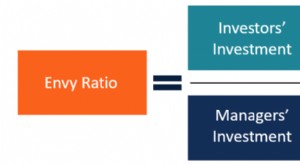
In private equity, the envy ratio is a ratio that shows the price paid by investors in relation to the price paid by the management team for their respective shares of the company’s common equit
-

Equity Capital Market: Definition & How It Works
The equity capital market is a subset of the broader capital market, where financial institutions and companies interact to trade financial instruments and raise capital for companies. Equity capital
finance
- Acid-Test Ratio: Understanding Your Company's Short-Term Liquidity
- Celler-Kefauver Act: History, Purpose & Impact on Antitrust
- Clayton Antitrust Act: A Comprehensive Overview | Legal Definitions & Impact
- Dodd-Frank Act Explained: Impact & Key Provisions
- Understanding the Earnings Multiplier (P/E Ratio): A Comprehensive Guide
- Glass-Steagall Act: History, Impact, and Significance
- Hart-Scott-Rodino Act (HSR Act): Antitrust Review Explained
- Understanding the IPO Process: A Comprehensive Guide
- Modigliani-Miller Theorem: Understanding Capital Structure & Firm Value
-
 Understanding Degree of Operating Leverage (DOL): A Comprehensive Guide
The degree of operating leverage (DOL) is a financial ratio that measures the sensitivity of a company’s operating incomeOperating IncomeOperating income is the amount of revenue left after dedu...
-
 Understanding Total Leverage: A Comprehensive Guide
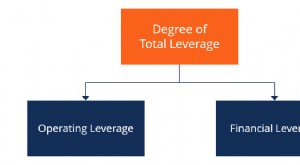
The degree of total leverage is a ratio that compares the rate of change a company experiences in earnings per share (EPS)Earnings Per Share (EPS)Earnings per share (EPS) is a key metric used to deter...