
Quantitative Easing (QE): A Comprehensive Explanation
During normal financial times, the primary function of a country’s central bank is to keep the economy growing at a steady rate by setting interest rates at a low enough level so that money is cheap enough for everyone to borrow. So if an economy is stagnant, the central bank will attempt to get money flowing through the works by dropping interest rates. But what options remain if interest rates are dropped to zero but the economy still fails to show any signs of life? QE happens. Like the Walkman and the lesser-known but arguably just as brilliant umbrella tie, QE is a Japanese invention, one that actually did a fairly effective job of reinvigorating the moribund Japanese economy when the Bank of Japan undertook it in 2001. When the US faced an equally dire situation during the global financial crisis, the Federal Reserve embarked on a similar QE policy beginning in 2009. The UK soon followed suit.
How’s QE work? If you’re a QE superfan who tailgates at every Fed meeting, or even the chair of your country’s central bank, you’ll probably want to dig a bit deeper into QE mechanics, but basically, a central bank will flood commercial banks with cash by buying bonds or financial instruments like mortgage backed securities using money that it creates with the stroke of a pen. With all that new cash, the central banks hope that those commercial banks will in turn provide loans to various cogs in the economy, from mortgage seekers all the way up to huge corporations hoping to expand their operations. Though economists might bicker about how much QE benefited various economies, the fact that the global economy roared back to life in recent years suggests that it will become a regular weapon in central banks’ arsenals to combat the worst financial crises.
-

Understanding Alpha: A Guide to Investment Performance
Alpha is a measure of the performance of an investment as compared to a suitable benchmark index, such as the S&P 500S&P – Standard and PoorsStandard & Poor’s is an American fi
-
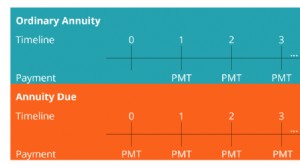
Annuity Due Explained: Payments at the Beginning of Each Period
Annuity due refers to a series of equal payments made at the same interval at the beginning of each period. Periods can be monthly, quarterly, semi-annually, annually, or any other defined period. Exa
finance
- BIS: Understanding the Bank for International Settlements - Role & Impact
- Understanding the Federal Reserve: The Central Bank of the U.S.
- Jumbo CDs: Higher Rates & Deposits Explained
- Quantitative Analysis: Definition, Methods & Applications
- Quantitative Finance: Models, Data & Market Analysis
- Quantitative Trading: A Deep Dive into Models & Analysis
- Central Banks: Functions, Role & Impact on the Economy
- Central Bank Digital Currency (CBDC): Explained | [Your Brand/Website]
- What is Quantitative Easing (QE)?
-
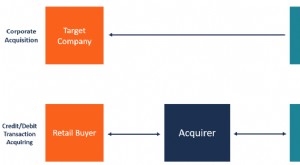 Acquirer Definition: Understanding Corporate Acquisitions
An acquirer is a registered company that purchases a portion of, or all the rights to, another company. The acquiring company takes over the management of another company by obtaining a majority stake...
-
 Understanding Add-On Interest: How It Works & Loan Payments
Add-on interest refers to the calculation method of determining the total interest to be paid on a loan. Once the interest’s been added to the principal, the amount is divided by the number of m...