
ACATS Explained: Seamless Account Transfers for Investors
The Automated Customer Account Service (ACATS) is an electronic system in the U.S. that allows the smooth transfer of financial securities of a customer from the trading account of one institution to the trading account at another. The institutions are usually brokerage firmsBrokerageA brokerage provides intermediary services in various areas, e.g., investing, obtaining a loan, or purchasing real estate. A broker is an intermediary who or banks.

Many different types of assets and investment products are transferred using ACATS, such as equities, bonds, unit trusts, annuities, options, mutual funds, and cash. For mutual fund transactions, ACATS is connected to the NSCC’s Fund/SERV system. The system facilitates fast re-registration of funds when account transfers take place.
Whereas, for the transfer of insurance assets, ACATS links with Insurance Processing Service (IPS) to provide information necessary for re-registration between two companies. A transfer through ACATS takes about six business days to process. However, ACATS transactions are not guaranteed and therefore, can be reversed if one of the parties in the transfer defaults.
The system was developed by the National Securities Clearing Corporation (NSCC)National Securities Clearing Corporation (NSCC)The National Securities Clearing Corporation (NSCC) provides risk management, settlement, and clearing services to the U.S securities exchange market, which went on to become a subsidiary of the Depository Trust and Clearing Corporation (DTCC). The system replaced a previous asset transfer system, which was a manual one.
DTCC is a private holding company that is owned by various banks and financial institutions that handle a majority of securities transactions in the US. Only companies that are members of the NSCC can use ACATS. Banks must be members of DTCC to use ACATS.
Summary
- Automated Customer Account Transfer Service (ACATS) is an automated system that helps transfer assets from one customer trading account to another.
- ACATS was developed by the National Securities Clearing Corporation and replaced an earlier system, which was a manual one.
- The system helps traders exchange various types of assets and provides a standardized procedure that is efficient.
How Does an Automated Customer Account Service Work?
A standard account transfer between two broker-dealer members would follow the steps below:
- The receiving member initiates the transfer by submitting a Transfer Information (TI) form to ACATS. The form is also known as a Transfer Initiation Form (TIF).
- A control number is assigned by ACATS to the transfer for future reference. ACATS also informs both the delivering and the receiving member identified in the TIF. It also puts the requested transfer into the “REQUEST” status in the system. If the information submitted is incomplete or in the wrong format, ACATS rejects the request and informs the member that initiated the request.
- The delivering member either adds the assets that are to be transferred or rejects the transfer. The member has one business day to respond to the output.
- Once the delivering member adds the assets that are to be transferred, both parties to the transfer have the opportunity to check the assets that are selected. ACATS transfers the status to “REVIEW” and both the members have two business days to review the assets. In case the delivering member decides to add, delete, or modify the assets listed, ACATS transfers the status to “REVIEW-ADJUST-DELIVERER” and automatically provides an additional business day for both the parties to review the assets.
- Due to the nature of mutual fundsMutual FundsA mutual fund is a pool of money collected from many investors for the purpose of investing in stocks, bonds, or other securities. Mutual funds are owned by a group of investors and managed by professionals. Learn about the various types of fund, how they work, and benefits and tradeoffs of investing in them and insurance assets, the receiving member must submit the requisite mutual fund and insurance re-registration forms.
- After the review period is complete, ACATS will move the account to “SETTLE PREP” status. The period lasts for one business day, and no party can make any further updates or changes to the transfer.
- ACATS will then issue a report to both the parties informing them about the assets being settled in the transfer. The members will have settling interfaces, and ACATS will send the settling assets to the interfaces.
- After the transfer, ACATS then moves the account to “SETTLE CLOSE” status in the system. Through NSCC’s money settlement, the delivering member will be debited the market value of the assets, and the receiving member will be credited with the market value of the assets.
The same procedure is followed, even if cash assets are involved. However, if one of the parties is a bank in a cash asset transfer, it settles through a Security Payment Order (SPO) at DTCC.
Benefits of ACATS
- ACATS is cost- and time-efficient.
- It complies with FINRA requirements.
- The service can easily handle multiple processing cycles.
- It accelerates settlements and is secure.
Additional Resources
CFI is the official provider of the Commercial Banking & Credit Analyst (CBCA)™Program Page - CBCAGet CFI's CBCA™ certification and become a Commercial Banking & Credit Analyst. Enroll and advance your career with our certification programs and courses. certification program, designed to transform anyone into a world-class financial analyst.
In order to help you become a world-class financial analyst and advance your career to your fullest potential, these additional resources will be very helpful:
- Banking and Securities Industry Committee (BASIC)Banking and Securities Industry Committee (BASIC)The Banking and Securities Industry Committee (BASIC) was established in 1970 with the goal of standardizing, automating, and streamlining the processing
- Managed FuturesManaged FuturesManaged futures is a subclass of alternative investment strategies used by large funds and institutional investors to achieve both portfolio and market
- Financial Industry Regulation Authority (FINRA)Financial Industry Regulatory Authority (FINRA)The Financial Industry Regulatory Authority (FINRA) acts as a self-regulatory organization for securities firms operating in the United States.
- Wire TransferWire TransferWire transfer is the electronic transfer of funds between people or entities. It allows people in distant locations around the globe to safely transfer
-
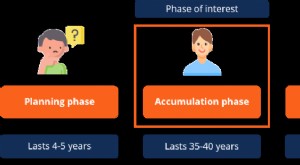
Understanding the Investment Accumulation Phase: Building Wealth Over Time
The accumulation phase refers to the time in the life cycle of an investment when an individual or an investor builds up the value of their annuity or investment. It is the second phase in the process
-

ACATS Explained: Seamless Account Transfers for Investors
The Automated Customer Account Service (ACATS) is an electronic system in the U.S. that allows the smooth transfer of financial securities of a customer from the trading account of one institution to
invest
- Understanding EBT Cash Accounts: Benefits & How They Work
- Understanding Savings Accounts: Purposes & Benefits
- Understanding Checking Accounts: Features & Benefits
- Debt Service Coverage Ratio (DSCR): Definition & Calculation
- Understanding the Debt Service Reserve Account (DSRA)
- Dow 30 Explained: Understanding the Dow Jones Industrial Average
- Margin Accounts: Borrowing to Invest & Increase Buying Power
- Savings Accounts: Definition, Types & How to Start Saving
- ACH vs. Wire Transfer: Understanding the Key Differences
-
 Best Automated Forex Trading Software: A Comprehensive Guide
In the past decade, the nature of trading has changed from more traditional methods venturing into innovative ones. It is part of a larger trend of computers substituting human traders and their emo...
-
 Savings Account Interest Rates: What to Expect & How to Maximize Your Returns
When it comes to the interest rate paid on savings accounts, you don't want to be ...