
Currency Futures Contracts: A Comprehensive Guide
Currency futures contracts also referred to as foreign exchangeForeign ExchangeForeign exchange (Forex or FX) is the conversion of one currency into another at a specific rate known as the foreign exchange rate. The conversion rates for almost all currencies are constantly floating as they are driven by the market forces of supply and demand. futures or FX futures for short, are a type of futures contract to exchange a currency for another at a fixed exchange rate on a specific date in the future.
Since the value of the contract is based on the underlying currency exchange rate, currency futures are considered a financial derivative. These futures are very similar to currency forwards however futures contracts are standardized and traded on centralized exchanges rather than customized.
Summary
- Currency futures contracts are a type of futures contract to exchange a currency for another at a fixed exchange rate on a specific date in the future.
- The contracts are standardized and are traded on centralized exchanges.
- Currency futures can be used for hedging or speculative purposes.
- Due to the high liquidity and ability to leverage the position, speculators will often use currency futures over currency forwards.
How Do Currency Futures Work?
Currency futures are standardized contracts that trade on centralized exchanges. The futures are either cash-settled or physically delivered. Cash-settled futures are settled daily on a mark-to-market basis.
As the daily price changes, the differences are settled in cash until the expiration date. For futures settled by physical delivery, at the expiration date, the currencies must be exchanged for the amount indicated by the size of the contract.
Foreign exchange futures contracts comprise several components outlined below:
- Underlying Asset – This is the specified currency exchange rate
- Expiration Date – For cash-settled futures, this is the last time it is settled. For physically delivered futures this is the date the currencies are exchanged
- Size – Contracts sizes are standardized. For example, a euro currency contract is standardized to 125,000 euros
- Margin Requirement – To enter into a futures contract, an initial margin is required. A maintenance marginMaintenance MarginMaintenance margin is the total amount of capital that must remain in an investment account in order to hold an investment or trading position and avoid a will also be established and if the initial margin falls below this point, a margin call will happen, meaning the trader or investor must deposit money to bring it above the maintenance margin
Since currency futures are traded on centralized exchanges and through clearinghouses, and margins are put into place, this vastly reduces counterparty risk compared to currency forwards. A typical initial margin can be around 4% and a maintenance margin around 2%.
What are Currency Futures used for?
Like other futures, foreign exchange futures can be used for hedging or speculative purposes. A party who knows they will need a foreign currency at a future point, however, does not want to purchase the foreign currency at this point in time may buy FX futures. This will act as a hedged position against any volatility in the exchange rate. At the expiration date when they need to buy the currency, they will be guaranteed the FX futures contract’s exchange rate.
Similarly, if a party knows that they will receive a cash flow in the future in a foreign currency, they can use futures to hedge this position. For example, if a company in the US is doing business with a country in Germany, and they are selling a large item payable in euros in a year, the US company may purchase currency futures to protect against negative swings in the exchange rate.
Currency futures are also often used by speculatorsSpeculatorA speculator is an individual or firm that, as the name suggests, speculates – or guesses – that the price of securities will go up or down and trades the securities based on their speculation. Speculators are also people who create fortunes and start, fund, or help to grow businesses.. If a trader expects a currency to appreciate against another, they can buy FX futures contracts to try to gain from the shifting exchange rate. These contracts can also be useful for speculators because the initial margin that is held will generally be a fraction of the size of the contract. This allows them to essentially lever up their position and have more exposure to the exchange rate.
Currency futures can also be used as a check for interest rate parityInterest Rate Parity (IRP)The interest rate parity (IRP) is a theory regarding the relationship between the spot exchange rate and the expected spot rate or forward exchange rate of two currencies, based on interest rates. The theory holds that the forward exchange rate should be equal to the spot currency exchange rate times the interest rate of the home country, divided by the interest rate of the foreign country.. If interest rate parity does not hold, a trader may be able to employ an arbitrage strategy to profit purely from borrowed funds and the use of futures contracts.
Investors looking to hedge a position often use currency forwards due to the ability to customize these over-the-counter contracts. Speculators often use currency futures due to the high liquidity and ability to leverage their position.
Currency Futures – Worked Example
Let us now look at an example that involves currency futures. Say you purchase 8 future Euro contracts (€125,000 per contract) at 0.89 US$/€. At the end of the day, the settlement price has moved to 0.91 US$/€. How much have you lost or profited?
The price has increased meaning you have profited. The calculation to determine how much you have profited is as follows:
(0.91 US$/€ – 0.89 US$/€) x €125,000 x 8 = 20,000 US$
Additional Resources
Thank you for reading CFI’s article on currency futures. If you would like to learn about related concepts, check out CFI’s other resources:
- DerivativesDerivativesDerivatives are financial contracts whose value is linked to the value of an underlying asset. They are complex financial instruments that are
- Futures ContractFutures ContractA futures contract is an agreement to buy or sell an underlying asset at a later date for a predetermined price. It’s also known as a derivative because future contracts derive their value from an underlying asset. Investors may purchase the right to buy or sell the underlying asset at a later date for a predetermined price.
- Currency SwapCurrency Swap ContractA currency swap contract (also known as a cross-currency swap contract) is a derivative contract between two parties that involves the
- Interest Rate ParityInterest Rate Parity (IRP)The interest rate parity (IRP) is a theory regarding the relationship between the spot exchange rate and the expected spot rate or forward exchange rate of two currencies, based on interest rates. The theory holds that the forward exchange rate should be equal to the spot currency exchange rate times the interest rate of the home country, divided by the interest rate of the foreign country.
-

Understanding Nasdaq Futures & Futures Contracts: A Comprehensive Guide
A futures contract represents a legally binding agreement between two parties. In the contract, one party agrees to pay the other the difference in price from when they entered the contract until th
-
Currency Overlay: Protecting Your Investments from FX Risk
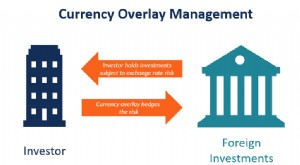
Currency overlay is an investment risk management strategy usually implemented by specialist firms that manage foreign currency exchange risk for client investors. The clients may be individual invest
invest
- Understanding Foreign Exchange Rates: A Comprehensive Guide
- Understanding Financial Derivatives: A Comprehensive Guide
- E-mini Futures: A Comprehensive Guide to Electronic Trading
- Interest Rate Futures: Definition, How They Work & Investing
- Managed Futures: A Comprehensive Guide for Diversified Investing
- Understanding Trading Instruments: A Comprehensive Guide
- Understanding Futures Contracts: A Guide for Investors
- Understanding Forex Futures: A Beginner's Guide
- Smart Contracts: A Comprehensive Guide to Blockchain Agreements
-
 Understanding the Backing of the U.S. Dollar: History & Current System
A detail of the U.S. one-dollar bill. To improve the public's confidence in the U.S. dollar and encourage its use in financial transactions, the Federal Reserve used to hold a specific am...
-
Understanding Futures Contracts: A Comprehensive Guide
What Is a Futures Contract? A futures contract is a legal agreement to buy or sell a particular commodity asset, or security at a predetermined price at a specified time in the future. Futures ...