
Understanding Foreign Exchange Rates: A Comprehensive Guide
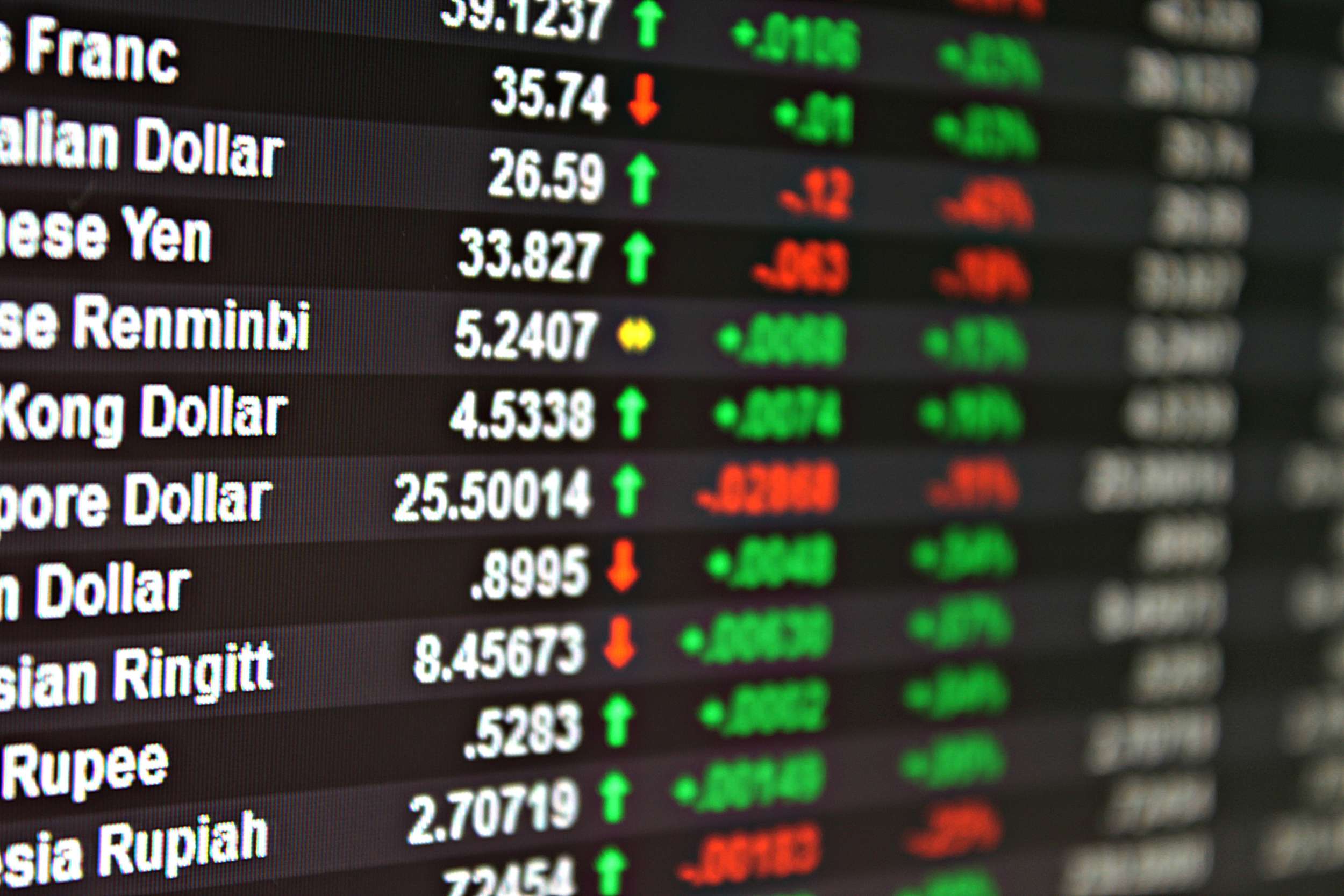
Foreign currency exchange rates measure one currency’s strength relative to another. A strong currency is considered to be one that is valuable, and this manifests itself when comparing its value to another currency. The strength of a currency depends on a number of factors such as its inflationInflationInflation is an economic concept that refers to increases in the price level of goods over a set period of time. The rise in the price level signifies that the currency in a given economy loses purchasing power (i.e., less can be bought with the same amount of money). rate, prevailing interest ratesInterest RateAn interest rate refers to the amount charged by a lender to a borrower for any form of debt given, generally expressed as a percentage of the principal. in its home country, or the stability of the government, to name a few.
What are Fixed Exchange Rates?
A fixed exchange rate (also known as the gold standard) quantifies the values of currencies by using a stable reference point. Historically, gold has been used as the reference point. This is because it is a valuable commodityGuide to Commodity Trading SecretsSuccessful commodity traders know the commodity trading secrets and distinguish between trading different types of financial markets. Trading commodities is different from trading stocks. worldwide and its value is less susceptible to fluctuations in interest rates. The system of tying currency values to gold functioned quite well until the mid-20th century.
The gold standard system in the early 1900s pegged the value of gold at US$35 per ounce of gold, which was the reference point that other nations used to fix the value of their currencies. It is important to note that this price was not the commodity price of gold. Private investors could not purchase gold at this price point. Governments had exclusive rights over private individuals to buy gold at this below-market price, thus reducing the volatility of currency values.
In 1944, the U.S. pursued an expansionary monetary policyFiscal PolicyFiscal Policy refers to the budgetary policy of the government, which involves the government controlling its level of spending and tax rates in a bid to financially support the country’s participation in World War II. This policy caused inflation to rise and resulted in the US dollar losing value fairly quickly. Other nations quickly began stockpiling gold to prevent fluctuations in their own currencies.
Eventually, the practice became quite unsustainable due to placing unrealistic demands on the inflation of the US dollar. In 1944, the “Gold Standard” was abolished and was replaced with the Pegged Exchange Rate System.
What are Pegged Exchange Rates?
The pegged exchange rate system incorporates aspects of floating and fixed exchange rate systems. Smaller economies that are particularly susceptible to currency fluctuations will “peg” their currency to a single major currency or a basket of currencies. These currencies are chosen based on which country the smaller economy experiences a lot of trade activity with or on which currency the nation’s debt is denominated in.
For example, if a small nation that does a lot of trade with the USA decides to peg its currency to the US dollar, its currency will fluctuate in value in roughly the same manner as the USD. The practice eliminates high-magnitude fluctuations and makes the smaller economy’s currency a safer investment. Larger economies are less hesitant to set up trade deals with such currencies since its value will likely not fluctuate beyond reasonable levels.
When pegged exchange rate agreements are set up, an initial target exchange rate is agreed upon by the participating countries. A fluctuation range is also set in place to outline acceptable deviations from the target exchange rate. Pegged exchange rate agreements usually have to be reviewed several times over their lifetimes in order to adapt the target rate and fluctuations to the changing economic climate.
Such systems have proven to reduce the volatility of currencies used in developing economies and have placed pressure on governments to be more disciplined with monetary policy choices. However, this does open up the possibility of investor speculation, which may have an effect on the value of the currency. Pegged rate systems may be abandoned altogether once the weaker currency gains momentum and sees its actual market value jump well ahead of its pegged value.
Additional Resources
Thanks for reading CFI’s article on fixed and pegged exchange rates. CFI offers the Financial Modeling & Valuation Analyst (FMVA)™Become a Certified Financial Modeling & Valuation Analyst (FMVA)®CFI's Financial Modeling and Valuation Analyst (FMVA)® certification will help you gain the confidence you need in your finance career. Enroll today! certification program for those looking to take their careers to the next level. To learn more about related topics, check out the following CFI resources:
- PeggingPeggingIn finance, pegging refers to two different actions. First, a peg is the act of linking the exchange rate of one currency to another. For most countries, the general practice is to peg the exchange rate of their currency to that of the U.S. dollar.
- Purchasing Power ParityPurchasing Power ParityThe concept of Purchasing Power Parity (PPP) is a tool used to make multilateral comparisons between the national incomes and living standards
- Trade-Weighted Exchange RateTrade-Weighted Exchange RateThe Trade-Weighted Exchange Rate is a complex measure of a country's currency exchange rate. It measures the strength of a currency weighted by the amount of trade with other countries.
- USA/CAD Currency CrossUSD/CAD Currency CrossThe USD/CAD currency pair represents the quoted rate for exchanging US to CAD, or, how many Canadian dollars one receives per US dollar. For example, a USD/CAD rate of 1.25 means 1 US dollar is equivalent to 1.25 Canadian dollars. The USD/CAD exchange rate is affected by economic and political forces on both
-
Key Currencies: Definition, Importance & Global Impact
Key currency is a currency that does not fluctuate too broadly, helps in setting exchange rates, and supports global transactions. The term “key currency” can also be used to define promin
-

2019 State Income Tax Rates: A Comprehensive Overview
This article was fact-checked by our editors and a member of the Credit Karma Tax® product specialist team, led by Senior Manager of Operations Christina Taylor. Do you know your s
finance
- Understanding Competitive Interest Rates: What You Need to Know
- Negative Interest Rates: Explained | Causes, Effects & History
- Understanding Currency Exchange Rates: A Comprehensive Guide
- Currency Forward Explained: Contracts for Future Exchange Rates
- Foreign Exchange Reserves: Definition & Importance
- Negative Interest Rates Explained: How They Work & Impact
- Understanding the Temporal Method for Currency Translation
- Understanding Currency Pegs: EUR/USD and Exchange Rate Basics
- Understanding Currency Exchange Rates: Key Factors & Influences
-
 Demonetization Explained: Understanding Currency Withdrawal
Demonetization is an economic process in which a country’s currency unit is no longer legal tender. A currency unit is what we would commonly refer to as physical money, such as banknotes and co...
-
 Understanding Hard Currencies: Stability and Global Trade
A hard currency refers to a currency that is generally issued by developed countries, globally traded, and seen as politically and economically stable. International investors put their confidence and...