
Managed Futures: A Comprehensive Guide for Diversified Investing
Managed futures is a subclass of alternative investment strategies used by large funds and institutional investors to achieve both portfolio and market diversification. With the ability to take both long and short positionsLong and Short PositionsIn investing, long and short positions represent directional bets by investors that a security will either go up (when long) or down (when short). In the trading of assets, an investor can take two types of positions: long and short. An investor can either buy an asset (going long), or sell it (going short)., managed futures are diversified, highly-flexible, liquid, transparent, ideal risk management tools with the potential to profit from rising and falling markets.

The substantial growth of the managed futures industry over the past few decades can be attributed to greater investor awareness and continuous improvement in information technology. As of the first quarter of 2020, the managed futures (CTA) industry was valued at $278 billion, according to BarclayHedge, a leading research-based provider of information services to alternative investments.
Summary
- Managed futures is an alternative investment vehicle frequently used by large funds and institutional investors to achieve both portfolio and market diversification.
- They are operated by Commodity Pool Operators (CPOs) and Commodity Trading Advisors (CTAs).
- Managed futures exhibit weak correlation to traditional asset classes, such as stocks and bonds. When used in conjunction with stocks and bonds, they have the potential to lower the overall portfolio risk and increase returns.
Managed Futures vs. Hedge Funds
Managed futures are different from hedge funds in the sense that while hedge funds can trade in a wide variety of markets, including fixed income derivatives, over-the-counterOver-the-Counter (OTC)Over-the-counter (OTC) is the trading of securities between two counter-parties executed outside of formal exchanges and without the supervision of an exchange regulator. OTC trading is done in over-the-counter markets (a decentralized place with no physical location), through dealer networks., and individual equity. On the other hand, managed futures can generally only trade in exchange cleared futures, options on futures, and forward markets.
CTAs and CPOs
Managed futures funds are operated by Commodity Pool Operators (CPOs) and Commodity Trading Advisors (CTAs). CTAs are individuals or organizations responsible for the actual trading of managed accounts. They provide individualized advice regarding the buying and selling of commodity futures, futures options, and/or forward contractsForward ContractA forward contract, often shortened to just "forward", is an agreement to buy or sell an asset at a specific price on a specified date in the future on broad asset classes.
The two major types of CTAs are technical traders and fundamental traders. Technical traders employ systematic quantitative investment strategies and use computer programs to follow pricing trends, whereas fundamental traders understand demand and supply factors to forecast prices. There are approximately 1,800 CTAs registered with the National Futures AssociationNational Futures Association (NFA)The National Futures Association (NFA) is a self-regulatory organization that regulates the U.S. derivatives industry and provides investors with protection, each with its own unique method of managing assets.
CPOs are the organizations managing commodity pools. They are mostly in the form of limited partnerships, which hire CTAs to direct the day-to-day trading of the fund or portion of it. They combine the performance of a variety of external CTAs or DFMs and are thus called “Manager of Managers.” There are around 1,100 CPOs registered with the NFA.
Approaches for Trading Managed Futures
1. Market-neutral strategy
A market-neutral strategy is frequently used by investors or investment managers to reduce some form of market risk or volatility by taking matching long and short positions in a particular industry. It is a form of hedging that aims to generate returns from both increasing and decreasing prices independent of the market environment.
The ultimate goal is to maintain zero beta exposure to the overall market and thus, the success of the strategy depends purely on the portfolio manager’s ability to select individual stocks.
2. Trend-following strategy
Unlike the market-neutral strategy, trend trading involves using various indicators/technical signals to determine the direction of market momentum. Trend traders tend to enter into a short position when the price of the asset goes down and may take a long position when the price goes up.
Benefits of Trading Managed Futures
1. Risk reduction
Managed futures, when used in conjunction with traditional asset classes, have the potential to lower the overall portfolio risk and increase returns as they can be traded across a wide range of global markets and have a low correlation to traditional asset classes such as stocks and bonds. Also, they have historically performed well and have provided excellent downside protection in a traditional portfolio during adverse market conditions.
2. Non-correlation
Managed futures exhibit weak correlation to traditional asset classes such as stocks and bonds. The low correlation is a result of managed futures managers’ ability to go long or short across equity index, fixed income, commodity, and foreign exchange markets without taking on any systematic exposure to beta. During times of inflationary pressure, investing in managed futures can provide a counterbalance to the losses that may occur in the equity and bond market.
3. Diversification opportunities
The rise in actively traded futures contracts and the establishment of global commodity exchanges have made managed futures a natural choice for investment portfolio diversification. Managed futures can be traded in over 150 financial and commodity markets worldwide, including agricultural products, metals, energy products, equities, currencies, stock indexes, etc. CTAs, thus, have the opportunity to profit from a wide variety of non-correlated markets.
4. Limits drawdowns
Drawdowns – peak-to-valley decline in equity or of a trading account or during a specific period of investment – are inevitable and cannot be completely avoided. However, because CTAs can go long or short – and typically adhere to strict stop-loss limits by placing an offsetting order to limit the losses when the price of the security reaches a specified level – managed futures funds have the potential to limit drawdowns more effectively than many other investments.
Related Readings
CFI is the official provider of the global Commercial Banking & Credit Analyst (CBCA)™Program Page - CBCAGet CFI's CBCA™ certification and become a Commercial Banking & Credit Analyst. Enroll and advance your career with our certification programs and courses. certification program, designed to help anyone become a world-class financial analyst. To keep advancing your career, the additional CFI resources below will be useful:
- Contango vs. BackwardationContango vs BackwardationContango vs backwardation are terms used to describe the shape of the futures curve for commodity markets. The futures curve has two dimensions, plotting time across the horizontal axis and delivery price of the commodity across the vertical axis.
- Hedging ArrangementHedging ArrangementHedging arrangement refers to an investment whose aim is to reduce the level of future risks in the event of an adverse price movement of an asset. Hedging provides a sort of insurance cover to protect against losses from an investment.
- Open-end vs Closed-end Mutual FundsOpen-end vs Closed-end Mutual FundsMany investors consider open-end vs. closed-end mutual funds similar due to both mutual funds allowing them a low-cost way to pool capital together and
- Futures and ForwardsFutures and ForwardsFuture and forward contracts (more commonly referred to as futures and forwards) are contracts that are used by businesses and investors to hedge against risks or speculate.
-

Understanding Hard Assets: Definition, Examples & Investment
Hard assets are physical or tangible assets that hold value and are normally held for the long term. In addition to tangibility, they are also visible and are considered an investable asset because of
-

Understanding Historical Returns: A Guide for Investors
The historical return of a financial asset, such as a bond, stock, security, index, or fund, is its past rate of return and performance. The historical data is commonly used in financial analysisTypes
invest
- Understanding Futures Contracts: A Comprehensive Guide for Investors
- Baby Bonds: A Comprehensive Guide to Investing in Children's Futures
- Basis Risk Explained: Understanding and Managing Hedging Risk
- Understanding Bonds: A Comprehensive Guide for Investors
- Currency Futures Contracts: A Comprehensive Guide
- E-mini Futures: A Comprehensive Guide to Electronic Trading
- Interest Rate Futures: Definition, How They Work & Investing
- Understanding Futures Contracts: A Guide for Investors
- Understanding Forex Futures: A Beginner's Guide
-
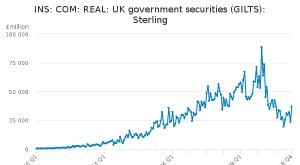 Gilts: Understanding UK Government Bonds | LSE
Gilts are bonds issued by the UK government. More specifically, the debt securities are issued by the Bank of England, by His or Her Majesty’s treasury, and are listed on the London Stock Exchan...
-
 Understanding Growth Stocks: Definition, Characteristics & Investing
Growth stocks are stocks that offer a substantially higher growth rate as opposed to the mean growth rate prevailing in the market. It means that a growth stock grows at a faster rate than the average...