
Dynamic Asset Allocation: A Comprehensive Guide
Dynamic asset allocation is an investment strategy that involves the frequent adjustment of the weights in a portfolio based on the overall market performance or the performance of certain securitiesMarketable SecuritiesMarketable securities are unrestricted short-term financial instruments that are issued either for equity securities or for debt securities of a publicly listed company. The issuing company creates these instruments for the express purpose of raising funds to further finance business activities and expansion..
Under the dynamic allocation strategy, a portfolio managerPortfolio ManagerPortfolio managers manage investment portfolios using a six-step portfolio management process. Learn exactly what does a portfolio manager do in this guide. Portfolio managers are professionals who manage investment portfolios, with the goal of achieving their clients’ investment objectives. assesses the current market conditions and the performance of each asset class. He uses the results of the assessment to reduce the weights of assets with bad performance and to increase the weights of assets with a strong performance.
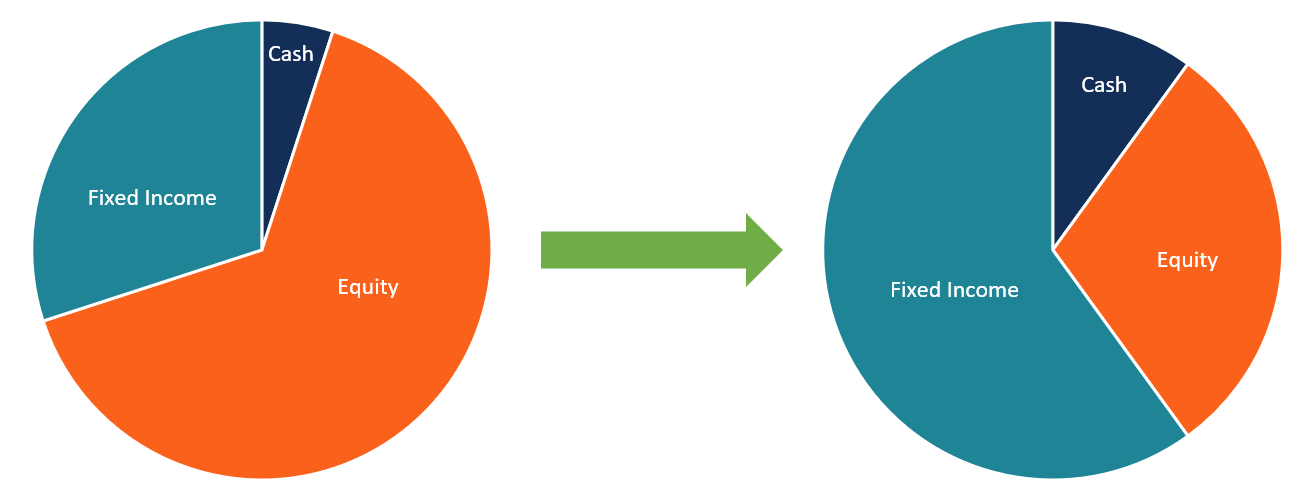
Generally, a dynamic strategy is used in reaction to existing risks and market downturns2010 Flash CrashThe 2010 Flash Crash is the market crash that occurred on May 6, 2010. During the 2010 crash, leading US stock indices, including the Dow. Unlike the strategic asset allocation strategy, dynamic asset allocation does not involve a target mix of assets. Thus, portfolio managers enjoy a high degree of flexibility in the choice of investments.
Dynamic allocation requires active portfolio management. Therefore, the success of the strategy depends not only on the market conditions but also on the portfolio manager’s ability to make good investment decisions and to adequately respond to changes in the market.
Advantages of Dynamic Asset Allocation
The investment strategy offers some advantages over other types of allocations, including:
1. Returns
The frequent adjustments in the mix of assets can possibly provide higher returns on the investment portfolio. The portfolio adjustments can prevent losses from unexpected market downturns and capture the momentum to increase the returns.
In addition, proficient portfolio managers can use dynamic asset allocation to achieve returns higher than the average market returns. In other words, the strategy can be utilized to beat the market.
2. Adjustment to market changes
Unlike static asset allocation, dynamic allocation is highly flexible. The strategy can quickly respond to market changes and market risks.
Disadvantages of Dynamic Asset Allocation
The strategy is not flawless. The potential user should be aware of the following disadvantages:
1. Transaction costs
The frequent rebalancing the weights within the portfolio is associated with transaction costsService ChargeA service charge, also called a service fee, refers to a fee collected to pay for services that relate to a product or service that is being purchased.. However, the constant buy and sell transactions diminish the overall returns of the portfolio.
2. Active management
The nature of dynamic asset allocation requires tight control of the investment portfolio and constant observation of emerging market trends. Therefore, the asset allocation strategy requires the skills and knowledge of a professional portfolio manager and may often demand extensive sources (e.g., employees for research).
Related Readings
CFI offers the Financial Modeling & Valuation Analyst (FMVA)™Become a Certified Financial Modeling & Valuation Analyst (FMVA)®CFI's Financial Modeling and Valuation Analyst (FMVA)® certification will help you gain the confidence you need in your finance career. Enroll today! certification program for those looking to take their careers to the next level. To keep learning and advancing your career, the following resources will be helpful:
- Asset ClassAsset ClassAn asset class is a group of similar investment vehicles. They are typically traded in the same financial markets and subject to the same rules and regulations.
- Investing: A Beginner’s GuideInvesting: A Beginner's GuideCFI's Investing for Beginners guide will teach you the basics of investing and how to get started. Learn about different strategies and techniques for trading
- DiversificationDiversificationDiversification is a technique of allocating portfolio resources or capital to a variety of investments.The goal of diversification is to mitigate losses
- Industry AnalysisIndustry AnalysisIndustry analysis is a market assessment tool used by businesses and analysts to understand the complexity of an industry. There are three commonly used and
-

Understanding Market Makers: How They Fuel Liquidity
Market maker refers to a firm or an individual that engages in two-sided markets of a given security. It means that it provides bids and asks in tandem with the market size of each security. A market
-

Understanding Market Manipulation: Definition, Tactics & SEC Role
Market manipulation refers to artificial inflation or deflation of the price of a security. Also known as price manipulation or stock manipulation, it involves the literal manipulation of a financial
invest
- Constant Weight Asset Allocation: A Simple Guide
- Dispersion Explained: Understanding Data Spread and Investment Risk
- Strategic Asset Allocation (SAA): A Comprehensive Guide
- Tactical Asset Allocation (TAA): A Comprehensive Guide
- Asset Allocation: A Comprehensive Guide to Investment Risk Management
- Asset Allocation: A Comprehensive Guide to Portfolio Diversification
- Portfolio Rebalancing: A Guide to Optimal Asset Allocation
- Socially Responsible Investing: Understanding Asset Allocation
- Asset Allocation: A Comprehensive Guide to Portfolio Diversification
-
 Understanding Market Exposure: Risk & Portfolio Allocation
Market exposure refers to the absolute amount of funds or the percentage of a portfolio that is invested in a given security, or a bundle of securities that are part of the same industry or market sec...
-
 Understanding Market Indexes: A Comprehensive Guide
Market index refers to a portfolio of securities that represent a particular section of the stock marketStock MarketThe stock market refers to public markets that exist for issuing, buying and selling...