
General Obligation Bonds (GO Bonds): A Comprehensive Guide
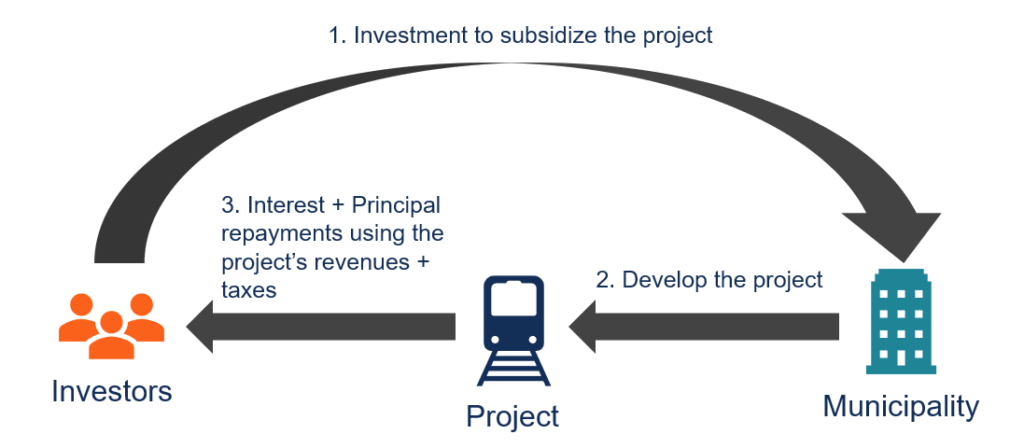
A general obligation (GO) bond is a type of municipal bond in which the bond repayments (interest and principalPrincipal PaymentA principal payment is a payment toward the original amount of a loan that is owed. In other words, a principal payment is a payment made on a loan that reduces the remaining loan amount due, rather than applying to the payment of interest charged on the loan.) are guaranteed by the total revenue generated by the relevant government entity or agency. In other words, the repayment is guaranteed by both tax revenue and operating revenue generated by various projects. GO bonds are primarily used to subsidize the development of public projects.
GO bonds are different from another type of municipal bonds called revenue bondsRevenue BondA revenue bond is a type of municipal bond in which the repayment of the obligation is primarily guaranteed by the operating revenues of an entity. . The repayment of revenue bonds is secured only by operational revenue streams generated by the project and cannot be guaranteed by tax revenues. However, as stated above, GO bonds allow using both revenue sources.
Types of General Obligation Bonds
There are two types of general obligation bonds: the limited-tax GO bond and the unlimited-tax GO bond.
1. Limited-tax general obligation bond
A limited-tax GO bond allows municipalities to raise property taxes (within a certain specified limit) when it is necessary to meet the service payments of the debt.
2. Unlimited-tax general obligation bond
An unlimited-tax general obligation bond comes with similar features as the limited-tax version, but with no limit on the property tax increase. The property tax can be increased by up to 100%, but only with the consent of taxpayers. Note that for limited-tax GO bonds, the taxpayers’ approval is not usually required.
How Does a General Obligation Bond Work?
Imagine a situation when a municipality decides to launch a new project, but it lacks sufficient capital to finance the initiative. In such a case, the municipality can issue general obligation bonds.
Investors who purchase the bonds provide capital to the municipality. In return, the investors are entitled to a portion of the municipality’s revenues generated from the project, as well as tax revenues. The revenue streams allow the municipality to honor both the interest and principal payments of the bonds.
Since the repayment is secured by the municipality’s total revenues, there is a low probability of default. Thus, GO bonds are considered safe investments. It is common that such bonds receive strong ratings from credit rating agenciesRating AgencyA rating agency assesses the financial strength of companies and government entities, especially their ability to meet principal and interest payments.
Additional Resources
CFI is the official provider of the global Financial Modeling & Valuation Analyst (FMVA)™Become a Certified Financial Modeling & Valuation Analyst (FMVA)®CFI's Financial Modeling and Valuation Analyst (FMVA)® certification will help you gain the confidence you need in your finance career. Enroll today! certification program, designed to help anyone become a world-class financial analyst. To keep advancing your career, the additional resources below will be useful:
- Capital Raising ProcessCapital Raising ProcessThis article is intended to provide readers with a deeper understanding of how the capital raising process works and happens in the industry today. For more information on capital raising and different types of commitments made by the underwriter, please see our underwriting overview.
- Convertible BondConvertible BondA convertible bond is a type of debt security that provides an investor with a right or an obligation to exchange the bond for a predetermined number of shares in the issuing company at certain times of a bond’s lifetime. A convertible bond is a hybrid security
- Coupon BondCoupon BondA coupon bond is a type of bond that includes attached coupons and pays periodic (typically annual or semi-annual) interest payments during its lifetime and its par value at maturity. These bonds come with a coupon rate, which refers to the bond's yield at the date of issuance.
- Revenue StreamsRevenue StreamsRevenue Streams are the various sources from which a business earns money from the sale of goods or provision of services. The types of
-

Profit Sharing Bonds: Understanding Investment Income & Potential
A profit sharing bond is a fixed income security whereby the holder receives regular interest payments and a share in the profits or dividends of the bond-issuing company. Other Nam
-

Understanding Term to Maturity: A Key Bond Concept
Term to maturity is the remaining life of a bond or other type of debt instrument. The duration ranges between the time when the bond is issued until its maturity date when the issuer is required to r
invest
- Understanding Bonds: A Comprehensive Guide for Investors
- Callable Bonds: Understanding Issuer Redemption Rights
- Convertible Bonds: A Comprehensive Guide for Investors
- Green Bonds: Financing a Sustainable Future | [Your Company Name]
- High-Yield Bonds: Understanding Risk & Potential Returns
- Kangaroo Bonds: A Guide to Australian Dollar Debt
- L Bonds: Understanding Unrated Life Insurance Bonds
- Municipal Bonds: A Comprehensive Guide for Investors
- Understanding Bonds: A Comprehensive Guide for Investors
-
 Development Impact Bonds: Investing in Social Change
A development impact bond is a type of financial security that is used to finance development programs in low-resource countries by attracting private investors. Development impact bonds are considere...
-
 Understanding High-Yield Bond Spreads: A Comprehensive Guide
A high-yield bond spread, also known as a credit spread, is the difference in yields between multiple high-yield bonds, expressed in basis points or percentage points. A high-yield bond is a term that...