
Understanding Term to Maturity: A Key Bond Concept
Term to maturity is the remaining life of a bond or other type of debt instrument. The duration ranges between the time when the bond is issued until its maturity date when the issuer is required to redeem the bond and pay the face value of the bond to the bondholder.

During the life of the bond, the issuer is required to make coupon paymentsCoupon RateA coupon rate is the amount of annual interest income paid to a bondholder, based on the face value of the bond. at a fixed percentage agreed on the issue date. The time of maturity can be either short-term or long-term, and each duration comes with varying interest rates. Bonds with a longer term to maturity offer a higher interest rate than short-term bonds whose term to maturity is less than five years.
Categories of Bonds Based on Terms of Maturity
Bonds can be grouped into either short-term, intermediate or long-term bonds.
1. Short-term bonds
A short-term bond is a bond with a term to maturity of between 1 to 5 years. Short-term bonds can be issued by any entity such as investment-grade corporations, government institutions, and companies rated below investment gradeCredit RatingA credit rating is an opinion of a particular credit agency regarding the ability and willingness an entity (government, business, or individual) to fulfill its financial obligations in completeness and within the established due dates. A credit rating also signifies the likelihood a debtor will default.. They are preferred by bondholders who are looking to preserve their capital since they tend to hold up better when market conditions are unfavorable. Short-term bonds are highly liquid; investors can access their capital with ease compared to a long-term bond that tends to lock investors in for a long period.
2. Intermediate bonds
Intermediate bonds come with a term to maturity of 5 to 10 years, and they pay higher returns than short-term bonds, but lower than long-term bonds. Intermediate bonds are preferred by investors with higher risk tolerance and who expect to earn higher yields at maturity. On the downside, bonds with a longer term to maturity are more affected by price fluctuations than bonds with a short term to maturity.
3. Long-term bonds
Long-term bonds come with a term to maturity of between 10 years and 30 years. Such bonds generally pay a higher interest rateInterest RateAn interest rate refers to the amount charged by a lender to a borrower for any form of debt given, generally expressed as a percentage of the principal. than short-term and intermediate bonds. Bond issuers are willing to pay a higher interest rate for the bonds in exchange for locking the bond for a longer period of time. Usually, the term to maturity for long term bonds may be fixed, or it can be changed during the life of the bond if the bond agreement includes a put, call, or conversion provision.
Long-term bonds are preferred by investors who are looking to maximize their returns in the long run. On the downside, the bonds lack the flexibility offered by short-term bonds. It means that, if interest rates increase, the value of the bond will decline by a similar proportion. Also, bond issuers with other outstanding bonds with shorter maturities may default on their obligations.
What Happens When Bonds Reaches Maturity
If you own bonds in your portfolio, it is important to know when they expire and the amount of time left until the maturity date. Usually, upon the expiry of a bond, the bondholder is required to return the bond certificate to the issuing entity, which is either the Federal Government or a corporation.
The issuer will then pay the original issue price or the face value of the bond to the bondholder. If the issuer did not make periodic interest payments prior to the maturity date, bondholders expect to receive the principal payment plus all the interest payments that have accrued since the bond was issued.
Bondholders are also required to pay taxes on any capital gainsCapital Gains YieldCapital gains yield (CGY) is the price appreciation on an investment or a security expressed as a percentage. Because the calculation of Capital Gain Yield involves the market price of a security over time, it can be used to analyze the fluctuation in the market price of a security. See calculation and example on the bond they hold. Typically, treasury bonds and municipal bonds may be exempted from federal and local taxes, and their holders will not be required to pay such taxes. Other bonds are subject to taxation depending on the tax laws that exist in a country.
For example, if you bought a $1,000 bond at a discount of $950, you will realize a capital gain of $50. The capital gain must be declared on your annual tax returns. If it’s a capital loss, it can help reduce the taxes due to the tax authorities.
Risk and Yield of Bonds with Different Maturity Terms
Investors can choose among short-term bonds, intermediate bonds, and long-term bonds when looking for fixed-income instruments. Their choice of investment is influenced by their risk tolerance, time frame, and objectives. Typically, short-term bonds come with low risk and low yields. They are preferred by investors whose top priority is the safety of their investments. It means they are willing to sacrifice higher yields offered by intermediate and long-term bonds to obtain greater stability and low risk.
On the other hand, long-term bonds provide higher yields and come with greater risk. Long-term bonds lock the investor’s funds for a longer period, which allows more time for interest rates to influence the price of the bond. Investors with a higher risk tolerance would willingly lock up their money for a long period in exchange for higher yields. However, long-term bonds are more than volatile than other bond types. It means that they may not be appropriate for investors who are looking to recover their investment in three years or less.
Additional Resources
CFI offers the Financial Modeling & Valuation Analyst (FMVA)™Become a Certified Financial Modeling & Valuation Analyst (FMVA)®CFI's Financial Modeling and Valuation Analyst (FMVA)® certification will help you gain the confidence you need in your finance career. Enroll today! certification program for those looking to take their careers to the next level. To keep learning and advancing your career, the following resources will be helpful:
- Bond RatingsBond RatingsBond ratings are representations of the creditworthiness of corporate or government bonds. The ratings are published by credit rating agencies and provide evaluations of a bond issuer’s financial strength and capacity to repay the bond’s principal and interest according to the contract.
- Effective DurationEffective DurationEffective duration is the sensitivity of a bond's price against the benchmark yield curve. One way to assess the risk of a bond is to estimate the
- Fixed Income Bond TermsFixed Income Bond TermsDefinitions for the most common bond and fixed income terms. Annuity, perpetuity, coupon rate, covariance, current yield, par value, yield to maturity. etc.
- Par ValuePar ValuePar Value is the nominal or face value of a bond, or stock, or coupon as indicated on a bond or stock certificate. It is a static value
-

Profit Sharing Bonds: Understanding Investment Income & Potential
A profit sharing bond is a fixed income security whereby the holder receives regular interest payments and a share in the profits or dividends of the bond-issuing company. Other Nam
-

Understanding High-Yield Bond Spreads: A Comprehensive Guide
A high-yield bond spread, also known as a credit spread, is the difference in yields between multiple high-yield bonds, expressed in basis points or percentage points. A high-yield bond is a term that
invest
- Understanding Bonds: A Comprehensive Guide for Investors
- Callable Bonds: Understanding Issuer Redemption Rights
- Convertible Bonds: A Comprehensive Guide for Investors
- Green Bonds: Financing a Sustainable Future | [Your Company Name]
- High-Yield Bonds: Understanding Risk & Potential Returns
- Kangaroo Bonds: A Guide to Australian Dollar Debt
- L Bonds: Understanding Unrated Life Insurance Bonds
- Municipal Bonds: A Comprehensive Guide for Investors
- Understanding Bonds: A Comprehensive Guide for Investors
-
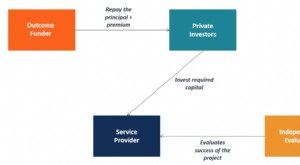 Development Impact Bonds: Investing in Social Change
A development impact bond is a type of financial security that is used to finance development programs in low-resource countries by attracting private investors. Development impact bonds are considere...
-
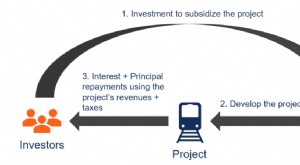 General Obligation Bonds (GO Bonds): A Comprehensive Guide
A general obligation (GO) bond is a type of municipal bond in which the bond repayments (interest and principalPrincipal PaymentA principal payment is a payment toward the original amount of a loan th...