
High-Frequency Trading (HFT): A Comprehensive Overview
High-frequency trading (HFT) is algorithmic trading characterized by high-speed trade execution, an extremely large number of transactions, and a very short-term investment horizon. HFT leverages special computers to achieve the highest speed of trade execution possible. It is very complex and, therefore, primarily a tool employed by large institutional investors such as investment banksList of Top Investment BanksList of the top 100 investment banks in the world sorted alphabetically. Top investment banks on the list are Goldman Sachs, Morgan Stanley, BAML, JP Morgan, Blackstone, Rothschild, Scotiabank, RBC, UBS, Wells Fargo, Deutsche Bank, Citi, Macquarie, HSBC, ICBC, Credit Suisse, Bank of America Merril Lynch and hedge funds.
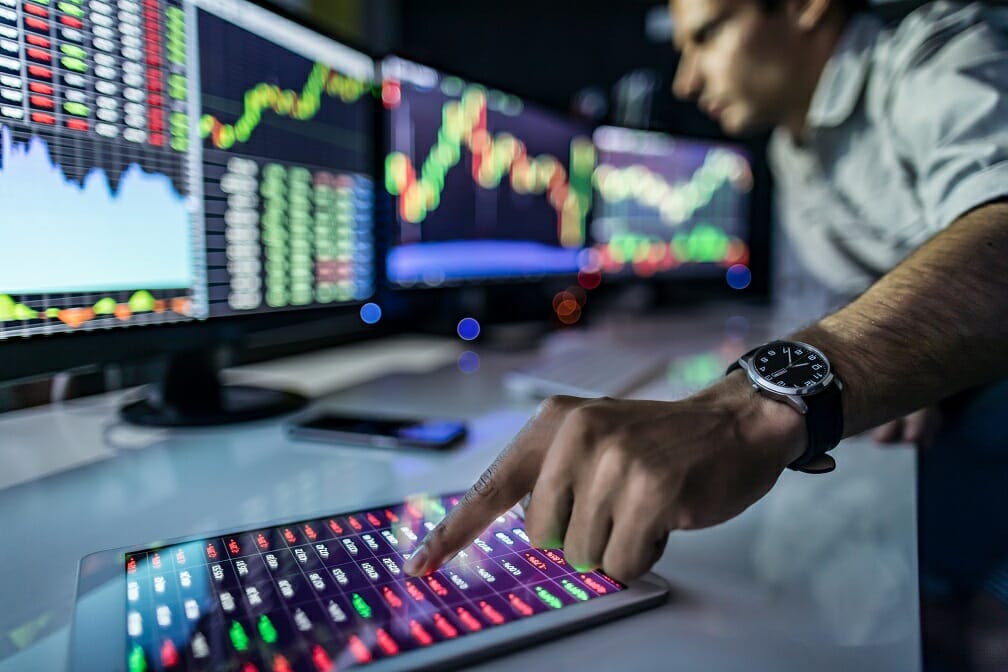
Complex algorithms that are used in high-frequency trading analyze individual stocks to spot emerging trends in milliseconds. It will result in hundreds of buy orders to be sent out in a matter of seconds, given the analysis finds a trigger.
Advantages of High-Frequency Trading
High-frequency trading, along with trading large volumes of securities, allows traders to profit from even very small price fluctuations. It allows institutions to gain significant returns on bid-ask spreads.
Trading algorithmsAlgorithms (Algos)Algorithms (Algos) are a set of instructions that are introduced to perform a task. They automate trading to generate profits at a frequency impossible to a human trader. can scan multiple markets and exchanges. It enables traders to find more trading opportunities, including arbitraging slight price differences for the same asset as traded on different exchanges.
Many proponents of high-frequency trading argue that it enhances liquidity in the market. HFT clearly increases competition in the market as trades are executed faster and the volume of trades significantly increases. The increased liquidity causes bid-ask spreads to decline, making the markets more price-efficient.
A liquid market sees less risk associated with it, as there will always be someone on the other side of a position. Also, as liquidity increases, the price a seller is willing to sell for, and a buyer is willing to pay for will move closer together.
The risk can be mitigated with several strategies – one of which is stop-loss orderStop-Loss OrderA stop-loss order is a tool used by traders and investors to limit losses and reduce risk exposure. Learn more about stop-loss orders in this article., which will ensure that a trader’s position will close at a specific price and prevent further loss.
Risks of High-Frequency Trading
High-frequency trading remains a controversial activity and there is little consensus about it among regulators, finance professionals, and scholars.
High-frequency traders rarely hold their portfolios overnight, accumulate minimal capital, and establish holding for a short timeframe before liquidating their position.
As a result, the risk-reward, or Sharpe RatioSharpe RatioThe Sharpe Ratio is a measure of risk-adjusted return, which compares an investment's excess return to its standard deviation of returns. The Sharpe Ratio is commonly used to gauge the performance of an investment by adjusting for its risk., is exceptionally high. The ratio is much greater than the classic investor who invests with a long-term strategy. A high-frequency trader will sometimes only profit a fraction of a cent, which is all they need to make gains throughout the day but also increases the chances of a significant loss.
One major criticism of HFT is that it only creates “ghost liquidity” in the market. HFT opponents point out that the liquidity created is not “real” because the securities are only held for a few seconds. Before a regular investor can buy the security, it’s already been traded multiple times among high-frequency traders. By the time the regular investor places an order, the massive liquidity created by HFT has largely ebbed away.
Furthermore, it is supposed that high-frequency traders (large financial institutions) often profit at the expense of smaller players in the market (smaller financial institutions, individual investors).
Finally, HFT has been linked to increased market volatility and even market crashes. Regulators have caught some high-frequency traders engaging in illegal market manipulations such as spoofing and layering. It was proven that HFT substantially contributed to the excessive market volatility exhibited during the Flash Crash in 2010.
Ethics and Market Impact
Some professionals criticize high-frequency trading since they believe that it gives an unfair advantage to large firms and unbalances the playing field. It can also harm other investors that hold a long-term strategy and buy or sell in bulk.
Critics also suggest that emerging technologies and electronic trading starting in the early 2000s play a role in market volatilityVolatilityVolatility is a measure of the rate of fluctuations in the price of a security over time. It indicates the level of risk associated with the price changes of a security. Investors and traders calculate the volatility of a security to assess past variations in the prices. Small and large crashes can be amplified by such technologies mass liquidating their portfolios with specific market cues.
Some European countries want to ban high-frequency trading to minimize volatility, ultimately preventing adverse events, such as the 2010 US Flash Crash and the Knight Capital collapse.
Algorithms can also be created to initiate thousands of orders and canceling them seconds later, creating a momentary spike in price. Taking advantage of such a type of deception is widely considered immoral and sometimes illegal.
Related Readings
CFI offers the Capital Markets & Securities Analyst (CMSA)™Program Page - CMSAEnroll in CFI's CMSA® program and become a certified Capital Markets &Securities Analyst. Advance your career with our certification programs and courses. certification program for those looking to take their careers to the next level. To keep learning and developing your knowledge base, please explore the additional relevant resources below:
- Investing: A Beginner’s GuideInvesting: A Beginner's GuideCFI's Investing for Beginners guide will teach you the basics of investing and how to get started. Learn about different strategies and techniques for trading
- Momentum InvestingMomentum InvestingMomentum investing is an investment strategy aimed at purchasing securities that have been showing an upward price trend or short-selling securities that
- Primary MarketPrimary MarketThe primary market is the financial market where new securities are issued and become available for trading by individuals and institutions. The trading activities of the capital markets are separated into the primary market and secondary market.
- Trading MechanismsTrading MechanismsTrading mechanisms refer to the different methods by which assets are traded. The two main types of trading mechanisms are quote driven and order driven trading mechanisms
-

Circuit Breakers: Understanding Trading Halts & Market Stability
A circuit breaker is a regulatory instrument that halts the trading of a securityStockWhat is a stock? An individual who owns stock in a company is called a shareholder and is eligible to claim part o
-

Understanding Commodities: A Beginner's Guide to Investing
Commodities are another class of assets just like stocks and bondsBondsBonds are fixed-income securities that are issued by corporations and governments to raise capital. The bond issuer borrows capit
invest
- CFD Trading Explained: A Comprehensive Guide for Investors
- Day Trading Explained: Strategies, Risks & How It Works
- Proprietary Trading: A Comprehensive Guide for Investors
- Quantitative Trading: A Deep Dive into Models & Analysis
- Spread Trading: A Comprehensive Guide to Relative Value Trading
- Trading Authorization: Empowering Your Broker & Account Security
- Trading Channels: Understanding Uptrends & Downtrends
- Trading Plan: A Comprehensive Guide to Successful Trading
- Understanding Trading Sessions: Hours & Global Markets
-
 After Hours Trading Explained: A Comprehensive Guide
After hours trading refers to the time outside regular trading hours when an investor can buy and sell securities. The main exchanges in the United States, NASDAQ and NYSENew York Stock Exchange (NYSE...
-
 Basis Trading: Definition, Strategy & How It Works
Basis trading is a financial arbitrage trading strategy that involves the trading of a financial instrument, such as a financial derivative or a commodityCommoditiesCommodities are another class of as...