
Portfolio Planning: A Comprehensive Guide to Investment Strategies
Portfolio planning is the process of strategizing the construction of an investment portfolio. The investment portfolio should be encompassing of the investor’s risk toleranceRisk ToleranceRisk tolerance refers to the amount of loss an investor is prepared to handle while making an investment decision. Several factors determine the level of, investment time horizon, and expected return of the portfolio.

Summary
- Portfolio planning is the process of strategizing the construction of an investment portfolio.
- Investment managers can develop an understanding of the investor’s risk tolerance through a written investment policy statement.
- Many investors are restricted in the types of securities they can hold in their portfolio – examples include real estate investment trusts, corporations, and qualified investment accounts.
What is the Portfolio Planning Process?
An investment manager is very unlikely to produce a good result for a client without understanding that client’s needs, circumstances, and constraints. For an investment manager to effectively manage a portfolio for a client, they must understand the client’s needs, constraints, and situation. More specifically, the investor’s expected return must be well suited to their risk tolerance. It follows the logic that investors are compensated for the systematic riskSystematic RiskSystematic risk is that part of the total risk that is caused by factors beyond the control of a specific company or individual. Systematic risk is caused by factors that are external to the organization. All investments or securities are subject to systematic risk and therefore, it is a non-diversifiable risk. taken on.
Investment managers can develop an understanding of the investor’s risk tolerance through a written investment policy statement. The typical aspects addressed by the investment policy statement are:
1. Client Description
A brief description of the clients’ investment objectives and individual circumstance
2. Purpose
A statement referring to the reason for the investment policy statement
3. Duties and Responsibilities
A statement of the distribution of duties and responsibilities among the investment manager, custodian of assets, and the client
4. Procedures
Clearly documented procedures to update the investment policy statements and respond to individual circumstance
5. Investment Objectives
The client’s expected compensation for taking on market risk
6. Investment Constraints
The constraints that the investment is subject to
7. Investment Guidelines
Documented guidelines that clearly indicate how the policy becomes executable, restricted asset types, and the leverage taken on
8. Evaluation of Performance
The benchmark portfolio for evaluating investment performance and other information on the evaluation of investment results
9. Appendices
The appendices must possess information regarding the baseline asset allocation and if any deviations are allowed from the policy portfolio allocation. Moreover, it must also include information on the rebalancing of the portfolio.
What are the Potential Investment Constraints?
The investment constraints include the following:
1. Liquidity
Liquidity is the ability to convert investment assets into cash rapidly without price discounting. Therefore, liquidity is the trade-off between how quickly an asset can be sold and the price at which the asset is sold.
2. Time Horizon
The time horizon is the desired length of investment in terms of time. Generally, the longer the investor’s time horizon, the investor will select more illiquid investment assets. For example, if an investor opts for a short time horizon of one year, the investor will prefer to invest in short-term liquid securities, such as a certificate of depositCertificate of Deposit (CD)A certificate of deposit (CD) refers to a financial product that is offered by financial institutions – such as banks and credit unions – that allow.
3. Tax Situation
Different investment accounts require separate, distinct tax treatments; therefore, this directly impacts portfolio construction. Assuming an investor is not using a tax-sheltered account, their decision can be impacted by the tax treatment of their investment.
Depending on the investment asset, the investor can be subject to capital gains taxationCapital Gains TaxCapital gains tax is a tax imposed on capital gains or the profits that an individual makes from selling assets. The tax is only imposed once the asset has been converted into cash, and not when it’s still in the hands of an investor. or income taxation. Some accounts can be tax-sheltered or tax-exempt, and investors tend to invest in securities that generate fully taxable income in these accounts because there is a larger difference in tax advantage relative to more favorable capital gains tax rates.
4. Regulatory Constraints
Investors are subject to standard financial market regulations, as well as further specified regulation for certain types of investors. Certain investors are restricted in terms of allowable investments. For example, a few of the investors-facing restrictions are:
- Real Estate Investment Trusts (REITs)
- Corporations
- Qualified Investment Accounts
5. Circumstance
Individual or institutional investors can adopt their own set of preferences regarding the types of assets held. For example, religious or ethical preferences can impact investment choices. ESG factors are becoming increasingly more important for investors. Circumstances surrounding portfolio construction can range from personal preference to macroeconomic conditions.
What is Strategic Asset Allocation?
The strategic asset allocation is the percentage allocation of the investment portfolio attributable to a specific asset class. Successful strategic asset allocation is evidenced by two major factors: (1) high correlation between securities of the same asset class and (2) low correlation between asset classes. It allows the investor to mitigate risk with portfolio diversification.
Once the portfolio manager identifies which potential asset classes are suitable to the investor’s risk profile and expected return, the portfolio must identify the correlation of each asset class. Given such information, a portfolio manager can construct an efficient frontier and then identify which portfolio is most aligned with the investor’s risk and return requirements of the investor.
Additional Resources
CFI offers the Commercial Banking & Credit Analyst (CBCA)™Program Page - CBCAGet CFI's CBCA™ certification and become a Commercial Banking & Credit Analyst. Enroll and advance your career with our certification programs and courses. certification program for those looking to take their careers to the next level. To keep learning and advancing your career, the following resources will be helpful:
- Expected ReturnExpected ReturnThe expected return on an investment is the expected value of the probability distribution of possible returns it can provide to investors. The return on the investment is an unknown variable that has different values associated with different probabilities.
- Investment Policy StatementInvestment Policy Statement (IPS)An investment policy statement (IPS), a document drafted between a portfolio manager and a client, outlines the rules and guidelines that the portfolio
- Fixed Income Portfolio MandatesFixed Income Portfolio MandatesFixed-income portfolio mandates refer to the set of rules that should be followed while investing in a variety of fixed-income securities
- Investment HorizonInvestment HorizonInvestment horizon is a term used to identify the length of time an investor is aiming to maintain their portfolio before selling their securities for a profit. An individual’s investment horizon is affected by several different factors. However, the primary determining factor is often the amount of risk that the investor
-

Annual Return: Definition, Calculation & Understanding
The annual return is the return on an investment generated over a year and calculated as a percentage of the initial amount of investment. If the return is positive (negative), it is considered a gain
-
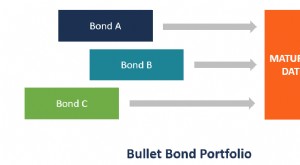
Bullet Bond Portfolios: A Comprehensive Guide
A bullet bond portfolio, commonly referred to as a bullet portfolio, is made up of a range of bullet bonds, from short-term to long-term bullet bonds. A bullet bond is a non-callable bondNon-Callable
invest
- Understanding Financial Benchmarks: A Comprehensive Guide
- Understanding Drawdowns: A Key Investment Risk
- Foreign Portfolio Investment (FPI): A Comprehensive Guide
- Understanding Investment Horizon: A Comprehensive Guide
- Investment Policy Statement (IPS): A Comprehensive Guide
- Investment Portfolio: Definition, Types & Building a Strong One
- Investment Trusts Explained: A Comprehensive Guide
- Hedging Explained: Protect Your Investments from Risk
- Portfolio Rebalancing: A Comprehensive Guide for Investors
-
![Active Management: Strategies & How It Works | [Your Company Name]](https://www.etffin.com/article/uploadfiles/202110/2021100815211459_S.jpeg) Active Management: Strategies & How It Works | [Your Company Name]
Active Management: Strategies & How It Works | [Your Company Name]Active management is the use of human capital to manage a portfolio of funds. Active managers rely on analytical research, personal judgment, and forecasts to make decisions on what securities to buy,...
-
 Understanding Investment Alpha: A Guide for Investors
Investing is an opportunity and being a successful investor are two different things. Although anyone can come up with a trading idea, those who want to make money need sound ...