
Investment Policy Statement (IPS): A Comprehensive Guide
An investment policy statement (IPS), a document drafted between a portfolio managerPortfolio ManagerPortfolio managers manage investment portfolios using a six-step portfolio management process. Learn exactly what does a portfolio manager do in this guide. Portfolio managers are professionals who manage investment portfolios, with the goal of achieving their clients’ investment objectives. and a client, outlines the rules and guidelines that the portfolio manager must follow when considering asset allocation in the client’s portfolio. In other words, an investment policy statement outlines how a portfolio manager is to manage the client’s money.

Quick Summary:
- An investment policy statement is a document drafted between a portfolio manager and a client that outlines the client’s portfolio objectives and information relevant to achieving the objectives.
- The components of an investment policy statement are scope and purpose, governance, investment, return and risk objectives, and risk management.
- An IPS provides guidance to portfolio managers when making portfolio decisions and helps keep clients from making emotional decisions related to their portfolio.
Understanding an Investment Policy Statement
An investment policy statement provides guidance to portfolio managers when making portfolio decisions. Asset allocation decisions, client risk tolerance, leverageLeverageLverage is a strategy that companies use to increase assets, cash flows, and returns, though it can also magnify losses. There are two main types of leverage, liquidity requirements, and foreign security investment restraints are some examples of issues that are addressed in an IPS.
A well-constructed investment policy statement provides a framework for investment decisions made by the portfolio manager and also helps commit the client to a long-term investment strategy. Emotional decisions made by the client to the portfolio can be avoided – an IPS acts to remind clients regarding the overarching goals and strategies of the portfolio.
Components of an Investment Policy Statement
Referencing a document published by the CFA Institute, the components of an investment policy statement are as follows:
1. Scope and Purpose
- Establishing and building context regarding the investor’s source of wealth
- Identifying and defining the investor
- Setting forth roles and responsibilities of the portfolio manager
- Identifying a risk management structure
- Assigning responsibility for portfolio monitoring and reporting
2. Governance
- Specifying responsibilities in determining, executing, and monitoring the results of the implementation of the investment policy statement
- Describing the process related to reviewing the updating the IPS
- Describing authority in the hiring and firing of vendors associated with the portfolio
- Assigning responsibility in determining the asset allocation of the portfolio, including inputs used and the criteria used to develop the inputs
- Assigning responsibility for risk management monitoring and reporting
3. Investment, Return, and Risk Objectives
- Describing the overall investment objective
- Stating the return, risk, and spending assumptions (outflows in the portfolio)
- Defining the investor’s risk tolerance
- Describing relevant constraints (liquidity requirements, tax considerations, restrictions on certain investments, legal constraints)
- Describing any other considerations that may be relevant to the investment strategy
4. Risk Management
- Establishing performance measurements and reporting accountabilities
- Specifying metrics used to measure and evaluate risk
- Defining the process for portfolio rebalancing and target asset allocationsAsset AllocationAsset allocation refers to a strategy in which individuals divide their investment portfolio between different diverse categories
Theoretical Example
Following is a theoretical example of how an investment policy statement might prevent emotional decisions.
In 2018, an elderly client drafted an IPS with her portfolio manager. The investment policy statement outlines, among other things, that the portfolio is restricted from investing in high-risk speculative investments.
With the impending legalization of cannabis in Canada and seeing the buzz created by cannabis stocks, the client meets with her portfolio manager and outlines her idea to shift the entire equity asset allocation of the portfolio into cannabis stocks to ride the wave. The client believes that the industry will continue to rise and outperform other industries.
With a drafted IPS, the portfolio manager indicates to the client that the portfolio is restricted from investing in high-risk speculative investments. The portfolio manager outlines that cannabis stocks are highly speculative as they include revenue growth assumptions that are unrealistic and are currently trading at extreme valuation multiplesTypes of Valuation MultiplesThere are many types of valuation multiples used in financial analysis. They can be categorized as equity multiples and enterprise value multiples..
Additionally, the portfolio manager states that while marijuana stocks may perform well in the short term due to constant headlines, it would significantly increase the portfolio risk and potentially jeopardize the portfolio from achieving its long-term goal.
Understanding the facts presented by the portfolio manager, the client decides to follow along with the portfolio’s investment policy statement and to avoid the cannabis space.
More Resources
CFI is the official provider of the Financial Modeling and Valuation Analyst (FMVA)™Become a Certified Financial Modeling & Valuation Analyst (FMVA)®CFI's Financial Modeling and Valuation Analyst (FMVA)® certification will help you gain the confidence you need in your finance career. Enroll today! certification program, designed to transform anyone into a world-class financial analyst.
To keep learning and developing your knowledge of financial analysis, we highly recommend the additional resources below:
- Dynamic Asset AllocationDynamic Asset AllocationDynamic asset allocation is an investment strategy that involves the frequent adjustment of the weights in a portfolio based on the overall market performance or the performance of certain securities.
- Investing: A Beginner’s GuideInvesting: A Beginner's GuideCFI's Investing for Beginners guide will teach you the basics of investing and how to get started. Learn about different strategies and techniques for trading
- ProspectusProspectusA prospectus is a legal disclosure document that companies are required to file with the Securities and Exchange Commission (SEC). The document provides information about the company, its management team, recent financial performance, and other related information that investors would like to know.
- Types of Due DiligenceTypes of Due DiligenceOne of the most important and lengthy processes in an M&A deal is Due Diligence. The process of due diligence is something which the buyer conducts to confirm the accuracy of the seller's claims. A potential M&A deal involves several types of due diligence.
-
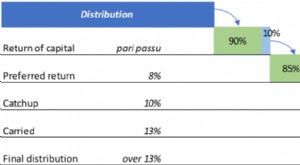
Understanding Distribution Waterfalls in Equity Investing
A distribution waterfall is a popular term in equity investing that refers to the way in which capital gainsCapital GainA capital gain is an increase in the value of an asset or investment resulting f
-

Understanding Dividend Policy: A Comprehensive Guide
A company’s dividend policy dictates the amount of dividends paid out by the company to its shareholders and the frequency with which the dividends are paid out. When a company makes a profit, t
invest
- Understanding Your Insurance Policy Statement: A Comprehensive Guide
- Understanding Financial Benchmarks: A Comprehensive Guide
- Understanding Drawdowns: A Key Investment Risk
- Foreign Portfolio Investment (FPI): A Comprehensive Guide
- Understanding Investment Horizon: A Comprehensive Guide
- Investment Policy Statement (IPS): A Comprehensive Guide
- Investment Portfolio: Definition, Types & Building a Strong One
- Portfolio Planning: A Comprehensive Guide to Investment Strategies
- Create a Robust Investment Policy Statement (IPS) for Your Goals
-
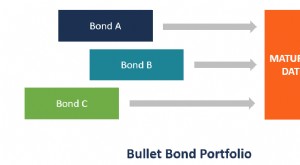 Bullet Bond Portfolios: A Comprehensive Guide
A bullet bond portfolio, commonly referred to as a bullet portfolio, is made up of a range of bullet bonds, from short-term to long-term bullet bonds. A bullet bond is a non-callable bondNon-Callable ...
-
 Capital Preservation: A Guide to Protecting Your Investments
Capital preservation is an investment strategy that promotes saving, i.e., preserving capital and avoiding loss of value. The strategy adopts a conservative approach towards investing specifically in ...