
Understanding Stock Prices: A Comprehensive Guide
The term stock price refers to the current price that a share of stock is trading for on the market.

Every publicly traded companyPrivate vs Public CompanyThe main difference between a private vs public company is that the shares of a public company are traded on a stock exchange, while a private company's shares are not., when its shares are issued, are given a price – an assignment of their value that ideally reflects the value of the company itself. The price of a stock will go up and down in relation to a number of different factors, including changes within the economy as a whole, changes within industries, political events, war, and environmental changes.
Stock Price Changes for a Company
Aside from the other things that make any stock price change, there can be issues within a company that cause its stock price to move in either direction.
1. Law of supply and demand
If a company produces a good that not many others produce or a good that is highly desired or necessary, the price of its stock will climb because the demand is high. When the supply of the good balances out with the demand, stock prices will tend to plateau. If the supply is greater than the demand, the company’s share price will likely drop.
It also depends on how effectively and uniquely the company produces the good. If they create a variation on an old standard, their share price may stay the same or increase even if supply is high.
In the end, it’s really about the law of supply and demandSupply and DemandThe laws of supply and demand are microeconomic concepts that state that in efficient markets, the quantity supplied of a good and quantity.
2. Management or production changes
Changes in management or production can also cause a company’s share price to rise or fall. It depends on how effectively and efficiently the company is managed and goods are produced. Changes to the management team, style, or how goods are produced can boost efficiency and thus overall effectiveness – increasing profits and causing the share price to rise. However, negative changes can result in the exact opposite effect.
3. Mention of the company’s name
One other point of note that can significantly affect the stock price is the mention of the company’s name in the news, on social media, or by word of mouth. It is specifically in regard to one of two events: a scandal or a success.
Scandals – true or untrue – can cause a company’s share price to drop, simply by being associated with anything negative. Also, being connected to, or responsible for, a breakthrough – either in the market or respective industry – will usually cause a stock’s price to increase.
Stock Price, Earnings, and Shareholders
Stock prices are first determined by a company’s initial public offering (IPO) Initial Public Offering (IPO)An Initial Public Offering (IPO) is the first sale of stocks issued by a company to the public. Prior to an IPO, a company is considered a private company, usually with a small number of investors (founders, friends, family, and business investors such as venture capitalists or angel investors). Learn what an IPO iswhen it first puts its shares into the market. Investment firms use a variety of metrics, along with the total number of shares being offered, to determine what the stock’s price should be. Afterward, the several reasons mentioned above will cause the share price to rise and fall, driven largely by the earnings that can be expected from the company.
Traders use financial metrics constantly to determine the value of the company, including its history of earnings, changes in the market, and the profit that it can reasonably be expected to bring in. It will cause traders to bid share prices up and down.
Traders aim to make a return on their investments. It is done in two primary ways:
- DividendsDividendA dividend is a share of profits and retained earnings that a company pays out to its shareholders. When a company generates a profit and accumulates retained earnings, those earnings can be either reinvested in the business or paid out to shareholders as a dividend. – If the company’s stock pays dividends, regular payments are made to shareholders for every share held
- Purchasing shares when they are at a low price and selling them back once the price goes up
Final Word
A stock price is a given for every share issued by a publicly traded company. The price is a reflection of the company’s value – what the public is willing to pay for a piece of the company. It can and will rise and fall, based on a variety of factors in the global landscape and within the company itself.
Additional Resources
CFI offers the Financial Modeling & Valuation Analyst (FMVA)™Become a Certified Financial Modeling & Valuation Analyst (FMVA)®CFI's Financial Modeling and Valuation Analyst (FMVA)® certification will help you gain the confidence you need in your finance career. Enroll today! certification program for those looking to take their careers to the next level. To keep learning and advancing your career, the following resources will be helpful:
- Capital MarketsCapital MarketsCapital markets are the exchange system platform that transfers capital from investors who want to employ their excess capital to businesses
- New York Stock Exchange (NYSE)New York Stock Exchange (NYSE)The New York Stock Exchange (NYSE) is the largest securities exchange in the world, hosting 82% of the S&P 500, as well as 70 of the biggest
- Price-Weighted IndexPrice-Weighted IndexA price-weighted index is a type of stock market index in which each component of the index is weighted according to its current share price. In price-weighted indices, companies with a high share price have a greater weight than those with a low share price.
- Wall StreetWall StreetWall Street takes up eight blocks in Manhattan, New York. It runs east to west from Broadway to South Street, in the heart of the financial district. Representing the heart of capitalism, Wall Street is home to the New York Stock Exchange (NYSE), numerous banks, other financial institutions, and corporations.
-

Understanding Divergence in Technical Analysis: A Guide
Divergence is when the asset price moves in the direction opposite to what a technical indicator indicates. When a stock is diverging, it signals weaker price trends and the beginning of a reversal.&n
-

Understanding Downtrends: Definition, Identification & Reversal
A downtrend describes the movement of a stock towards a lower price from its previous state. It will exist as long as there is a continuation of lower highs and lower lows in the stock chart. The down
invest
- Understanding Stock Price Appreciation: A Guide for Investors
- Understanding Common Stock: Ownership and Basics
- Shareholders: Understanding Ownership and Dividends
- Understanding Stocks: A Beginner's Guide to Share Ownership
- Allotment Explained: Resource & Equity Distribution in Business
- Stock Analysis: A Comprehensive Guide for Investors
- Understanding Stock Quotes: A Comprehensive Guide
- Understanding Stock Warrants: A Comprehensive Guide
- Stock Buybacks: Understanding Share Repurchases and Their Impact
-
 Understanding Adjusted Closing Price: A Comprehensive Guide
The adjusted closing price is a calculation adjustment made to a stock’s closing price. The original closing price is the final price in which a stock, or any other particular kind of security, ...
-
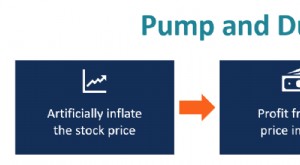 Pump and Dump Schemes: Understanding Securities Fraud
A pump and dump scheme is a type of securities fraud that involves the artificial inflation (“pump”) of the price of a security through false, misleading, or exaggerated statements regardi...