
Uncovered Interest Rate Parity (UIRP): Explained & Implications
The Uncovered Interest Rate Parity (UIRP) is a financial theory that postulates that the difference in the nominal interest rates between two countries is equal to the relative changes in the foreign exchange rate over the same time period. It is quite similar to an economic theory called the “Law of One Price (LOOP)Law of One Price (LOOP)The Law of One Price (sometimes referred to as LOOP) is an economic theory that states that the price of identical goods in different markets.” It is similar in the sense that UIRP also claims that the price of an identical commodity, financial security, etc. anywhere around the world should have the same price when currency exchange rates are taken into consideration, regardless of its location in the world.
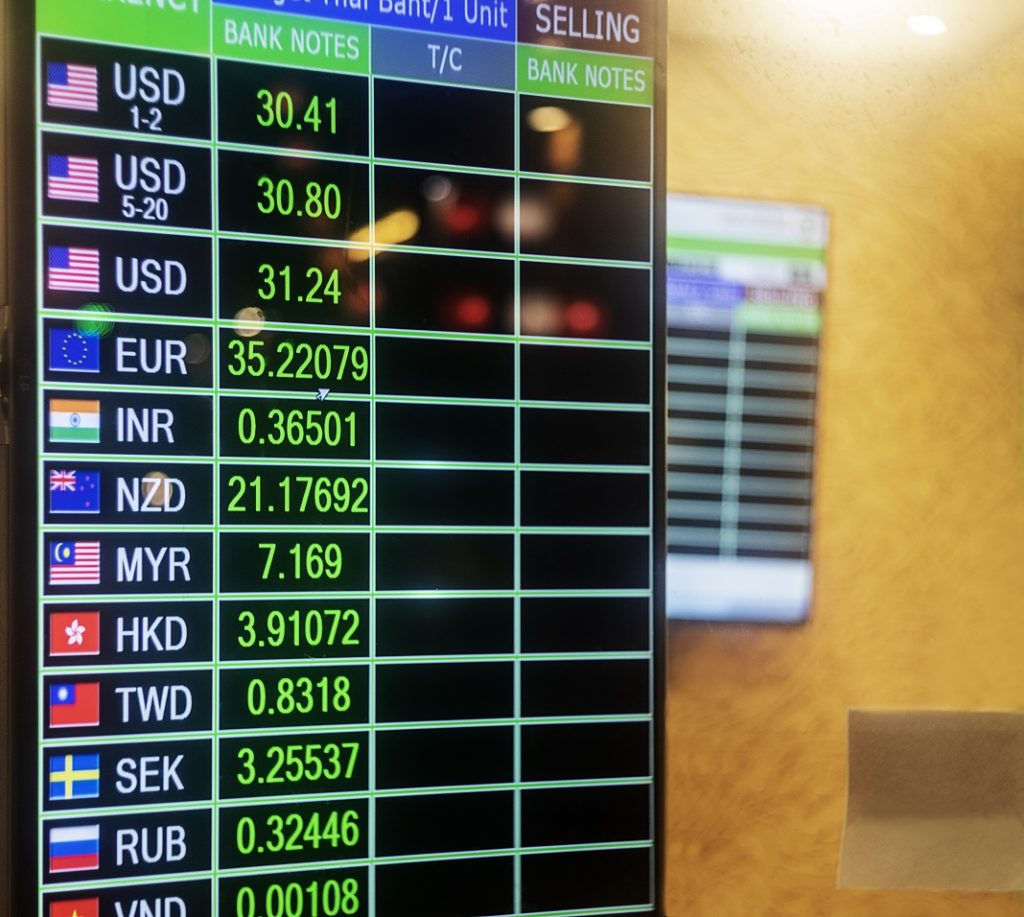
The uncovered interest rate parity ensures that an investor gains no excess return by relative changes or differences in foreign exchange rates. It does so by assuming that the country with the higher interest rate will experience depreciation in its domestic currency value relative to the foreign currency value with the lower interest rate.
Summary
- The Uncovered Interest Rate Parity (UIRP) is a financial theory that postulates that the difference in the nominal interest rates between two countries equals the relative changes in the foreign exchange rate over the same time period.
- Without interest rate parity, it would be very easy for banks and investors to exploit differences in currency rates and make profits.
- UIRP works by assuming that the country with the higher interest rate will experience depreciation in its domestic currency value relative to the foreign currency value with the lower interest rate.
Formula for Uncovered Interest Rate Parity (UIRP)

Where:
- Et[espot(t + k)] is the expected value of the spot exchange rate
- espot(t + k), k periods from now. No arbitrage dictates that this must be equal to the forward exchange rate at time t
- k is number of periods in the future from time t
- espot(t) is the current spot exchange rate
- iDomestic is the interest rate in the country/currency under consideration
- iForeign is the interest rate in another country/ currency under consideration. In the equation of the uncovered interest rate parity mentioned above, the forward exchange rate is the future exchange rate. They are available with banks and foreign-exchange dealers.
Assumptions of UIRP
- Capital mobility in the market: The uncovered interest rate parity assumes perfect capital mobility in the market.
- Non-arbitrage condition: UIRP follows a no-arbitrage condition in the UIRP equation. If the condition is violated, a risk-free return exists, and an opportunity to make a risk-free profit unfolds.
Limitations of UIRP
- Expected rate of depreciation: Empirical evidence concludes that the expected rate of depreciation, which plays a crucial role in uncovered interest rate parity, is often less than the difference that needs to be adjusted. Such a limitation often hampers the efficient working of the uncovered interest rate parity equation.
Practical Example
Assume the nominal interest rateInterest RateAn interest rate refers to the amount charged by a lender to a borrower for any form of debt given, generally expressed as a percentage of the principal. in the US is 6% per annum, and the nominal interest rate in India is 14% per annum. Since the nominal interest rate in India is higher, the investor will perceive it to be beneficial to borrow in USD and invest that in INR, and then reconvert the investment proceeds to USD to make a profit from the difference.
Say, for example, the investor borrows USD1,800 and converts it in INR at a spot rate of INR70/USD. Hence, he would need to repay USD1,860 after a year. Hence, he invests INR126,000 at a rate of 14% per annum. Hence, by the end of the year, he will receive INR143,640.
Now, when he tries to reconvert the investment proceeds back to USD, the uncovered interest rate parity condition will come into play, and the nominal interest rate difference will rise in order to eliminate the difference. The investor will then neither be better off nor worse off and will not make any profit as the difference in interest rates will be adjusted according to the no-arbitrage condition of UIRP.
Covered Interest Rate Parity vs. Uncovered Interest Rate Parity
1. Future rates
Covered interest rate parity involves the use of future rates or forward rates when assessing exchange rates, which also makes potential hedging HedgingHedging is a financial strategy that should be understood and used by investors because of the advantages it offers. As an investment, it protects an individual’s finances from being exposed to a risky situation that may lead to loss of value.possible. However, uncovered interest rate parity takes into account expected rates, which basically implies forecasting future interest rates. Hence, it involves the use of an estimation of the expected future rate and not the actual forward rate.
2. Difference in exchange rates
According to covered interest rate parity, the difference between interest rates gets adjusted in the forward discount/premium. When investors borrow from a lower interest rate currency and invest in a higher interest rate currency, they are consequently in advantage through a forward cover. The forward cover eliminates any risks associated with their investment.
However, the uncovered interest for parity adjusts the difference between interest rates by equating the difference to the domestic currency’s expected rate of depreciation. It is because, in an uncovered interest rate parity condition, investors do not benefit from any forward cover.
More Resources
CFI is the official provider of the global Financial Modeling & Valuation Analyst (FMVA)™Become a Certified Financial Modeling & Valuation Analyst (FMVA)®CFI's Financial Modeling and Valuation Analyst (FMVA)® certification will help you gain the confidence you need in your finance career. Enroll today! certification program, designed to help anyone become a world-class financial analyst. To keep advancing your career, the additional resources below will be useful:
- Calculating Foreign Exchange SpreadCalculating Foreign Exchange SpreadThe foreign exchange spread (or bid-ask spread) refers to the difference in the bid and ask prices for a given currency pair. The bid price refers to the maximum amount that a foreign exchange trader is willing to pay to buy a certain currency, and the ask price is the minimum price that a currency dealer is willing to accept for the currency.
- FX Carry TradeFX Carry TradeFX carry trade is a financial strategy whereby the currency with the higher interest rate is used to fund trade with a low-yielding currency.
- Triangular Arbitrage OpportunityTriangular Arbitrage OpportunityA triangular arbitrage opportunity is a trading strategy that exploits the arbitrage opportunities that exist among three currencies in a foreign currency exchange. The arbitrage is executed through the consecutive exchange of one currency to another when there are discrepancies in the quoted prices
- Types of MarketsTypes of Markets - Dealers, Brokers, ExchangesMarkets include brokers, dealers, and exchange markets. Each market operates under different trading mechanisms, which affect liquidity and control. The different types of markets allow for different trading characteristics, outlined in this guide
-

Interbank Rate Explained: Understanding Foreign Exchange Rates
The interbank rate or interbank exchange rate is a financial concept used to express foreign exchange rates, which are paid by banks when they conduct currency trading with other banks. Interbank, or
-

Savings Account Interest Rates: What to Expect & How to Maximize Your Returns
When it comes to the interest rate paid on savings accounts, you don't want to be
invest
- Uncovered Interest Rate Parity (UIP): Understanding the Theory
- Binomial Interest Rate Tree: Definition, Uses & Applications
- Interest Rate Parity (IRP): Understanding the Relationship
- Nominal Interest Rate Explained: Definition & Implications
- Swap Rate Explained: Understanding Fixed Exchange Rates in Derivatives
- Covered Interest Rate Parity (CIRP): Explained | [Your Brand Name]
- Understanding the Net Interest Rate Differential (NIRD)
- Interest Rate Parity Explained: A Comprehensive Guide
- Understanding the Policy Interest Rate: Its Impact on the Economy
-
 Rate of Return vs. Interest Rate: Understanding the Key Differences
The rate of return is an internal measure of the return on money invested in a project. The interest rate is the external rate at which money can be borrowed from lenders. Rate of R...
-
 Interest Rate Caps: Understanding Protection for Adjustable-Rate Loans
An interest rate cap is a limit to the amount of interest that a lender can charge on an adjustable-rate loan. Adjustable-rate mortgages have an interest rate cap to provide a maximum payment am...