
Portfolio Risk & Return: Navigating Market Volatility
This is part 3 of the “Withstanding Market Cycles” series on portfolio diversification and asset allocation…some of your best safeguards in times of volatility.
- Part 1: The Benefits of Portfolio Diversification
- Part 2: How to Determine the Right Asset Mix for Your Portfolio
The tradeoff between risk and return is inescapable. Higher-risk, higher-volatility assets like stocks have historically produced better returns than lower-risk, lower-volatility assets like bonds. But there’s a price for that better return: you have to be able to handle that increased risk. There is no way to consistently enjoy that better return without accepting higher risk.
In the short-run, an investor who lowers their risk in a portfolio through diversification should not expect to see returns that match the best performing asset class over that same timeframe. This is a fundamental concept of investing, and it is unavoidable.
However, over a long enough time frame, a “reversion to the mean” happens – meaning the diversified approach often comes quite close to the performance of that high-risk asset class over longer timeframes.
Have questions about portfolio diversification? Contact a financial advisor.
-

3 Proven Market Investing Strategies for Risk Management
Market investing involves risks, it is a good idea to consider a few strategies to minimize losses. Regardless of experience level, a few overall strategies can be used by any investor. Although
-
Navigating Market Volatility: The Power of Diversification
We’ve recently experienced a sudden reappearance of big down days and also some big up days, and while it’s natural to try to find what is to blame, volatility often has no obvious cause, even when lo
invest
- Market Risk Premium: Definition & Calculation | Investopedia
- Understanding Market Risk: A Comprehensive Guide
- Understanding Risk and Return in Investing
- Understanding Investment Risk: Balancing Safety and Returns
- Portfolio Diversification: A Beginner's Guide to Risk Management
- Asset Allocation: Building a Resilient Portfolio for Market Volatility
- Portfolio Diversification: Protecting Your Investments During Market Volatility
- Portfolio Diversification: Navigating Market Uncertainty & Protecting Your Investments
- Understanding Average Stock Market Returns: S&P 500 & Dow Jones
-
 CAPM Expected Return Calculation: Using Beta & Market Risk Premium
How to Calculate Expected Return With Beta & Market Risk Premiums You can use the capital asset pricing model, or CAPM, to estimate the return on an asset -- such as a stock, bond, mutual...
-
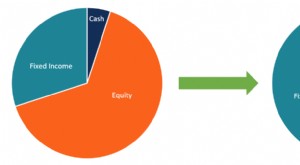 Dynamic Asset Allocation: A Comprehensive Guide
Dynamic asset allocation is an investment strategy that involves the frequent adjustment of the weights in a portfolio based on the overall market performance or the performance of certain securitiesM...