
Portfolio Diversification: Protecting Your Investments During Market Volatility
This is part one of a series on portfolio diversification and asset allocation…some of the best safeguards against market volatility.
U.S. markets have taken a volatile turn in the last few months, recording one of the worst Decembers in recent years. Naturally, market fluctuations are met by a range of emotions from investors: fear, an instinct to get more conservative, or even panic. While market volatility can be a challenging time, the best safeguard you can have against market cycles is a well-diversified portfolio.
What is Diversification?
Basically, a well-diversified portfolio is one that is not too heavily weighted in one area or another. Investors first diversify at a very high level by using different asset classes (equity, fixed income and alternatives). Next, they diversify within each asset class by investing in different geographies, and then further by choosing different styles, sizes, and sectors.
Finally, investors attempt to diversify away from any risk involved with a specific company or investment by investing in a large number of companies by using pooled investments like mutual funds and ETF’s, or by purchasing a sufficiently large number of individual securities.
When an investor understands the different types of asset classes, sizes, styles and sectors, as well as their relationships to each other and the broader environment, they can construct their portfolios around their specific risk tolerance.
The Benefits of Portfolio Diversification
To wildly oversimplify: a well-diversified portfolio is less risky and volatile than being heavily weighted in one area, and should not impact overall positive performance. This video explains the benefits of a well-diversified portfolio, and discusses a diversified portfolio’s performance over different market cycles:
Our Take
Recent market volatility has given us a great “case study” about the importance of diversification. This month has seen very high highs and very low lows. The previously bullish FAANG tech stocks have been particularly hard hit, marking a change in the tide from earlier in the year. Keep in mind, though, it’s not unusual for recently successful asset classes to fall the fastest when markets decline. What comes up usually comes down. This is why diversification is so important – and a more diversified approach to U.S. stocks weathers the down days better. And of course, diversification at the asset class level helps even more.
It’s impossible to know what the future holds, but the bottom line is that remaining diversified and rebalancing are some of the best ways to ensure you’re in a good spot, regardless of what the market does and when.
-
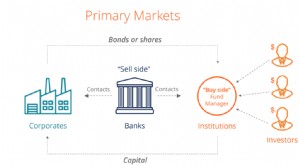
Understanding the Primary Market: A Comprehensive Guide
The primary market is the financial market where new securitiesPublic SecuritiesPublic securities, or marketable securities, are investments that are openly or easily traded in a market. The securitie
-

Understanding the S&P 500: A Comprehensive Guide
The Standard and Poor’s 500 Index, abbreviated as S&P 500 index, is an index comprising the stocks of 500 publicly traded companies in the U.S. with the highest values of market capitalizati
invest
- Understanding the Call Market: Trading Hours & Price Determination
- McClellan Oscillator: A Comprehensive Guide for Traders
- Understanding the Money Market: Short-Term Debt & Lending
- NASDAQ Explained: A Comprehensive Guide to the Stock Market Exchange
- Understanding Portfolio Margin Requirements for Options Trading
- Passive Investing Strategy: How to Outperform the Market with Index Funds
- Portfolio Risk & Return: Navigating Market Volatility
- Asset Allocation: Building a Resilient Portfolio for Market Volatility
- Navigating Market Volatility: Should You Rebalance Your Portfolio?
-
 NASDAQ Composite: Understanding the US Stock Market Index
The NASDAQ Composite is an index of more than 3,000 common equities listed on the NASDAQ stock market. The index is one of the most followed indices in the United States, alongside the Dow Jones Indus...
-
 Portfolio Turnover Ratio: Definition, Calculation & Significance
The portfolio turnover ratio is the rate of which assets in a fund are bought and sold by the portfolio managers. In other words, the portfolio turnover ratio refers to the percentage change of the as...