
Accrued Expenses and the Income Statement: Understanding the Impact
In accounting, not all cash expenditures are expenses for an income statement. Conversely, when using accrual-based accounting, expenses can occur in the income statement without showing any cash payments at the time. Accrued expenses are the expenses that companies have incurred but not yet paid for, which can still affect a company's income statement. However, an accrued expense in itself is a liability account on the balance sheet, and paying off the liability later doesn't affect a company's income statement.
Accrued Expense Definition
Accrued expenses are monies owed to parties that have provided a company with the use of certain operational inputs on credit terms, such as materials, labor or utilities. Accrued expenses often are in the form of accounts payable, a liability account on the balance sheet. Common accounts payable may include anything from salary payable, rent payable to income tax payable and interest payable. Companies record the various non-cash expenses as they are incurred and report them in the income statement as deductions to net income.
Accrued Expense Increase
Companies initially record an increase in accrued expense as it occurs by crediting accrued expense, or accounts payable, in the liability section of the balance sheet. The increase in accrued expense also increases a related expense account in the income statement, and thus, companies would debit the expense account and add it as an expense component to the income statement. As a result, an increase in accrued expense has a decreasing effect on the income statement.
Accrued Expense Decrease
A decrease in accrued expense occurs when companies pay down their outstanding accounts payable in later periods. To record a decrease in accrued expense, companies debit accounts payable to reduce the amount of accounts payable as a liability and credit cash for the amount of cash payment made. Such a cash expenditure is not an expense for the current accounting period because the related expense has occurred and been recorded in an earlier period. Therefore, a decrease in accrued expense doesn't affect the income statement.
Accrued Expense Omission
Failure to record an accrued expense will understate a company's liability on the balance sheet and related expense in the income statement and thus will overstate the net income. Recording accrued expense often is referred to as making adjusting entries, which companies normally carry out at the end of an accounting period. End-period omission of recording an accrued expense can happen sometimes because accrued expenses don't always have corresponding business transactions clearly taking place, which journal entries are based on.
-

Understanding Selling, General & Administrative (SG&A) Expenses
SG&A includes all non-production expenses incurred by a company in any given period. It includes expenses such as rent, advertising, marketing, accounting, litigation, travel, meals, management sa
-
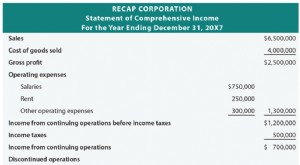
Understanding the Statement of Comprehensive Income: A Comprehensive Guide
The statement of comprehensive income is a financial statementAnalysis of Financial StatementsHow to perform Analysis of Financial Statements. This guide will teach you to perform financial statement
investing
- Understanding Financial Statement Analysis: Income Statement, Balance Sheet & Cash Flow
- Accrued Expenses: Definition, Examples & Accounting Explained
- Accrued Income Explained: Definition & Accounting
- Understanding Business Expenses: A Comprehensive Guide
- Understanding the Income Statement: A Comprehensive Guide
- Understanding Interest Expense: A Key Financial Metric
- Understanding the Multi-Step Income Statement: A Detailed Guide
- Understanding Non-Operating Expenses: Definition & Examples
- Understanding Accrued Income: Definition & Examples
-
 Understanding Accrued Expenses: A Comprehensive Guide
Accrued expenses are expenses that are recognized at the time they are incurred, even though cash has not yet been paid. These expensesFixed and Variable CostsCost is something that can be classified ...
-
 Understanding Non-Interest Expenses in Banking
A non-interest expense is an operating expense incurred by a bank, and it is separate from the interest expense on customer deposits. It includes the bank’s operating and overhead expenses, such...