
Mastering Ratio Analysis: Applying Financial Ratios to Your Personal Finances
Ratio analysis is considered to be very important when it comes to making financial investments. There are many retail investors who know the value of retail investments. As a result, they also routinely perform a ratio analysis for companies that they invest in. However, surprisingly, a lot of these analysts do not perform a ratio analysis on their own personal finances. This is because there is a prevailing belief that ratio analysis should only be done for big companies. However, this is far from the truth. The reality is that ratio analysis is as relevant in personal finances as it is to institutional financing. However, the ratios used in personal finances are slightly different as compared to those used in corporate finance.
The list of ratios relevant to personal finance as well as their explanation has been provided in detail in this article.
Solvency Ratio
Solvency ratios are used in personal finance as they are used in corporate finance. The idea behind the solvency ratio is the person should have enough cash on hand to ensure that they are capable of meeting their short term expenses. When it comes to companies, they have access to cost-effective sources of short-term financing. This is the reason why a solvency ratio of 1 is recommended in most cases. However, this is not the case when it comes to individuals. Individuals do not have access to cost-effective sources of short-term funding. Hence, if they fall short of cash in a given month, they are more likely to resort to using credit cards or payday loans to fill the gap. These financial instruments charge very high-interest rates and hence must be avoided. This is the reason that individuals are expected to have at least 3 to 6 months of their monthly expenses in short-term liquid assets. This is the first step in a lot of personal finance techniques and is often referred to as the “emergency fund.”
Savings Ratio
The savings ratio is quite simple to calculate. The savings ratio refers to the percentage of personal income that is being plowed back in savings. The specific definition of savings rate may vary since in some approaches involuntary contributions to government-mandated savings programs are counted whereas in other approaches it is not counted.
The savings ratio has been the single biggest factor in personal financial success. When it comes to personal finances, the discipline showed in making financial investments at a consistent pace tends to outperform asset allocation skills.
This means that studies have been conducted, which show that investors with lower incomes have beaten investors with considerably larger incomes as compared to them. This has been made possible since they regularly save a larger chunk of their money and invest it. For instance, a person earning $70,000 but saving 50% of it will have a higher net worth than a person who makes $100,000 but saves only 25% of their income.
The savings rate depends upon the personal philosophy of the investor. However, it is recommended that at least 15% of the post-tax income be saved. Failure to do so would mean that the investor would have to live paycheck to paycheck with no resources to fall back upon.
Debt Coverage Ratio
In a way, the debt coverage ratio is the opposite of the savings ratio. The savings ratio measures the percentage of income being saved, whereas the debt coverage ratio measures the percentage of income that is being committed to fixed expenses every month. Mortgage payments, car payments, education loan payments are all part of the debt coverage ratio.
Ideally, the debt coverage ratio of an individual should not exceed 40% of their post-tax income. This means that as soon as they receive their salary, they should not pay more than 40% of it out immediately. However, the reality is that for most people staying in urban areas, they pay anywhere between 60% to 75% of their income out on the first day itself. These are dangerous levels of leverage, particularly because if the interest rates rise, it could lead to a rise in monthly payments, which would make the financial situation untenable.
Personal Cost of Debt
Just like companies calculate their cost of capital, individuals too can calculate their personal cost of debt. Just like companies, the debt can be a weighted average of all the debts that a person is carrying. Having a target for the personal cost of debt is important since it keeps the person away from high-interest debt such as credit card debt. There are several low-cost debts, such as mortgage debt and even education loans. The personal cost of debt segregates between high-interest debt and low-interest debt. When an investor tries to maintain this level, they consciously try to avoid high-interest debt.
Target Net worth Ratio
Goal setting is a very important part of personal finance. In the absence of proper goal setting, the personal finance exercise would simply be futile. A lot of people following personal financial plans struggle with setting the correct goals regarding their net worth. This is because they do not have a benchmark to compare it to. They do not know what is an expected net worth given their age. For this purpose, a number of personal finance experts have created different target net worth formulas. These formulas take in a couple of factors, such as the age of the respondent as well as their annual income. The formula then provides the expected net worth as an output.
For instance, the popular book “The Millionaire Next Door” has a formula for calculating the target net worth. The formula is as follows:
-
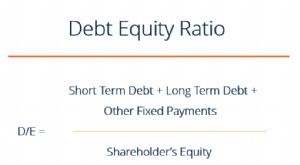
Debt-to-Equity Ratio: Definition, Calculation & Importance
The Debt to Equity ratio (also called the “debt-equity ratio”, “risk ratio”, or “gearing”), is a leverage ratioLeverage RatiosA leverage ratio indicates the le
-

Master Personal Finance: Create a Budget & Achieve a Surplus
Learning about personal finance budgeting can help you in a number of different ways. Learning how to budget and actually stick with it can put you in a surplus position. Here are a few tips for
Personal finance
- Understanding Personal Debt: Definition, Types & Impact
- Auto Loans: Are They Bad for Your Finances?
- Unlock Your Financial Potential: Understanding Earnings Power
- Coverage Ratio: Understanding Your Company's Debt Repayment Ability
- Leveraged Finance Explained: Strategies & Applications
- Ratio Analysis: A Comprehensive Guide to Financial Statement Insights
- Personal Finance: A Comprehensive Guide to Planning & Management
- Understanding Leverage Ratio: A Guide for Businesses & Individuals
- Free Personal Finance Courses: Build Wealth & Financial Literacy
-
 Asset Coverage Ratio: Understanding Financial Solvency
The asset coverage ratio is a financial metric that indicates how a company can potentially settle its debts by selling its tangible assetsTangible AssetsTangible assets are assets with a physical for...
-
 Debt-to-Assets Ratio: Definition, Calculation & Risk Assessment
The Debt to Assets Ratio is a leverage ratioLeverage RatiosA leverage ratio indicates the level of debt incurred by a business entity against several other accounts in its balance sheet, income statem...