
Forward Pricing in Mutual Funds: A Clear Explanation
An open-end mutual fund must use forward pricing on buy and sell orders received throughout the day. Forward pricing estimates the Net Asset Value (NAV) that will be used when the order is fulfilled. This may sound complicated, but the reason for forward pricing can be easily understood.
Net Asset Value
Mutual funds trade at the value of the sum of the value of their holdings, divided by the total number of shares outstanding in the fund. Therefore, the price per share is the net asset value of the fund. Open-end mutual funds can trade during the day, but the NAV of the fund on that day is not calculated until the end of the day. This could present a problem for those who bought or sold shares according to the prior NAV recorded the previous day.
Forward Pricing
Forward pricing is calculated using a complicated formula, but you do not need to know or use the formula to use the forward price. All open-end mutual funds are required to list the forward price during the day. This means you will be automatically quoted the forward price, and that price will be the one used to execute the buy or sell order you initiated that day.
-
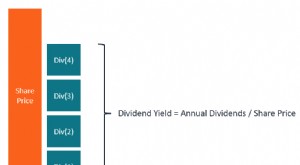
Understanding Forward Dividend Yield: A Key Metric for Investors
Forward dividend yield refers to the projection of a company’s yearly dividend. It’s calculated as a percentage of the current share price. For many investors, the dividends paid out by co
-

Fixed Income Forward Contracts: Definition & Uses
A fixed income forward contract refers to an agreement between two counterparties to buy or sell a fixed income instrument at a specified date, price, and amount in the future. The contracts are used
Public investment fund
- Currency Forward Explained: Contracts for Future Exchange Rates
- Forward Contracts: Definition, How They Work & Examples
- Understanding Forward Rates: A Comprehensive Guide
- Understanding Bond Pricing: Key Factors & Valuation
- Day Trading Explained: Strategies, Risks & How It Works
- Understanding Forward Prices: Definition & How They Work
- Predatory Pricing: Definition, Tactics & Legal Implications
- Value-Based Pricing: A Comprehensive Guide to Maximizing Revenue
- Day Trading Explained: A Beginner's Guide to Short-Term Stock Trading
-
 Intraday Trading: A Comprehensive Guide for Short-Term Investors
Intraday trading is a type of short-term investing that seeks to find smaller trends in the marketplace and take advantage of them. This type of trading is similar to day trading, but it differs...
-
Pattern Day Trading: Definition, Rules & Requirements
Pattern day trading is a type of trading that is utilized by individuals who wish to take short-term trades that are closed out in the same day that they are opened. The SEC has a special design...