
Understanding Company Health Through Dividend Payments
Dividend payments are one of the perks of being an investor in the stock market. While these payments can be nice to investors, they can also provide you with some valuable information about the company that is issuing them. Here are a few things to consider about dividend payments and how they help you gauge company health.
Dividend Payments
Dividend payments are an optional form of payment that is often provided by companies to their investors. This is a way for companies to share some of the profit that is generated every quarter or year. If you are an investor, you like to get a regular dividend check because it provides you with some type of consistent income. Companies have the option of whether they are going to pay a dividend or not. If they do not pay a dividend, they can use the money to further the company through many different means.
Company Health
Even though investors look at dividends as another source of income, they can also tell you a lot about how healthy a company is. If a company is issuing regular dividends, they are not worried about their future prospects. They know that the company is doing well and they are willing to share the wealth. Many companies that are just getting started do not issue regular dividends because they are not financially stable enough to do so. As an investor, you usually like to see regular dividends issued by a company that you are investing in because it gives you a signal that everything is doing well.
Problems
If a company that has previously issued a regular dividend stops issuing dividends, then you may become alarmed as an investor. Companies that are going through financial difficulties are going to cut out the dividend payment before they cut out anything else. This means that the company could be trying to tighten up their expenses and save money for other aspects of the business.
Dividend Ratio
When you are trying to gauge the health of a company, you can use the dividend ratio. This tells you how big a dividend is in comparison to the money that a company is bringing in. Some investors may not think anything is wrong if they continue to get a dividend check for $50 every quarter. However, if the company's revenue has increased by $1 billion and you are still only receiving $50, then something is not adding up. Your dividend should increase according to the money that is brought in. In order to calculate dividend ratio, you can take the amount of the dividend payment and divide it by the net earnings of the company.
Misinterpretations
It is possible to misinterpret a dividend cut. Some companies do not like to issue dividends because they want to focus on internal growth. These companies may be perfectly healthy financially but they want to grow faster. This makes it important to know the strategy of the company that you are investing in so that you do not misinterpret this information.
-

Understanding Asset Turnover: A Key Metric for Company Efficiency
Asset turnover is a valuation multiple that is used in order to compare the amount of revenue of a company to the assets it holds. You can calculate asset turnover by taking the revenue and divi
-
Understanding Leverage Ratio: A Key Indicator of Company Financial Health
Leverage ratio is used by investors to gain insight about a company’s financial methods as well as its ability to repay its debts. The term leverage, also known as gearing, pertains to the
Stock basis
- Understanding Dividend Yield: A Key Metric for Investors
- Understanding Liquidating Dividends: A Comprehensive Guide
- Special Dividends: Understanding One-Time Distributions
- Understanding Dividend Policy: A Comprehensive Guide
- Decoding Executive Stock Sales: What They Reveal About a Company's Future
- Understanding Property Dividends: A Guide for Investors
- Strategic Dividend Policy Development for Sustainable Growth
- Evaluating Investment Companies: A 3-Step Guide for Investors
- Dividend Stocks: Are They Right for Your Portfolio?
-
 Understanding Forward Dividend Yield: A Key Metric for Investors
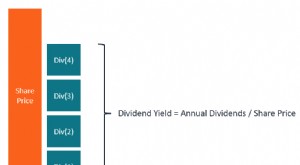
Forward dividend yield refers to the projection of a company’s yearly dividend. It’s calculated as a percentage of the current share price. For many investors, the dividends paid out by co...
-
Understanding ETF Dividend Payments: A Comprehensive Guide
If you want a good source of income, you should consider an ETF dividend payment account. There are two basic paths to investment, one is the more traditional stock funds. The other is using the...