
EBT vs. Pretax Income: Understanding the Difference
Actually, there is no difference between earnings before tax (EBT) vs pretax income. Both terms denote the same concept and can be used interchangeably.
Essentially, EBT or pretax income is a measure of the company’s profitability. EBT indicates the amount of money that a company retains after deducting all operating expenses but prior to the deduction of tax expenses.

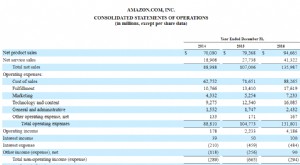
Pretax income is commonly disclosed on the company’s income statement. On an income statement, the pretax income can be commonly referred to as an income before provision for income taxes. In addition, all variables required to calculate the pretax income (revenue, COGSCost of Goods Sold (COGS)Cost of Goods Sold (COGS) measures the “direct cost” incurred in the production of any goods or services. It includes material cost, direct, interest expenses, etc.) can also be found on the income statement.
How to Calculate Pretax Income?
As mentioned above, pretax income is calculated as the difference between a company’s revenue and all operating expenses, including depreciation and interest expensesInterest ExpenseInterest expense arises out of a company that finances through debt or capital leases. Interest is found in the income statement, but can also, while excluding income taxes. Mathematically, it can be expressed using the following formula:
Pretax Income = Revenue – (Depreciation + COGS + Interest Expenses + SG&A)
Alternatively, pretax income can be calculated from the company’s net income. You just need to add back taxes to the net income:
Pretax Income = Net Income + Taxes
In addition, pretax income can be deduced from other profitability measures such as EBIT or EBITDA. The following formulas can be applied to calculate pretax income:
Pretax Income = EBIT – Interest Expenses
Pretax Income = EBITDA – (Interest Expenses + Depreciation & Amortization)
Why Do We Use EBT?
There are several measures of a company’s profitability including, but not limited to, EBITDA, EBIT, EBT, and net income. Each of the profitability measures comes with its own meaning and applications.
For example, pretax income is commonly used to compare the company’s financial performance with the performance of its peers, as well as to compare the company’s performance across different time periods.
Generally, it is viewed that pretax income is a better indicator of a financial performance rather than net income for companies with a significant amount of tax considerations, including tax credits, carryforwards, and carrybacks. In such a scenario, the net income of such a company is distorted by tax considerations. Thus, the metric does not depict the accurate company’s financial performance from its operations.
On the other hand, pretax income (EBT) excludes the company’s tax expenses. Thus, it measures only the financial performance from its operations.
Pretax Income vs. Taxable Income
The concept of pretax income (EBT) must not be confused with the concept of taxable incomeTaxable IncomeTaxable income refers to any individual's or business’ compensation that is used to determine tax liability. The total income amount or gross income is used as the basis to calculate how much the individual or organization owes the government for the specific tax period.. Pretax income is a book value that is used on the company’s financial statements. Calculations of pretax income are driven by accounting principles rather than existing tax legislation. Essentially, pretax income provides a basis to calculate an estimate of tax expense. The appropriate tax rate is applied to the pretax income figure to calculate the tax expenses for a period.
Conversely, taxable income is a figure that is calculated under the guidance of tax legislation in a given jurisdiction. In other words, using the taxable income in its tax filings, a company determines the actual amount of money it must pay in taxes for a given period.
More Resources
CFI offers the Financial Modeling & Valuation Analyst (FMVA)®Become a Certified Financial Modeling & Valuation Analyst (FMVA)®CFI's Financial Modeling and Valuation Analyst (FMVA)® certification will help you gain the confidence you need in your finance career. Enroll today! certification program for those looking to take their careers to the next level. To keep learning and advancing your career, the following resources will be helpful:
- After Tax Operating Income (ATOI)After Tax Operating Income (ATOI)After operating tax income or ATOI is a company’s operating income after all taxes are paid. The ATOI is not recognized by the GAAP as it excludes after-tax
- EBITDAEBITDAEBITDA or Earnings Before Interest, Tax, Depreciation, Amortization is a company's profits before any of these net deductions are made. EBITDA focuses on the operating decisions of a business because it looks at the business’ profitability from core operations before the impact of capital structure. Formula, examples
- Income SummaryIncome SummaryThe income summary account is an account that receives all the temporary accounts of a business upon closing them at the end of every accounting period. This means that the value of each account in the income statement is debited from the temporary accounts and then credited as one value to the income summary account.
- Projecting Income Statement Line ItemsProjecting Income Statement Line ItemsWe discuss the different methods of projecting income statement line items. Projecting income statement line items begins with sales revenue, then cost
-

Income Smoothing: Definition, Methods & Implications
Income smoothing is a term used to refer to the different strategies and approaches used by accountants and financial analystsFinancial Analysts - What Do They Do to monitor or control the impact of h
-
Understanding Net Income: A Comprehensive Guide
Net income is the amount of accounting profit a company has left over after paying off all its expenses. Net income is found by taking sales revenueSales RevenueSales revenue is the income received by
Accounting
- Understanding Federal Income Tax: A Comprehensive Guide
- Understanding Income Tax: A Comprehensive Guide for Individuals & Businesses
- Understanding Income Tax Payable: A Guide for Businesses
- Annualized Income: Definition, Calculation & Tax Implications
- Understanding Deferred Income Tax: A Comprehensive Guide
- Understanding Earnings Before Tax (EBT): Definition & Importance
- Negative Income Tax: A Comprehensive Explanation
- Understanding Pretax Income: Definition & Calculation
- Voluntary Tax Compliance: Understanding the U.S. Tax System
-
 Understanding Accounting Income: A Key Financial Metric
Accounting income is the profit a company retains after paying off all relevant expenses from sales revenue earned. It is synonymous with net incomeNet IncomeNet Income is a key line item, not only in...
-
 Accrued Income Explained: Definition & Accounting
Accrued income is income that a company will recognize and record in its journal entries when it has been earned – but before cash payment hast been received. There are times when a company will...