
Understanding Extraordinary Items in Financial Statements
An extraordinary item is an accounting term that refers to an abnormal gain or loss that is not generated from the ordinary business operations of a company, is infrequent in nature, and is unlikely to recur in the foreseeable future. Extraordinary items are disclosed separately in the financial statementsThree Financial StatementsThe three financial statements are the income statement, the balance sheet, and the statement of cash flows. These three core statements are of the company.

Summary
- An extraordinary item is an accounting term that refers to an abnormal gain or loss that is not generated from the ordinary business operations of a company, is infrequent in nature, and is unlikely to recur in the foreseeable future.
- Extraordinary gains and losses are often excluded by financial analysts while calculating the price-earnings ratio of a company to get a better sense of its profitability.
- Today, GAAP (Generally Accepted Accounting Principles) and IFRS (International Financial Reporting Standards) do not recognize the formal use of extraordinary items; it was eliminated in January 2015 to reduce the cost and complexity faced by companies in making financial statements.
Features of an Extraordinary Item
1. Materiality
Transactions exceeding the material threshold of a company will qualify as an extraordinary item. Materiality depends upon the relative size of the company and the industry to which the company belongs.
For example, a royalty of $10,000 earned by a street vendor for selling his recipe to a restaurant chain will be classified as an extraordinary gain as it is a substantial amount relative to his/her annual profit.
However, the same amount received by a multinational restaurant chain will not be unusual; rather, it will constitute the ordinary business operations of the company.
2. Rare/Unusual in nature
Transactions termed as extraordinary do not occur on a day-to-day basis. For example, an electrical appliance company discontinuing its line of refrigerators and shutting down the product’s manufacturing units is an event unlikely to recur in the future, and thus can be classified as an extraordinary item.
Purpose of an Extraordinary Item
Rare but significant events are treated as extraordinary items to prevent them from skewing a company’s regular earnings. Extraordinary items are often excluded by financial analysts while calculating the P/E ratioPrice Earnings RatioThe Price Earnings Ratio (P/E Ratio is the relationship between a company’s stock price and earnings per share. It provides a better sense of the value of a company. of a company to get a better sense of its profitability.
Companies disclose extraordinary items separately in their financial statements to give investors a more accurate picture of their ongoing expenses and incomes. At the same time, classifying a major loss as an extraordinary item may allow a company to depict a better picture of its financial performance.
To maintain standard accounting practices across companies, GAAP (Generally Accepted Accounting Principles)GAAPGAAP, Generally Accepted Accounting Principles, is a recognized set of rules and procedures that govern corporate accounting and financial and IFRS (International Financial Reporting Standards) specify the treatment of extraordinary items in the books of companies.
Exceptions
GAAP clearly specifies that gains or losses on the sale of an asset, lease of equipment to another company, foreign currency conversion, the effect of a labor strike, or abandonment of property must not be classified as extraordinary items.
Treatment of Extraordinary Items under GAAP and IFRS
In a GAAP update in January 2015, the formal use of extraordinary items was eliminated by the Financial Accounting Standards Board (FASB) to reduce the cost and complexity faced by companies in making financial statements.
Before 2015, extraordinary gains and losses (net of taxes) were disclosed separately on the P&L Statement after the income from day-to-day operations. Today, while companies still need to disclose any unusual transaction or event, they neither have to classify it as an extraordinary item nor evaluate their impact on income tax.
The IFRS also does not recognize extraordinary items and allows companies to disclose them under the usual sub-heads of revenue, finance costs, etc.
Related Readings
CFI is the official provider of the global Commercial Banking & Credit Analyst (CBCA)™Program Page - CBCAGet CFI's CBCA™ certification and become a Commercial Banking & Credit Analyst. Enroll and advance your career with our certification programs and courses. certification program, designed to help anyone become a world-class financial analyst. To keep advancing your career, the additional resources below will be useful:
- Accounting PoliciesAccounting PoliciesAccounting policies are rules and guidelines that are selected by a company for use in preparing and presenting its financial statements
- IFRS vs. US GAAPIFRS vs. US GAAPThe IFRS vs US GAAP refers to two accounting standards and principles adhered to by countries in the world in relation to financial reporting
- Non-GAAP EarningsNon-GAAP EarningsNon-GAAP earnings are earnings measures that do not follow GAAP’s (Generally Accepted Accounting Principles) standard calculations
- Profit and Loss (P&L) StatementProfit and Loss Statement (P&L)A profit and loss statement (P&L), or income statement or statement of operations, is a financial report that provides a summary of a
-

Understanding the Role of an Accountant: Key Responsibilities & Importance
An accountant plays a very crucial role in an organizationTypes of OrganizationsThis article on the different types of organizations explores the various categories that organizational structures can
-

Accrued Revenue: Definition, Examples & Accounting Explained
Accrued revenue is revenue that has been earned by providing goods or services but the payment has yet to be received. In other words, cash collection will occur in a subsequent period after the goods
Accounting
- Acquirer Definition: Understanding Corporate Acquisitions
- Understanding Clawbacks: Protecting Stakeholders from Failed Performance
- Extraordinary General Meeting (EGM): Definition & Key Information
- Understanding Financial Gearing: Debt & Leverage Explained
- EBITA Explained: Understanding Earnings Before Interest, Taxes, and Amortization
- Understanding Expenditures: Definition and Types
- Goodwill in Accounting: Definition & Value
- OIBDA Explained: Understanding Operating Income Before Depreciation & Amortization
- Understanding Vouchers: A Guide to Accounts Payable Documents
-
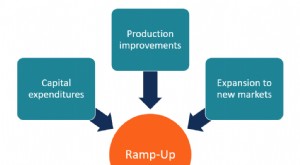 Ramp-Up: Definition, Benefits & How to Achieve It
In business, ramp-up is a term that describes a significant increase in the output of a company’s products or services. Essentially, ramp-up implies bringing the company’s capacity utiliza...
-
 Streamlining Processes: Definition, Benefits & Techniques
Streamlining refers to the improvement of the efficiency of a certain process within an organization. It can be done by automationExcel vs Automation in Financial ModelingBefore we discuss Excel vs au...