
Income, Revenue, and Earnings: Understanding the Differences
Income, revenue, and earnings are probably the three most widely used concepts in accounting and finance. All the terms denote measures of a company’s profitability. Although they are defined differently, they are frequently confused with one another.

Income (net income) is the amount of money a company retains after subtracting all expenses associated with operations. Therefore, net income is known as the bottom line of a company’s income statement. Earnings and net income are commonly used as synonyms.
Revenue is the total amount of money a company generates from its core operations. It is the first line on a company’s income statementIncome StatementThe Income Statement is one of a company's core financial statements that shows their profit and loss over a period of time. The profit or.
What is Income?
The basic meaning of income is the amount of money an individual or an organization receives for selling goods, providing services, or investing capital. For example, as an employee in a company, income is the wage the individual earns for work rendered. Additionally, they may earn a side income from an investment portfolio of financial assets (e.g., stocks, bonds, etc.). Any type of income is generally taxable. Note that the tax regulations regarding income types may vary among tax jurisdictions.
In the context of business operations, income is the amount of money a company retains internally after paying all expenses and taxes. In this sense, income is commonly referred to as net income. Similar to revenue, net income appears on the company’s income statement. Note that it is reported at the bottom of the statement. Due to this reason, net income can be frequently referred to as the bottom line.
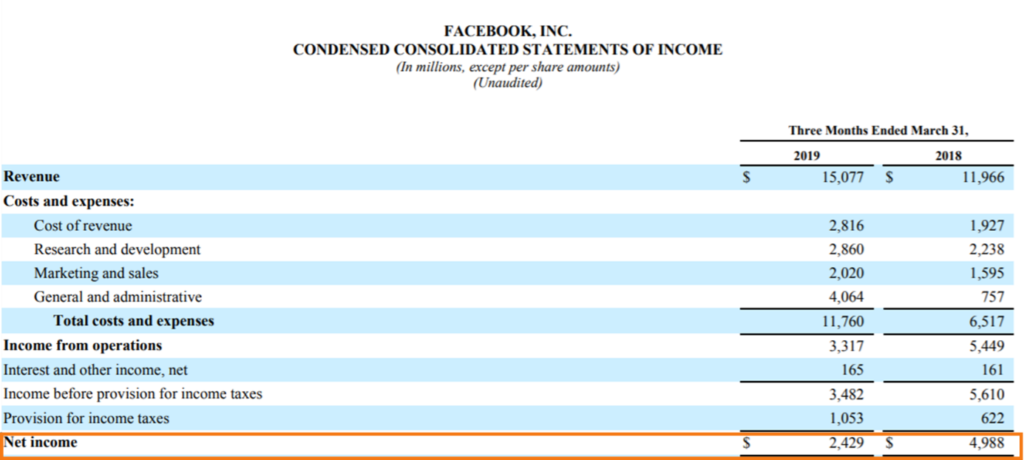
Net income is also used as a profitability measure of a company. The main advantage of net income over other profitability measures is that it indicates what amount of money a company can actually retain internally after accounting for all operating and non-operating revenues and expenses. At the same, investors and analysts view net income as a somewhat deceiving profitability measure that provides a distorted picture of the company’s operating efficiency.
What is Revenue?
Revenue is the total amount of money a company generates in the course of its normal business operations. Most businesses earn their revenue by selling goods and/or services to the clients. For example, a local coffee shop’s revenue is the total amount of money earned from the sale of coffee and snacks to the customers.
A company’s revenue is reported on an income statement. The first line on every income statement is revenue. As a result, revenue can sometimes be referred to as the top line.
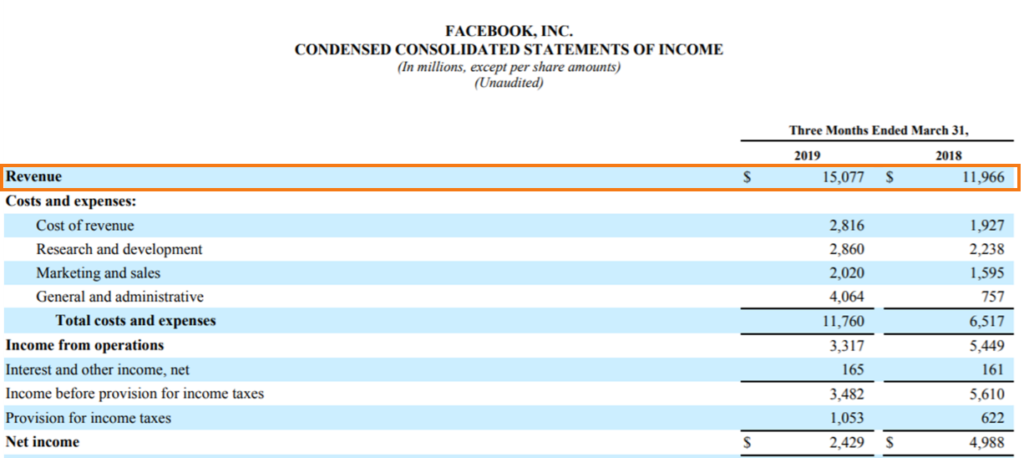
Revenue is the most basic yet important indicator of a company’s profitability and its overall financial performance. It is a critical measure of financial performance that reveals how well a company can generate money from its primary business operations. Generally, analysts and investors carefully assess the company’s revenues from different periods to identify their growth trends.
In some cases, the reliability of revenue can be questionable as the metric is prone to potential manipulation. For example, the management of a company can artificially inflate revenues by applying aggressive revenue recognition principles.
What are Earnings?
Earnings are the company’s profits. In other words, earnings represent the net income of a company.
Also, earnings can be referred to as the pre-tax income of a company. In such a context, there are many variations of earnings measures such as earnings before taxes (EBT), earnings before interest and taxes (EBIT)EBIT GuideEBIT stands for Earnings Before Interest and Taxes and is one of the last subtotals in the income statement before net income. EBIT is also sometimes referred to as operating income and is called this because it's found by deducting all operating expenses (production and non-production costs) from sales revenue., and earnings before interest, taxes, depreciation & amortization (EBTIDA)EBITDAEBITDA or Earnings Before Interest, Tax, Depreciation, Amortization is a company's profits before any of these net deductions are made. EBITDA focuses on the operating decisions of a business because it looks at the business’ profitability from core operations before the impact of capital structure. Formula, examples. Also, companies commonly report earnings per share (EPS)Earnings Per Share (EPS)Earnings per share (EPS) is a key metric used to determine the common shareholder's portion of the company’s profit. EPS measures each common share's profit, which indicates their earnings on a per-share basis.
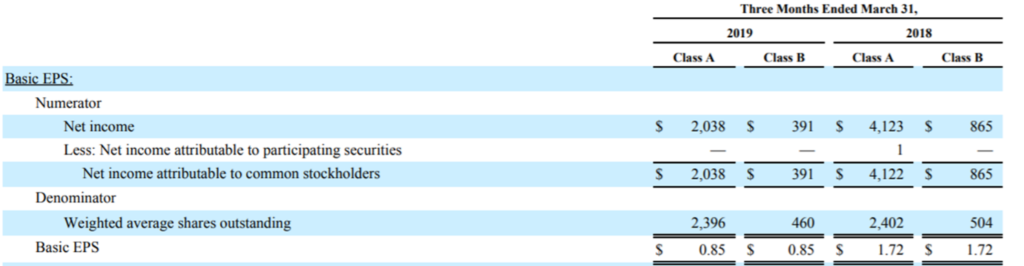
Earnings are considered one of the most critical determinants of a company’s financial performance. For public companies, equity analysts make their own estimates of the company’s anticipated earnings periodically (quarterly and annually). Public companies are concerned with the difference between the actual earnings and the estimates provided by the analysts.
For example, if the company’s actual earnings are lower than the estimated earnings, it may indicate poor performance of the company. On the other hand, the fact that a company beats its earnings estimates is an indicator of its solid performance.
Although manipulation of the company’s earnings is both unethical and illegal, some companies still leverage the flaws in current accounting reporting standards to hide some deficiencies in the operating performance of a company.
More Resources
CFI is the official provider of the global Financial Modeling & Valuation Analyst (FMVA)®Become a Certified Financial Modeling & Valuation Analyst (FMVA)®CFI's Financial Modeling and Valuation Analyst (FMVA)® certification will help you gain the confidence you need in your finance career. Enroll today! certification program, designed to help anyone become a world-class financial analyst. To keep advancing your career, the additional resources below will be useful:
- Earnings Before Tax (EBT) vs Pretax IncomeEarnings Before Tax (EBT) vs Pretax IncomeActually, there is no difference between earnings before tax (EBT) vs pretax income. Both terms denote the same concept and can be used
- Operating IncomeOperating IncomeOperating income is the amount of revenue left after deducting the operational direct and indirect costs from sales revenue.
- Projecting Income Statement Line ItemsProjecting Income Statement Line ItemsWe discuss the different methods of projecting income statement line items. Projecting income statement line items begins with sales revenue, then cost
- Top Accounting ScandalsTop Accounting ScandalsThe last two decades saw some of the worst accounting scandals in history. Billions of dollars were lost as a result of these financial disasters. In this
-

Decoding Earnings Reports: Avoiding Misleading Financial Data
Many investors look at company earnings when evaluating a stocks potential. However, in recent years it has become more apparent that earnings reports can be misleading. Here are a few things to
-
Revenue Explained: Definition, Calculation & Importance
When you’re evaluating a business, it’s important to understand key numbers. One of the most important is revenue, which can tell you how a company is doing year over year and if it’s bringing in more
Accounting
- Gross Revenue vs. Gross Income: Understanding the Difference
- Understanding Earnings: A Guide to Financial Profitability
- Understanding Earnings Announcements: A Comprehensive Guide
- Understanding Earnings Calls: A Comprehensive Guide
- Accrued Revenue: Definition, Examples & Accounting Explained
- Understanding Pretax Income: Definition & Calculation
- Understanding Revenue: A Comprehensive Guide for Businesses
- Revenue vs. Income: Understanding the Key Differences
- Sales Revenue: Definition, Calculation & Importance
-
 Revenue Per Employee: Definition, Calculation & Importance
Revenue per employee is an efficiency ratio used to determine the revenue generated per individual working at a company. The revenue per employee ratio is important for determining the efficiency and ...
-
 Revenue Enhancement: Strategies & Techniques for Increased Income
Revenue enhancement is the increase in revenues that is achieved by raising the amount of taxes that individuals and corporationsCorporationA corporation is a legal entity created by individuals, stoc...