
Revenue Enhancement: Strategies & Techniques for Increased Income
Revenue enhancement is the increase in revenues that is achieved by raising the amount of taxes that individuals and corporationsCorporationA corporation is a legal entity created by individuals, stockholders, or shareholders, with the purpose of operating for profit. Corporations are allowed to enter into contracts, sue and be sued, own assets, remit federal and state taxes, and borrow money from financial institutions. remit to the government. Most of the time, governments run on a deficit budget, due to the inability to meet all the demands for services and infrastructure from citizens. This means that they need to be continually innovative to find new ways of raising additional revenue to fund the deficit and meet citizens’ demands.

Revenue enhancement is not limited to the public sector alone – it also applies to the private sector. Private companies need to continually find new ways of boosting their revenues if they want to survive in a competitive market. While cost savings is a common strategy for increasing revenues, it is only a short-term solution. There are other, more long-term techniques of increasing revenues that companies can use to boost revenue collection.
How to Enhance Revenues Without Affecting Profit Margins
The following are some of the techniques that businesses can use to enhance their revenues and create a sustainable business modelTypes of BusinessesThere are four main types of businesses to choose when forming a company: sole proprietorships, partnerships, limited liability companies, and corporations.:
1. Benchmark performance against the performance of top competitors
Companies should continually evaluate their operating marginsOperating MarginOperating margin is equal to operating income divided by revenue. It is a profitability ratio measuring revenue after covering operating and and gross profit margins on a periodical basis and then use the metrics to benchmark against competitors. Essentially, the ideal competitors to benchmark against are the top-performing companies in the same or related industries.
Comparing the company’s performance to the performance of its top competitors can help highlight opportunities that it can exploit to enhance its revenues. The opportunities can be in terms of individual service or product offering, business lines, types of clients, or geographical locations.
2. Review options and possible outcomes
After identifying the opportunities in the market, the company should consider the possible options for revenue enhancement. The options may be to decrease costs, eliminate low margin clients, implement new marketing techniques5 P's of MarketingThe 5 P's of Marketing – Product, Price, Promotion, Place, and People – are key marketing elements used to position a business strategically. The 5 P's of, increase product prices, or expand to a new geographical location.
The company should then assess the possible outcomes for each option to determine the choices that will bring in the most revenues in the long term. The next step is to create a work plan on how the company will implement the selected actions.
3. Eliminate low-margin clients
Companies sell their products and services to a diverse client base consisting of both high-margin and low-margin clients. A company should be able to distinguish between the two types of clients and analyze the contribution of each type of client to its overall revenues. The goal of the company should be to trade with clients that bring the most revenues and focus their resources towards fulfilling the needs of such clients.
Eliminating low-margin clients and staying only with the high-margin clients can reduce costs and free up resources for the company. While the decision can mildly affect revenues, it will free up both capitalCapitalCapital is anything that increases one’s ability to generate value. It can be used to increase value across a wide range of categories, such as financial, social, physical, intellectual, etc. In business and economics, the two most common types of capital are financial and human. and time, which can then be spent on the high-margin clients to increase revenues in the long term.
4. Set targets
After deciding on the ideal options to focus on, the company should then set realistic and actionable targets for the enterprise. The targets should be in line with the overall goal of increasing revenues, and they should offer a long-lasting benefit to the business.
When setting targets, the company should first consider why customers buy the company’s products, and then use those findings to set more concrete targets that grow revenues and profits. The company should put in place a proper review system in place to determine how well it is doing in achieving its targets. The review should be done periodically. Any issues should be identified and solved immediately.
Revenue Enhancement for Governments
The government is continually in need of more revenue each year to improve infrastructure, improve healthcare, address inequality, and guarantee retirement security. Some of the ways that the government can raise more revenues include:
1. Increase high-end taxes
In the United States, the highest tax rate on earned income is 40% for taxpayers earning over $400,000. Raising the tax rate to about 45% can help maximize revenues and minimize distortions in the market such as reduced labor supply and tax avoidance. If the government were to raise tax rates for ordinary taxpayers, it would distort the market.
At the same time, this will provide the high net worth individuals with an opportunity to redefine their income to reduce liabilities associated with the increased tax rate. Raising the tax rate for the top earners would help reduce inequalities in incomes.
2. Increase estate tax
The current estate tax rate is considered modest, and the wealthy use their estates to invest in trusts with the goal of avoiding capital gains taxesCapital Gains TaxCapital gains tax is a tax imposed on capital gains or the profits that an individual makes from selling assets. The tax is only imposed once the asset has been converted into cash, and not when it’s still in the hands of an investor.. Also, the current estate tax law reaches less than 0.5% of estates. In addition, it only applies to the value of the estate that exceeds the existing exemption level.
As of 2018, the exemption level per taxpayer is $11.18 million per year, which is double the amount of exemption granted in 2017. This means that only about 2,000 estates per year are liable for the estate tax. Increasing the estate tax from 40% to 45% and increasing its coverage can increase the estate tax revenues paid to the government each year.
3. Tax carbon emissions
Taxing carbon emissions is considered not only important but also essential to address the issues of global warming. The carbon tax is imposed on companies and individuals that burn fossil fuels such as gas, coal, and oil. Increasing the tax on carbon emissions can reduce burning fossil fuels and perhaps eventually eliminate their usage, while encouraging other environmentally-friendly energy alternatives.
Additional Resources
CFI is the official provider of the Financial Modeling and Valuation Analyst (FMVA)™Become a Certified Financial Modeling & Valuation Analyst (FMVA)®CFI's Financial Modeling and Valuation Analyst (FMVA)® certification will help you gain the confidence you need in your finance career. Enroll today! certification program, designed to transform anyone into a world-class financial analyst.
To keep learning and developing your knowledge of financial analysis, we highly recommend the additional CFI resources below:
- Products and ServicesProducts and ServicesA product is a tangible item that is put on the market for acquisition, attention, or consumption while a service is an intangible item, which arises from
- SMART GoalsSMART GoalsA SMART goal is used to help guide goal setting. SMART is an acronym that stands for Specific, Measurable, Achievable, Realistic, and Timely. Goals are part
- Types of CustomersTypes of CustomersCustomers play a significant role in any business. By better understanding the different types of customers, businesses can be better equipped to develop
- Voluntary Carbon MarketVoluntary Carbon MarketThe voluntary carbon market enables private investors, governments, non-governmental organizations, and businesses to voluntarily purchase carbon offsets to
-
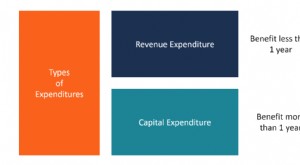
Understanding Expenditures: Definition and Types
An expenditure represents a payment with either cash or credit to purchase goods or services. An expenditure is recorded at a single point in time (the time of purchase), compared to an expenseAccrued
-

Goodwill in Accounting: Definition & Value
In accounting, goodwill is an intangible assetIntangible AssetsAccording to the IFRS, intangible assets are identifiable, non-monetary assets without physical substance. Like all assets, intangible as
Business strategy
- Acquirer Definition: Understanding Corporate Acquisitions
- Revenue Per Employee: Definition, Calculation & Importance
- Accrued Revenue: Definition, Examples & Accounting Explained
- Holding Companies: Definition, Purpose & How They Work
- Kaizen: Understanding Continuous Improvement for Business
- Outsourcing: A Comprehensive Guide to Benefits & Strategy
- Ramp-Up: Definition, Benefits & How to Achieve It
- Revenue Enhancement: Strategies & Techniques for Increased Income
- Streamlining Processes: Definition, Benefits & Techniques
-
 Ancillary Revenue: Definition, Examples & Maximization
Ancillary revenue is income a company generates from selling goods and services that are not a primary revenue streamRevenue StreamsRevenue Streams are the various sources from which a business earns ...
-
 EBITA Explained: Understanding Earnings Before Interest, Taxes, and Amortization
EBITA is an acronym that refers to the earnings of a company before interest, tax, and amortization expenses are deducted. Investors use EBITA as an indicator to measure the profitability and efficien...