
Managerial Accounting: Definition, Uses, and Differences from Financial Accounting
Managerial accounting (also known as cost accounting or management accounting) is a branch of accounting that is concerned with the identification, measurement, analysis, and interpretation of accounting information so that it can be used to help managers make informed operational decisions.

Unlike financial accounting, which is primarily concentrated on the coordination and reporting of the company’s financial transactions to outsiders (e.g., investors, lendersTop Banks in the USAAccording to the US Federal Deposit Insurance Corporation, there were 6,799 FDIC-insured commercial banks in the USA as of February 2014. ), managerial accounting is focused on internal reporting to aid decision-making.
Managerial accountants need to analyze various events and operational metricsKey Performance Indicators (KPIs)Key Performance Indicators (KPIs) are metrics used to periodically track and evaluate the performance of an organization toward the achievement of specific goals. They are also used to gauge the overall performance of a company in order to translate data into useful information that can be leveraged by the company’s management in their decision-making process. They aim to provide detailed information regarding the company’s operations by analyzing each individual line of products, operating activity, facility, etc.
Techniques in Managerial Accounting
In order to achieve its goals, managerial accounting relies on a variety of different techniques, including the following:
1. Margin analysis
Margin analysis is primarily concerned with the incremental benefits of optimizing production. Margin analysis is one of the most fundamental and essential techniques in managerial accounting. It includes the calculation of the breakeven pointBreak-even Point (BEP)Break-even point (BEP) is a term in accounting that refers to the situation where a company's revenues and expenses were equal within a specific accounting period. It means that there were no net profits or no net losses for the company - it "broke even". BEP may also refer to the revenues that are needed to be reached in order to compensate for the expenses incurred that determines the optimal sales mix for the company’s products.
2. Constraint analysis
The analysis of the production lines of a business identifies principal bottlenecks, the inefficiencies created by these bottlenecks, and their impact on the company’s ability to generate revenues and profits.
3. Capital budgeting
Capital budgeting is concerned with the analysis of information required to make the necessary decisions related to capital expenditures. In capital budgeting analysis, managerial accountants calculate the net present value (NPV)Net Present Value (NPV)Net Present Value (NPV) is the value of all future cash flows (positive and negative) over the entire life of an investment discounted to the present. and the internal rate of return (IRR)Internal Rate of Return (IRR)The Internal Rate of Return (IRR) is the discount rate that makes the net present value (NPV) of a project zero. In other words, it is the expected compound annual rate of return that will be earned on a project or investment. to help managers to decide on new capital budgeting decisions.
4. Inventory valuation and product costing
Inventory valuation involves the identification and analysis of the actual costs associated with the company’s products and inventory. The process generally implies the calculation and allocation of overhead charges, as well as the assessment of the direct costs related to the cost of goods sold (COGS)Cost of Goods Sold (COGS)Cost of Goods Sold (COGS) measures the “direct cost” incurred in the production of any goods or services. It includes material cost, direct.
5. Trend analysis and forecasting
Trend analysis and forecasting are primarily concerned with the identification of patterns and trends of product costs, as well as with recognition of unusual variances from the forecasted values and the reasons for such variances.
Related Readings
Thank you for reading CFI’s guide to managerial accounting. CFI is the official provider of the global Financial Modeling & Valuation Analyst (FMVA)Become a Certified Financial Modeling & Valuation Analyst (FMVA)®CFI's Financial Modeling and Valuation Analyst (FMVA)® certification will help you gain the confidence you need in your finance career. Enroll today!®Become a Certified Financial Modeling & Valuation Analyst (FMVA)®CFI's Financial Modeling and Valuation Analyst (FMVA)® certification will help you gain the confidence you need in your finance career. Enroll today! certification program, designed to help anyone become a world-class financial analyst. To keep advancing your career, the additional CFI resources below will be useful:
- Accounting CycleAccounting CycleThe accounting cycle is the holistic process of recording and processing all financial transactions of a company, from when the transaction
- Capital ExpendituresCapital ExpendituresCapital expenditures refer to funds that are used by a company for the purchase, improvement, or maintenance of long-term assets to improve
- Inventory ValuationInventory ValuationInventory valuation refers to the practice of accounting for the value of a business' inventory. Business inventories refer to all the
- Three Financial StatementsThree Financial StatementsThe three financial statements are the income statement, the balance sheet, and the statement of cash flows. These three core statements are
-

Accounting Profit Explained: Calculation & Importance
Accounting profit is the net income for a company and is calculated by subtracting expenses from revenues, with guidance from the Generally Accepted Accounting Principles (GAAP)GAAPGAAP, G
-

Understanding Accounting Ratios: A Comprehensive Guide
Accounting ratios cover a wide array of ratios that are used by accountants and act as different indicators that measure profitability, liquidityLiquidityIn financial markets, liquidity refers to how
Accounting
- Contribution Analysis: Understanding Profitability & Cost Management
- Credit Analysis: A Comprehensive Guide to Assessing Credit Risk
- Quantitative Analysis: Definition, Methods & Applications
- Financial Analysis: A Comprehensive Guide for Professionals
- Accounting Explained: Understanding Financial Records & Reporting
- Understanding Accounting Income: A Key Financial Metric
- Understanding Accounting Methods: Cash vs. Accrual
- Hedge Accounting Explained: A Comprehensive Guide
- Understanding Inflation Accounting: A Guide for Multinational Corporations
-
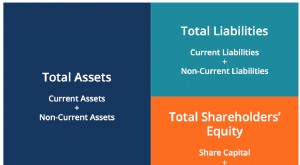 Understanding the Accounting Equation: Assets = Liabilities + Equity
The accounting equation is a basic principle of accounting and a fundamental element of the balance sheetBalance SheetThe balance sheet is one of the three fundamental financial statements. The financ...
-
 Understanding Accounting Policies: A Guide for Businesses
Accounting policies are rules and guidelines that are selected by a company for use in preparing and presenting its financial statements. Accounting policies are important, as they set a framework, wh...