
Modified Cash Basis Accounting: A Comprehensive Guide
Modified cash basis refers to an accounting method that utilizes the features of both the accrual and cash basis methods. It is also called hybrid accounting, where the cash basis of accounting is used to prepare the financials with the addition of accrual adjustments.

The modified cash basis of accounting is generally used for internal reporting by private small businessesSmall and Medium-sized Enterprises (SMEs)SMEs, or small and medium-sized enterprises, are defined differently around the world. The country a company operates in provides the, manufacturers, and retailers.
The cash basis of accounting identifies a transaction whenever cash is involved. Hence, revenue will be recorded when there is a cash receipt, and an expense will be recorded whenever there is a cash payment.
In the accrual basis of accountingAccrual AccountingIn financial accounting, accruals refer to the recording of revenues that a company has earned but has yet to receive payment for, and the, revenue will be recorded when it is earned and expenses will be recorded whenever incurred, regardless of changes in cash. Using both the cash and accrual basis methods, the modified cash basis method balances the details of short-term and long-term accounting items in a better way.
Summary
- The modified cash basis refers to an accounting method that utilizes the features of both cash and accrual accounting methods.
- It provides more relevant financial information than the cost basis and is cheaper than accrual basis accounting.
- The modified cash basis of accounting does not comply with GAAP and IFRS rules. Therefore, it is primarily used for internal accounting purposes at small private companies.
Features of the Modified Cash Basis
1. It follows the cash basis method of accounting for recording short-term items. It records almost all income statement elements as per the cash basis. However, inventory and accounts receivableAccounts ReceivableAccounts Receivable (AR) represents the credit sales of a business, which have not yet been collected from its customers. Companies allow are not recorded on the balance sheet.
2. It follows the accrual basis method of accounting for recording long-term items on the balance sheet. It records long-term debts and fixed-term assets on the balance sheet and the depreciation and amortization of associated fixed assets on the income statement.
3. The modified cash basis method utilizes double-entry accounting. A comprehensive set of financial statements can be constructed using the method. It requires an equivalent and opposite entry to be created in a different account. A modified cash basis accounting record cannot be obtained using a single-entry accounting system.
4. The financial information provided by the modified cash basis method is more relevant than the cash basis method. Maintaining a set of accrual records is costlier than the records provided by the modified cash basis method. Therefore, modified cash basis accounting can be deemed as a cost-effective method of bookkeepingWhat is Bookkeeping?Bookkeeping involves the recording, on a regular basis, of a company's financial transactions. With proper bookkeeping, companies are able to.
5. There are no rules imposed on the usage of modified cash basis accounting. However, if it is used, there should be consistency in the manner that transactions are handled, so the resultant financial statements are similar over time.
6. It is not permitted under Generally Accepted Accounting Principles (GAAP) or International Financial Reporting Standards (IFRS). It implies that a business using the modified cash basis method will have to adjust transactions that have been recorded on a cash basis to make them accrual-based; otherwise, the external auditor will not approve the financial statements.
However, the changes required are fewer than if the business had used the cash basis method. In that case, a full transition to accrual basis accounting would have been required.
7. It can be used when there is no need to comply with GAAP or IFRS. It may be used by privately-held businesses where financial statements are for internal use only, and financing is not required.
Cash Basis vs. Modified Cash Basis
Cash basis accounting only deals with cash accounts. It can be used when items such as cash, income, cost of goods sold, equity, and expenses need to be recorded. It cannot be used to record accrual accounts, such as inventory, loans, or fixed assets.
On the contrary, modified cash basis accounting can be used to record both cash accounts and accrual accounts. However, it is more time-consuming than cash basis accounting, as there are more accounts, and a greater number of transactions are required to be recorded.
Related Readings
CFI is the official provider of the global Commercial Banking & Credit Analyst (CBCA)™Program Page - CBCAGet CFI's CBCA™ certification and become a Commercial Banking & Credit Analyst. Enroll and advance your career with our certification programs and courses. certification program, designed to help anyone become a world-class financial analyst. To keep advancing your career, the additional CFI resources below will be useful:
- Modified Accrual AccountingModified Accrual AccountingModified accrual accounting refers to an accounting method that combines cash-basis accounting and accrual-basis accounting. It follows the
- Balance SheetBalance SheetThe balance sheet is one of the three fundamental financial statements. The financial statements are key to both financial modeling and accounting.
- Accounting CycleAccounting CycleThe accounting cycle is the holistic process of recording and processing all financial transactions of a company, from when the transaction
- IFRS StandardsIFRS StandardsIFRS standards are International Financial Reporting Standards (IFRS) that consist of a set of accounting rules that determine how transactions and other accounting events are required to be reported in financial statements. They are designed to maintain credibility and transparency in the financial world
-

Modified Cash Basis Accounting: A Comprehensive Guide
Modified cash basis refers to an accounting method that utilizes the features of both the accrual and cash basis methods. It is also called hybrid accounting, where the cash basis of accounting is use
-

Petty Cash: Definition, Uses & Management for Businesses
Petty cash refers to a small amount of hard currency that a businesses will keep on hand to pay for miscellaneous and unexpected items, such as team lunches, birthday cakes, or office snacks. Pe
Accounting
- Bitcoin Cash (BCH): A Comprehensive Overview - Features, History & Future
- Understanding Cash Consideration in Mergers & Acquisitions
- Understanding Cash Flow: A Comprehensive Guide
- Cash Management: A Comprehensive Guide to Financial Stability
- Cash-on-Cash Return: Definition, Calculation & Importance
- Cash Ratio: Understanding Your Company's Short-Term Liquidity
- Cash Sweep: Reduce Debt & Maximize Earnings | [Your Company Name]
- Disbursement Explained: Definition, Impact & Accounting Implications
- Understanding Finance: A Comprehensive Overview
-
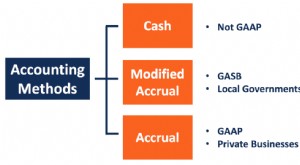 Modified Accrual Accounting: A Comprehensive Guide
Modified accrual accounting refers to an accounting method that combines cash-basis accounting and accrual-basis accounting. It follows the cash-basis method to record short-term events and follows th...
-
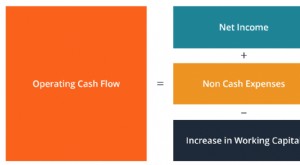 Understanding Operating Cash Flow (OCF): A Comprehensive Guide
Operating Cash Flow (OCF) is the amount of cash generated by the regular operating activities of a business within a specific time period. OCF begins with net incomeNet IncomeNet Income is a key line ...