
Revenue Recognition Principle: Definition & Importance
The revenue recognition principle dictates the process and timing by which revenue is recorded and recognized as an item in a company’s financial statements. Theoretically, there are multiple points in time at which revenue could be recognized by companies. Generally speaking, the earlier revenue is recognized, it is said to be more valuable to the company, yet a risk to reliability.

In accounting, revenue recognition is one of the areas that is most susceptible to manipulation and bias. In fact, it is estimated that a significant portion of all accounting fraud stems from revenue recognition issues, given the amount of judgment involved. Understanding the revenue recognition principle is important in analyzing financial statementsAnalysis of Financial StatementsHow to perform Analysis of Financial Statements. This guide will teach you to perform financial statement analysis of the income statement,.
Revenue Recognition Criteria
According to IFRS standardsIFRS StandardsIFRS standards are International Financial Reporting Standards (IFRS) that consist of a set of accounting rules that determine how transactions and other accounting events are required to be reported in financial statements. They are designed to maintain credibility and transparency in the financial world, all of the following five conditions must be met for a company to recognize revenue:
- There is a transfer of the risks and rewards of ownership.
- The seller loses continuing managerial involvement or control of the goods sold.
- The amount of revenue can be reasonably measured.
- Collection of payment is reasonably assured.
- The costs incurred can be reasonably measured.
To learn more, launch our free accounting courses!
Revenue Recognition for the Sale of Goods
For the sale of goods, most of the time, revenue is recognized upon delivery. This is because, at the time of delivery, all five criteria are met. An example of this may include Whole Foods recognizing revenue upon the sale of groceries to customers.
Revenue recognition at delivery will look like this:
DR Cash or Accounts Receivable a
CR Revenue a
When revenue is recognized, according to the matching principle, expenses must also be considered for:
DR Cost of Goods Sold b
CR Inventory b
Revenue Recognition Before and After Delivery
For the sale of goods, IFRS standards do not permit revenue recognition prior to delivery. IFRS does, however, permit revenue recognition after delivery.
There are situations when there are uncertainties regarding the costs associated with future costs, violating the fifth criteria for revenue recognition as outlined above.
For example, if a company cannot reliably estimate the future warranty costs on a specific product, the criteria are not met. When the fifth criterion is met, at that point revenue may be recognized.
Other reasons for revenue recognition after delivery include situations where the amount of revenue cannot be reasonably determined (e.g., contingent sales), inestimable returns, unassured collectability of accounts receivable, and risks of ownership remaining with the seller (consignment sales).
To learn more, launch our free accounting courses!
Journal Entries for the Revenue Recognition Principle
Typical journal entries look like:
DR Cash
CR Deferred Revenue
DR Deferred COGS
CR Inventory
Instead of crediting revenue and debiting COGSCost of Goods Sold (COGS)Cost of Goods Sold (COGS) measures the “direct cost” incurred in the production of any goods or services. It includes material cost, direct, deferred revenue and deferred COGS are used. When revenue can be recognized, then these deferred accounts are closed to actual revenue and COGS:
DR Deferred Revenue
CR Revenue
DR COGS
CR Deferred COGS
Installment Sales Method and the Revenue Recognition Principle
Installment sales are quite common, where products are sold on a deferred payment plan and payments are received in the future after the goods have already been delivered to the customer. Under this method, revenue can only be recognized when the actual cash is collected from the customer.
Example:
In May, XYZ Company sold $300,000 worth of goods to customers on credit. In June, $90,000 was collected and in September, $210,000 was collected. The COGS is 80%.
Using the installment sales method, the journal entries would be:
May:
DR Instalment Accounts Receivable 300,000
CR Deferred Revenue 300,000
DR Deferred COGS 240,000
CR Inventory 240,000
June:
DR Cash 90,000
CR Instalment Accounts Receivable 90,000
DR Deferred Revenue 90,000
CR Sales Revenue 90,000
DR COGS 72,000
CR Deferred COGS 72,000
September:
DR Cash 210,000
CR Instalment Accounts Receivable 210,000
DR Deferred Revenue 210,000
CR Sales Revenue 210,000
DR COGS 168,000
CR Deferred COGS 168,000
To learn more, launch our free accounting courses!
Revenue Recognition Principle for the Provision of Services
One important area of the provision of services involves the accounting treatment of construction contracts. These are contracts dedicated to the construction of an asset or a combination of assets such as large ships, office buildings, and other projects that usually span multiple years.
In recognizing revenue for services provided over a long period of time, IFRS states that revenue should be recognized based on the progress towards completion, also referred to as the percentage of completion method.
These contracts are of two kinds: fixed price contracts and cost-plus contracts.
In fixed-price contracts, the contractor/builder agrees to a price before construction actually begins. Thus, all the risks are imposed on the contractor.
In cost-plus contracts, the price depends on the amount actually spent on the project plus a profit margin. For companies reporting under ASPE, the completed-contract method may also be used.
As opposed to the percentage of completion method, the completed contract method only allows revenue recognition when the contract is completed.
Additional Resources
CFI offers the Financial Modeling & Valuation Analyst (FMVA)Become a Certified Financial Modeling & Valuation Analyst (FMVA)®CFI's Financial Modeling and Valuation Analyst (FMVA)® certification will help you gain the confidence you need in your finance career. Enroll today!®Become a Certified Financial Modeling & Valuation Analyst (FMVA)®CFI's Financial Modeling and Valuation Analyst (FMVA)® certification will help you gain the confidence you need in your finance career. Enroll today! certification program for those looking to take their careers to the next level. To help you advance your career, check out the additional CFI resources below:
- Analysis of Financial StatementsAnalysis of Financial StatementsHow to perform Analysis of Financial Statements. This guide will teach you to perform financial statement analysis of the income statement,
- Financial Accounting TheoryFinancial Accounting TheoryFinancial Accounting Theory explains the why behind accounting - the reasons why transactions are reported in certain ways. This guide will
- Financial Analyst Guide TrifectaThe Analyst Trifecta® GuideThe ultimate guide on how to be a world-class financial analyst. Do you want to be a world-class financial analyst? Are you looking to follow industry-leading best practices and stand out from the crowd? Our process, called The Analyst Trifecta® consists of analytics, presentation & soft skills
- Financial Modeling GuideFree Financial Modeling GuideThis financial modeling guide covers Excel tips and best practices on assumptions, drivers, forecasting, linking the three statements, DCF analysis, more
-
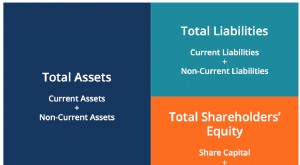
Understanding the Accounting Equation: Assets = Liabilities + Equity
The accounting equation is a basic principle of accounting and a fundamental element of the balance sheetBalance SheetThe balance sheet is one of the three fundamental financial statements. The financ
-

Accrued Revenue: Definition, Examples & Accounting Explained
Accrued revenue is revenue that has been earned by providing goods or services but the payment has yet to be received. In other words, cash collection will occur in a subsequent period after the goods
Accounting
- Navigating Recurring Revenue Recognition in the Cloud
- Revenue Recognition Explained: A Comprehensive Guide to ASC 606
- Accrual Accounting Principle: Definition & Explanation
- Ancillary Revenue: Definition, Examples & Maximization
- Full Disclosure Principle: Understanding Public Company Financial Reporting
- Understanding the Matching Principle in Accounting
- Revenue Recognition: A Comprehensive Guide (IFRS & GAAP)
- Special Revenue Funds: Definition & Purpose for Government Entities
- Revenue Recognition Principle: Definition, Importance & Examples
-
 Dow 30 Explained: Understanding the Dow Jones Industrial Average
The Dow 30, or Dow Jones Industrial Average, is a stock index that tracks the performance of the 30 biggest companies listed on the stock indices in the United States. Despite being used by analysts t...
-
![Rule of 72: Calculate Investment Doubling Time | [Your Brand Name]](https://www.etffin.com/article/uploadfiles/202110/2021100815281678_S.png) Rule of 72: Calculate Investment Doubling Time | [Your Brand Name]
Rule of 72: Calculate Investment Doubling Time | [Your Brand Name]In finance, the Rule of 72 is a formula that estimates the amount of time it takes for an investment to double in value, earning a fixed annual rate of returnRate of ReturnThe Rate of Return (ROR) is ...