
401(k)s & IRAs: Understanding Liquidity for Retirement Planning

A liquid asset refers to cash or anything you can quickly convert to cash with little or no loss. For example, savings or checking accounts, certificates of deposit, and securities such as stocks and bonds qualify as liquid assets. Physical property, such as real estate, does not qualify due to the unpredictable length of the sales process. As retirement accounts, 401(k)s and IRAs operate both as liquid assets and non-liquid assets depending on the circumstance.
Retirement Account Liquidity
For working-age adults, 401(k)s and IRAs do not qualify as liquid assets, as their purpose is to provide funds for retirement – rather than immediately available money -- and they are set up accordingly. Before age 59 1/2, the IRS minimum retirement age, you must pay income tax on IRA withdrawals, and an additional 10 percent tax on both IRA and 401(k) withdrawals. The 10 percent additional tax and the loss it imposes make 401(k)s and IRAs non-liquid assets for those under 59 1/2. Those over 59 1/2 do not pay the additional 10 percent tax, which makes IRAs and 401(k)s liquid assets for retirees.
-

Risk-Weighted Assets (RWA): A Comprehensive Guide for Finance Professionals
Risk-weighted assets is a banking term that refers to an asset classification system that is used to determine the minimum capital that banks should keep as a reserve to reduce the risk of insolvency.
-

Understanding Unrestricted Net Assets for Nonprofits
Unrestricted net assets are the asset (current and/or fixed) donations made to not-for-profit organizations (NPOs)Not-for-Profit OrganizationsA not-for-profit organization focuses on a particular soci
budgeting
- Investable Assets: A Comprehensive Guide for Investors
- Understanding Household Assets: A Comprehensive Guide
- Fixed Assets: Definition, Examples & Importance for Businesses
- Monetary Assets: Definition, Examples & Key Characteristics
- Net Liquid Assets: Definition, Calculation & Importance
- Understanding Non-Monetary Assets: Definition & Examples
- Liquid Assets: Definition, Examples & Importance
- Understanding Liquid Assets: A Comprehensive Guide
- Liquid Assets: Definition, Importance & Examples | [Your Brand Name]
-
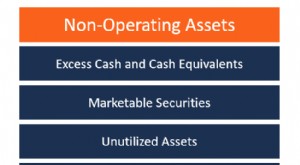 Non-Operating Assets: Definition, Examples & Financial Impact
Non-operating assets are assets that are not required in the normal operations of a business but that can generate income nonetheless. The assets are recorded in the balance sheetBalance SheetThe bala...
-
 Understanding Redundant Assets: Definition & Impact on Business
Redundant assets are assets that generate incomeOperating IncomeOperating income is the amount of revenue left after deducting the operational direct and indirect costs from sales revenue. for the bus...