
Organic Growth: Definition, Strategies & Benefits | [Your Brand]
Organic growth is the process by which a company expands on its own capacity. In an organic growth strategy, a business utilizes all of its resources – without the need to borrow – to expand its operations and grow the company.
![Organic Growth: Definition, Strategies & Benefits | [Your Brand]](https://www.etffin.com/Article/UploadFiles/202110/2021100815414104.jpeg)
Organic growth is typically marked by an increase in output, greater efficiency and speed with production, higher revenueRevenueRevenue is the value of all sales of goods and services recognized by a company in a period. Revenue (also referred to as Sales or Income), and improved cash flow. It is critical for the success of a company.
Three Primary Strategies for Organic Growth
There are three primary strategies that the majority of companies pursue in order to facilitate organic growth:
- Continual optimization of commercial activities, which involves how goods and services are priced, marketed, and sold
- Reallocating funds into activities – e.g., production of high-earning goods – that fuel earnings and growth
- Developing new models for operations or creating and developing new goods to sell and/or services to offer
Most companies choose to focus on one of the core strategies mentioned above to fuel organic growth, as pursuing more than one can make it less clear what actions within a strategy are working and which aren’t. Also, as growth typically requires significant expenditures, it may be difficult for a company to fund more than one growth strategy at a time.
A well-rounded company will likely adopt or practice all of the strategies at some point. However, they usually only attempt one strategy at a time. Generally, only the top-tier level companies opt to utilize more than one strategy at once. They are companies that typically have more resources at their disposal.
Organic Growth vs. Inorganic Growth
Inorganic growthExternal GrowthExternal growth (inorganic growth) refers to growth of a company that is derived from using external resources and capabilities, as opposed to internal, by comparison, is accomplished by using resources or growth opportunities outside of a company’s own means. It includes things such as taking loans and entering into mergers and acquisitionsMergers Acquisitions M&A ProcessThis guide takes you through all the steps in the M&A process. Learn how mergers and acquisitions and deals are completed. In this guide, we'll outline the acquisition process from start to finish, the various types of acquirers (strategic vs. financial buys), the importance of synergies, and transaction costs. Inorganic growth almost always relies on securing outside capital or resources but may enable more rapid expansion. Organic growth, on the other hand, relies on intrinsic resources and skills to fuel a slower, more natural growth.
Organic Growth and Understanding a Targeted Client Base
One of the most fundamentally sound things a company can do to fuel organic growth is to understand its target market. Consistent research into the way the target customers/clients think and make decisions helps a company understand where to invest the majority of their funds (into the goods and servicesProducts and ServicesA product is a tangible item that is put on the market for acquisition, attention, or consumption while a service is an intangible item, which arises from most purchased), what new products or services the target clientele would enjoy and use, and tailoring the marketing and pricing of products and services toward the clientele who are most frequently patrons.
Final Word
Organic growth is ultimately often more difficult to come by because it takes longer and it usually requires a shift in how the company operates. Still, organic growth is arguably better in the long term because it prevents the loss of a company as an independent entity (versus a merger or acquisition) and it also prevents a company from taking on substantial debt (through loans or borrowed resources).
More Resources
CFI is the official provider of the global Financial Modeling & Valuation Analyst (FMVA)™Become a Certified Financial Modeling & Valuation Analyst (FMVA)®CFI's Financial Modeling and Valuation Analyst (FMVA)® certification will help you gain the confidence you need in your finance career. Enroll today! certification program, designed to help anyone become a world-class financial analyst. To keep learning and advancing your career, the additional CFI resources below will be useful:
- Capital StructureCapital StructureCapital structure refers to the amount of debt and/or equity employed by a firm to fund its operations and finance its assets. A firm's capital structure
- M&A Considerations and ImplicationsM&A Considerations and ImplicationsWhen conducting M&A a company must acknowledge & review all factors and complexities that go into mergers and acquisitions. This guide outlines important
- Organizational AnalysisOrganizational AnalysisOrganizational analysis is the process of appraising the growth, personnel, operations, and work environment of an entity.
- Present Value of Growth Opportunities (PVGO)Present Value of Growth Opportunities (PVGO)Present Value of Growth Opportunities (PVGO) is a concept that gives analysts a different approach to valuation. Since prices in stock markets are a combination of fundamentals and expectations, we can break down the value of a stock to the sum of (1) its value assuming no earnings reinvested and (2) the present value
-
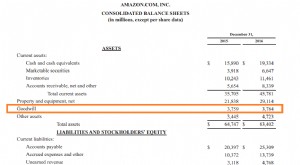
Goodwill in Accounting: Definition & Value
In accounting, goodwill is an intangible assetIntangible AssetsAccording to the IFRS, intangible assets are identifiable, non-monetary assets without physical substance. Like all assets, intangible as
-

OIBDA Explained: Understanding Operating Income Before Depreciation & Amortization
OIBDA is an abbreviation for Operating Income Before Depreciation and Amortization. It is a non-GAAP measure of the financial performance of a company during a specific period of time while excluding
Business strategy
- Acquirer Definition: Understanding Corporate Acquisitions
- Understanding Clawbacks: Protecting Stakeholders from Failed Performance
- Growth Capex: Definition, Examples & Strategic Importance
- Sustainable Growth Rate (SGR): Definition & Calculation
- Holding Companies: Definition, Purpose & How They Work
- Kaizen: Understanding Continuous Improvement for Business
- Outsourcing: A Comprehensive Guide to Benefits & Strategy
- Ramp-Up: Definition, Benefits & How to Achieve It
- Streamlining Processes: Definition, Benefits & Techniques
-
 EBITA Explained: Understanding Earnings Before Interest, Taxes, and Amortization
EBITA is an acronym that refers to the earnings of a company before interest, tax, and amortization expenses are deducted. Investors use EBITA as an indicator to measure the profitability and efficien...
-
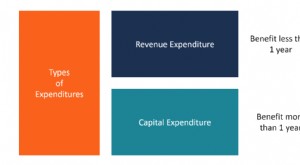 Understanding Expenditures: Definition and Types
An expenditure represents a payment with either cash or credit to purchase goods or services. An expenditure is recorded at a single point in time (the time of purchase), compared to an expenseAccrued...